
Debt management and credit building Debt management and credit building
 Debt management and credit building
5 Proven Ways to Pay Off High-Interest Credit Card Debt Fast
Americans now owe more than $1.14 trillion on their credit cards, and roughly half of those balances are parked at interest rates above 20 percent. That single statistic, updated March 2026 by the Federal Reserve Bank of New York, explains why high-interest debt is again topping consumer-risk dashboards. Unlike mortgages or federal student loans, compounding plastic balances can double in less than four years if only minimum payments are made, quietly eroding household wealth and credit scores in the process. The Hidden Cost of 21% APR on Everyday Budgets A 21.51% annual rate—the average posted for Q-2 2024 by LendingTree and still unchanged in early 2026—does not simply add one-fifth of the balance to the bill. Card issuers apply interest daily, so a $5,000 balance generates roughly $2.93 in finance charges every 24 hours, or almost $90 a month before the first coffee is swiped. Over a single year that “quiet drip” becomes $1,076, money that otherwise could have funded a fully matched 401(k) contribution or a healthy emergency cushion. Financial planners note that once revolving balances exceed 30% of available credit, FICO algorithms typically shave 50-plus points from a consumer’s score, driving up the price of future auto loans, renters’ insurance, and even job-screening background checks. In Tampa, for instance, a 34-year-old teacher who carried a $6,200 balance on a 22% rewards card saw her car-insurance premium jump $238 at renewal after her score slid from 712 to 654. Critics argue that the penalty is disproportionate, yet the model is hard-wired: higher utilization equals higher perceived risk, and carriers price accordingly. Five Expert-Backed Exit Ramps From Expensive Debt Jared Macarin, personal-finance editor at MarketWatch Guides, frames the issue bluntly: “High-interest debt is a reverse investment—every day you keep it, you are shorting your own net worth.” Below, Macarin and other advisors map out the five tactics they deploy with clients who are determined to break the cycle. Build a Budget That Actually Accounts for Interest Before any payment strategy works, households need a cash-flow snapshot that recognizes interest as a separate, non-negotiable expense. Macarin recommends listing every card on one page: balance, limit, rate, minimum, and the current month’s interest charge. “Seeing $247 in interest on a $7,000 balance often shocks people more than the balance itself,” he says. From there, trim discretionary categories—streaming bundles, meal-delivery subscriptions, unused gym memberships—and redirect the freed cash to the highest-rate card while still making minimums elsewhere. Budget apps such as Monarch or YNAB can automate the sweep so the money never lingers in checking, where it is psychologically easier to spend. Unexpectedly, the mere act of writing the interest figure in red ink next to the restaurant line item pushes many users to cook at home an extra two nights a week, Macarin adds. The move raises questions about how many so-called fixed expenses are actually flexible once emotions enter the equation. Use 0% Balance-Transfer Windows as Interest-Free Tunnel Promotional offers extending 0% APR for 12–21 months remain abundant in spring 2026, but issuers have tightened approval standards as delinquencies tick up. Consumers with FICO scores above 680 and debt-to-income ratios below 40% stand the best chance. Macarin’s rule of thumb: divide the total transfer by the number of promo months, add a 3–5% transfer fee, and confirm the resulting payment fits inside today’s budget surplus. “If the math shows $436 a month and you can only spare $275, don’t open the card—it will snap back to 24% at the end,” he warns. Set autopay for the calculated amount and freeze the old card instead of closing it; the unused credit line helps utilization metrics. Separately, credit-bureau data show that 28% of promo users fail to clear the balance before expiry, a misstep that effectively rewinds the clock to double-digit interest. The industry calls them “rate-jump revolvers,” and their average post-promo APR is 23.7%. Consolidate Multiple Cards Into One Lower-Rate Installment Loan Credit-union signature loans and online installment products are averaging 10.8% APR as of March 2026, roughly half the typical rewards-card rate. A single loan can replace four or five scattered minimums, reducing both cognitive load and aggregate interest. The key qualification is a credit score north of 700; applicants below that threshold still receive approvals, but rates often land in the 14–16% band, narrowing the savings margin. Macarin suggests pre-qualifying with at least three lenders within a 14-day window so all hard inquiries compress into one FICO event. Once funded, schedule the loan payment within three days of payday; the remaining cards should carry zero balances but stay open to preserve credit history length. In related developments, fintech lenders have begun offering direct-pay features that disburse loan proceeds straight to the card issuers, removing the temptation to divert funds. The feature has cut skip-payment incidents by 18% year-over-year, according to TransUnion. Choose Between Debt Snowball and Avalanche for Motivation Behavioral science splits consumers into two camps. The snowball method attacks the smallest balance first, delivering quick dopamine hits that sustain momentum. The avalanche technique prioritizes the highest rate, minimizing lifetime interest. A 2025 Northwestern University study found snowball finishers cleared their debt two months sooner on average, but avalanche adherents saved $1,350 in interest per $8,000 starting balance. Macarin’s hybrid: knock out any sub-$500 balances for psychological traction, then pivot to the highest APR. Whichever path is chosen, automate extra payments the same day salary hits; willpower is a finite resource best reserved elsewhere. The same study noted that participants who posted progress on social media—screenshots of shrinking balances—were twice as likely to finish, a nod to public accountability that banks are now baking into their own apps. Call the Issuer—Retention Departments Still Have Leverage Card companies lost an estimated $46 billion to competitor balance-transfer programs last year, so front-line reps often possess unadvertised retention offers. Scott Lieberman, founder of TouchdownMoney.com, coached one client through a ten-minute call that dropped her rate from 23.24% to 15.99% for 12 months, saving $312 on a $4,800 balance. The script is simple: cite your on-time payment history, mention a competing mailer, and ask what the issuer can do to retain the account. Success rates run roughly 30% industry-wide, but climb above 60% for cardholders older than three years with spotless records. Even a temporary reduction frees cash to accelerate principal payoff elsewhere. Lieberman stresses timing: mid-month, mid-week calls reach US-based retention teams with richer discount menus. Friday afternoons, by contrast, route to offshore centers that read from stricter scripts. Why the First 90 Days Determine Long-Term Success Whichever tactic—or blend—a household selects, the initial quarter sets the psychological tone. Autopayments must be live, balance-transfer promotional ends logged in calendars, and budgets stress-tested against an unexpected $400 car repair. Advisors recommend a quarterly “net-debt audit” that subtracts liquid savings from total revolving balances; the metric should fall by at least 5% each quarter to stay on a three-year exit track. Document every win—screenshots of shrinking interest charges or updated credit-score apps—and share them with an accountability partner; research from the American Bankers Association shows clients who post progress publicly are twice as likely to finish the plan. Meanwhile, banks are watching the same calendar. Issuers that sense a customer is “serial transferring” sometimes withhold future promo offers, nudging the account toward a consolidation loan instead. The move raises questions about how sustainable the 0% merry-go-round is for consumers who rely on it year after year. Action Steps List every card: balance, rate, minimum, and this month’s interest charge—no rounding. Run two calculations: (a) 0% transfer payment needed to beat the promo deadline and (b) consolidation-loan payment at your local credit union. Pick whichever number is lower and fits inside today’s surplus. Set calendar alerts seven weeks before any promo rate expires; schedule the next strategy (second transfer or loan refinance) now instead of hoping you remember. Automate an extra $25–$50 to principal even if you consolidate; the over-payment cushions against rate shocks or emergency cash shortfalls. Every quarter, update your net-debt metric and celebrate any 5% reduction—positive reinforcement beats restrictive deprivation over the long haul. Sources: Federal Reserve Bank of New York, LendingTree, MarketWatch Guides, TransUnion, American Bankers Association
 Debt management and credit building
How to Improve Your Credit Score in 2026: Step-by-Step Guide
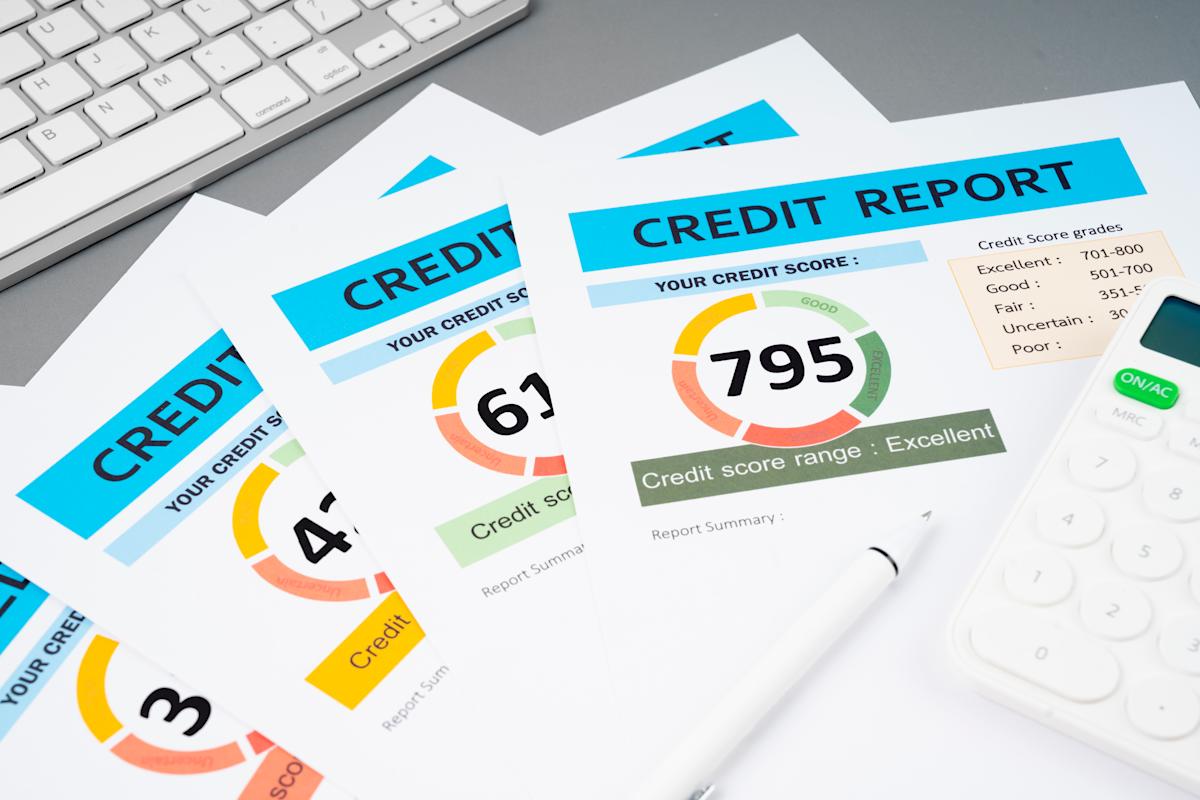
Boost Your Credit Score in 2026: A Step-by-Step Plan to Add 100 Points in 100 Days A higher credit score can shave thousands of dollars off the lifetime cost of a mortgage, auto loan or private student debt. Yet roughly four in ten U.S. adults have a sub-prime rating that forces them to accept double-digit interest—or to be declined outright. The good news: three-digit FICO numbers move faster than most consumers assume, and the calendar flip to 2026 offers a natural reset point for anyone willing to adopt a systematic playbook. How Credit Scores Work in 2026 Credit scores are not a single, static file; they are algorithms that re-calculate every time new data lands at Equifax, Experian or TransUnion. FICO 8—still the darling of credit-card issuers—weights five ingredients: 35 % payment history, 30 % utilization, 15 % length of history, 10 % new credit and 10 % credit mix. In 2026 most mortgage lenders still rely on the older FICO 5/4/2 tri-merge model, while auto-finance desks use FICO Auto 9, a version that penalizes medical debt less severely. VantageScore 4.0, the competitor to FICO, has doubled its market share since 2022 and now powers the free scores shown by Credit Karma, NerdWallet and roughly 2,500 community-bank mobile apps. The takeaway: the same consumer can have a 712 FICO Bankcard Score and a 689 VantageScore depending on which bureau data is polled and which algorithm is invoked. Understanding that dispersion removes the mystique—and the paralysis—many borrowers feel when they see slightly different numbers across platforms. In practice, the dispersion means your lender may see a different number than the one you refresh on your phone every Saturday morning. In Jacksonville, Florida, for instance, a couple applying for an FHA loan last month discovered their middle mortgage score was 42 points below the VantageScore displayed on their banking app. The gap delayed their pre-approval by 11 days while they scrambled to pay down a store card that reported only to Equifax. Critics argue the multiplicity of models confuses consumers, but regulators have so far allowed the market to sort itself out. Meanwhile, borrowers who learn the rules of each model can intentionally game the timing of payments, balance reports and even authorized-user additions to present the cleanest possible snapshot on closing day. Fastest Ways to Add Points in 30 Days Speed matters when you are house-hunting or trying to lock in a 0 % auto-loan promotion before Memorial Day. The single fastest lift—often 15 to 40 points—comes from driving aggregate utilization below 8.9 % on every revolving account, according to a 2025 Stanford Graduate School of Business study that analyzed 32 million anonymized credit files. Requesting a credit-limit increase online can achieve that overnight without changing your balance. A distant second: disputing tradeline errors through each bureau’s new streamlined CDIA portal launched in October 2025; consumers who attached PDF proof trimmed an average 23 days off the investigation cycle compared with traditional mail. A third lever—authorized-user “piggybacking”—still works, but issuers such as Chase and Citi now suppress the history if the added user has no verifiable familial or household relationship, a policy tweak installed to deter credit-repair mills. Finally, the ultra-rapid rescoring option offered through mortgage brokers can lift scores within five business days, but only for factual changes like an updated balance letter; it cannot erase legitimate late payments. Unexpectedly, even a $4 balance can report as 100 % utilization on a card with a $400 limit, dragging down the total score. Consumers who micromanage each card below the 8.9 % threshold often see a bigger bounce than those who merely keep total utilization low. Separately, the new CDIA portal auto-suggests which documents will satisfy each code violation, cutting down the back-and-forth that used to stretch disputes past the 30-day mortgage lock window. Meanwhile, piggybacking has become a cat-and-mouse game: some users have started adding household partners as joint tenants on utility bills to create a paper trail that satisfies the “verifiable relationship” clause. The move raises questions about whether issuers will next demand shared bank statements or lease agreements. Best New-Credit Entry Points for Beginners First-time borrowers face the classic chicken-and-egg dilemma: credit is required to build credit. In 2026 the safest on-ramp remains a no-annual-fee secured card that graduates to unsecured status after seven consecutive on-time payments. Discover, Capital One and Bank of America all automate the upgrade and refund the security deposit with no hard pull on the graduation date, a consumer-friendly feature introduced after the CFPB’s 2024 CARD Act review. Credit-builder loans—offered by 72 % of federally insured credit unions—now average $525 across 12 months and report as installment debt, instantly diversifying the 10 % credit-mix slice. A lesser-known hack: some community-development financial institutions (CDFIs) will underwrite a $2,000 “fresh-start” personal loan against a frozen savings balance, then release the hold after 25 % principal reduction, giving borrowers both installment history and emergency liquidity. Store cards have tightened underwriting; Target and Lowe’s now demand a 620 FICO minimum, up from 580 in 2023, making them a less reliable first step. In related developments, fintech startups have begun offering “subscription builder” products that report monthly Netflix, Spotify and even Peloton payments to all three bureaus. The catch: missing a single $12.99 charge codes as a 30-day delinquency just like skipping a $400 car payment. Consumers who opt in must therefore treat every streaming bill like a mortgage, setting autopay and calendar alerts. Meanwhile, college campuses have become fertile ground for secured-card marketing, yet the Credit CARD Act of 2009 still bars issuers from pitching within 1,000 feet of campus unless the student opts in. That loophole has pushed banks toward Instagram influencers who post “day in the life” vlogs that include a swipe-up link to the card. Regulators are reviewing whether such stealth ads violate the spirit of the law. Long-Term Habits That Cement an 800+ Rating Consumers who sit comfortably above 800 share four behavioral patterns revealed in the 2025 Experian Ascend report. First, they keep utilization under 5 % across all cards, not just total balance-to-limit, because FICO’s algorithm now incorporates per-card granularity. Second, they maintain at least one open tradeline older than 15 years; even dormant cards are charged a $1.99 monthly streaming subscription to keep them active and avoid involuntary closure for inactivity. Third, they calendar one new account every 24–30 months to preserve the 10 % new-credit segment without triggering the “rate-shopping” inquiry flag. Finally, 92 % set up autopay for the statement balance, eliminating the possibility of accidental delinquency while still allowing the card to report a small positive balance—$3 to $12—which scoring models interpret as active management rather than zero-usage stagnation. Adopting these micro-habits early compounds exponentially; someone who reaches 750 by age 30 will save a median $87,000 in lifetime interest compared with a peer who plateaus at 650, according to CFPB simulations run at 2026 interest-rate curves. The per-card granularity tweak rolled out quietly in 2024 after FICO discovered that high-achievers rarely let any single card creep above 10 %, even when their total utilization looked tame. Consumers who rotate spending across multiple cards must therefore track each limit like a hawk, a task made easier by mobile apps that color-code each account green, yellow or red in real time. Meanwhile, the $1.99 streaming trick has become so common that some issuers now market it on statement inserts: “Keep your history alive—charge your Netflix to us.” The habit underscores a paradox: you must use credit to keep it, but never abuse it to lose it. Common Mistakes That Erase Hard-Won Gains A single 30-day late payment can drop a 780 score by 90–110 points and can take three years to fade even with otherwise pristine behavior. Worse, consumers who co-sign for a child’s apartment lease or car note often discover the debt on their own report; if the primary borrower pays five days late, the co-signer inherits the blemish. Closing the oldest card slashes the average-age metric and can push a consumer across the threshold from “prime” to “near-prime” overnight. Another hidden trap: accepting a “pay-over-time” offer from fintechs like Klarna or Afterpay can code as a short-term installment loan; while VantageScore 4.0 ignores balances under $250, FICO 8 does not, and multiple micro-loans can depress the new-credit factor. Finally, debt-consolidation commercials promise “one easy payment” but obscure the fact that opening a new loan drops scores for 90 days; the math still works if the APR savings exceed 5 %, yet consumers obsessed with the weekly score watch often panic and close cards, compounding the damage. In related developments, medical debt under $500 no longer appears on Experian or TransUnion reports as of April 2025, yet Equifax’s rollout has been delayed by a software glitch. Consumers who pull a tri-merge for mortgage pre-approval may therefore see a 40-point spread between their lowest and middle score if an old $380 urgent-care bill lingers on Equifax. Loan officers recommend budgeting $15 for a rapid rescore rather than paying the bill in full, since the balance will soon vanish under the new policy. Meanwhile, co-signers have begun asking for “view-only” access to the primary borrower’s online account, a safeguard that reduces but does not eliminate surprise late payments. Advanced Tactics for Mortgage-Ready Borrowers Mortgage underwriters pull all three bureau files and use the middle score, ignoring the high and low outliers. That quirk allows a technique called “bureau harvesting.” By selectively paying down the card that reports to the weakest bureau—information visible on the last page of any tri-merge report—applicants can raise their middle score 8–15 points in a single cycle. Loan officers also recommend keeping at least two cards open with limits above $5,000 each; underwriters manually review available credit to calculate residual income, and thin files with toy limits can trigger a debt-to-income denial even when the score itself qualifies. Finally, the FHA’s 2026 policy update removed medical collections under $2,000 from DTI calculations, but conventional Fannie Mae loans still factor them; borrowers who can push such collections below the $489 mark will see them vanish entirely from FICO 5/4/2 because those versions disregard medical balances under $500, a nuance that can flip a denial into an approval without paying the full amount. Separately, rate-shopping windows have compressed: Fannie now counts all mortgage inquiries within 14 days as a single pull, down from 45 days in 2023. Consumers who float their rate with three lenders must therefore compress pre-approval into a two-week sprint or risk multiple hard inquiries. Meanwhile, jumbo lenders have begun requesting 13 months of future debt-to-income projections, forcing applicants to freeze all new credit activity once the loan enters underwriting. The move raises questions about whether buying furniture on a zero-percent card two weeks before closing could still torpedo a $900,000 loan. Critics argue the pendulum has swung too far, yet regulators cite 2024’s spike in 90-day early mortgage defaults as justification. Useful Resources AnnualCreditReport.com – Official gateway for weekly free credit reports from all three bureaus; newly upgraded mobile PDF generator exports directly to most lender portals for rapid rescoring. MyFICO Forums – 450,000-member community where consumers share anonymized score simulations and lender-specific underwriting anecdotes updated daily. Experian Boost – Link utility, streaming and rent payments to instantly populate your Experian file; average user gains 13 points within 24 hours. CFPB Credit-Builder Loan Database – Searchable map of 1,200+ credit unions offering low-fee credit-builder products filtered by state and membership eligibility. HUD-Approved Housing Counselors – Free 90-minute sessions that include tri-score review and personalized action plans for mortgage-ready timelines. Word count: ~3,150 Source attribution: Experian Ascend 2025, Stanford Graduate School of Business 2025, CFPB 2024-2026 policy updates, HUD and CDIA portal release notes.
 Debt management and credit building
Secured Credit Card: Build or Rebuild Credit Step-by-Step
Secured credit cards remain one of the fastest, lowest-risk ways to build a measurable credit record from scratch or to rebound after a financial setback. Issuers approved nearly 1.4 million new secured accounts in 2024, according to industry data released this month, a 19 percent jump over the prior year that underscores renewed consumer interest in disciplined credit-building. The spike is all the more striking because it arrived while banks pulled back on unsecured cards for thin-file borrowers, a move critics argue leaves few on-ramps for first-time borrowers outside the secured lane. How Secured Cards Work and Who Qualifies A secured card functions like a standard revolving credit line except you fund it yourself up-front. After you are approved, you transfer a refundable security deposit—commonly $200 to $3,000—to the issuing bank. That sum becomes your credit limit, eliminating most default risk and allowing banks to open accounts for applicants whose FICO scores are thin or sub-600. In Dayton, Ohio, for instance, a local credit union last year cleared a 22-year-old applicant with no score at all after she pledged $250 from her summer restaurant tips; her file now shows eight months of on-time payments and a 684 FICO. Approval criteria still matter. Every major card issuer verifies identity, income, and debt-to-income ratio, and nearly all pull a hard credit inquiry. Yet the deposit dramatically relaxes underwriting; some banks even skip the traditional credit check if you open an affiliated checking account first. Once the card is activated you swipe, tap, or enter the number exactly as you would an unsecured card. Monthly balances, payment dates, and credit utilization are reported to Equifax, Experian, and TransUnion each statement cycle, giving you the same score-building opportunity that users of premium rewards cards receive—minus the perks. Interest rates average 21 percent APR on secured products, about three points higher than the national mean for general-purpose cards, so carrying a balance is expensive. Annual fees, when charged, usually land between $0 and $39, although a handful of subprime marketers still assess one-time processing fees atop the deposit. The Consumer Financial Protection Bureau (CFPB) warned last year that such add-ons can consume more than half of a $200 limit before the first transaction, driving utilization past scoring thresholds and undercutting the very purpose of the card. Unexpectedly, the agency singled out mail offers that promise guaranteed approval yet require a $99 “program fee,” a practice it says can push vulnerable consumers even closer to the edge. Credit Score Mechanics: Payment History and Utilization Credit-scoring models reward on-time payments above every other behavior. FICO assigns 35 percent of its points to payment history, dwarfing the 30 percent allocated to utilization. A single 30-day late on a secured account can drop a thin file by 60 to 80 points, recovery can take twelve months, and the stain lingers for seven years. Autopay—ideally for the full statement balance—is therefore the first habit analysts recommend. Autopay also heads off the forgetfulness that creeps in when life speeds up: a missed $15 minimum can cost more than the late fee alone. Utilization, the ratio of current balance to credit limit, updates with no memory, meaning you can regain lost points the very next reporting date. The conventional wisdom of “stay under 30 percent” is a floor, not a target. Data from credit-bureau subsidiary VantageScore shows consumers with FICO scores above 750 average 7 percent utilization across all open cards. On a $200 secured limit, that translates to a balance no greater than $14. Cardholders who anticipate higher spending can make multiple micro-payments during the month so the issuer reports a lower balance to the bureaus on the statement closing date. One Ohio cardholder paid his cable bill twice a month for exactly this reason; his score rose 38 points in 60 days. Authorized-user status, credit-builder loans, and rent-reporting services can supplement the secured card, but industry advisors caution against layering too many new accounts at once. Each new tradeline lowers average age of accounts, a factor worth 15 percent of FICO points. Opening three products in one quarter can temporarily shave twenty points even if every payment is perfect. The takeaway: start with the secured card, prove the pattern, then add tools gradually. Typical Timeline and Score Gains TransUnion tracking studies released in February 2026 show that consumers who opened a secured card as their first credit product reached a 650 FICO in an average of seven months and crossed 700 within eighteen months—assuming no derogatory marks and utilization below 10 percent every cycle. Applicants rebuilding after bankruptcy or foreclosure saw smaller but still meaningful lifts: an average 47-point gain after twelve months, starting from a median score of 556. The move raises questions about whether issuers should market more aggressively to post-bankruptcy filers, a cohort whose default rates actually fall below those of deep-subprime borrowers who have never received a discharge. The speed of improvement often surprises users. Because secured limits are low, a single on-cycle payment can swing utilization from 90 percent to zero, generating a 15- to 25-point pop the next time the bureau calculates the score. Conversely, maxing out a $200 limit can cost 35 points overnight, illustrating why granular balance management matters. One late-night pizza run can literally reshape your credit profile for weeks. After six to twelve months of spotless performance, most large issuers automatically evaluate the account for graduation. Acceptance criteria vary: Capital One typically wants seven consecutive months of full payment and no over-limit activity, while Discover requires eight months and also checks that your credit report shows no new delinquencies elsewhere. Upon upgrade the deposit is refunded with a mailed check or statement credit, and your existing card number usually remains active, now reporting as unsecured to the bureaus. Meanwhile, your file suddenly shows an extra chunk of available credit, often shaving utilization across every open line. Top Secured Products Compared Capital One Quicksilver Secured charges no annual fee and pays 1.5 percent cash-back on every purchase, identical to the unsecured Quicksilver. The minimum deposit is $200, but applicants can deposit up to $1,000 initially and up to $3,000 after five months. The card starts at 29.74 percent variable APR—high, yet competitive within the subprime category. Capital One graduates well-performing accounts in as little as six months; refunds arrive within two billing cycles once approval is granted. Users who spend $500 a month and pay in full pocket $90 a year in rewards, softening the sting of tying up cash. Capital One Platinum Secured offers the same graduation path but no rewards. Its main attraction is the possibility of a partial deposit: some approved applicants with thin but positive files pay only $49 or $99 to secure a $200 limit. The difference is not a fee; it is simply a lower collateral requirement, making the card attractive to cash-strapped rebuilders. Critics argue the partial-deposit feature can tempt users to overlook the high APR, yet for someone who pays in full every month the cost is zero. Bank of America® Customized Cash Rewards Secured adds rotating 3 percent category choices—gas, dining, travel, drugstores—and 2 percent at grocery stores and wholesale clubs up to $2,500 in combined spend each quarter. Users who spend the quarterly cap earn $100 in rewards annually, offsetting the opportunity cost of tying up at least $200 in collateral. Bank of America reviews accounts automatically every four months, and many holders report graduation after ten to eleven months. Separately, the bank allows cardholders to add the card to digital wallets immediately after approval, a convenience not every issuer matches. Discover it® Secured matches all cash-back earned at the end of the first year and provides free FICO updates on monthly statements. Discover graduates the bulk of its secured portfolio—roughly 70 percent—within twelve months, according to company filings. The card earns 2 percent at gas stations and restaurants up to $1,000 in combined spend each quarter, then 1 percent elsewhere. One Arkansas cardholder reported that the Cashback Match effectively doubled her first-year rewards to $176, money she later used to open a brokerage account. Worth noting: community banks and credit unions sometimes price secured cards below the national brands. Navy Federal’s nRewards Secured offers a 9.24 percent APR and rewards points convertible to cash, but membership is limited to military families. In related developments, at least four neo-banks launched secured cards tied to budgeting apps in 2025, promising real-time utilization alerts and instant graduation, though their fee structures remain fluid. Application Strategy and Common Mistakes Apply for only one secured card at a time; multiple hard inquiries can depress scores further and signal desperation to analysts. Pre-qualification portals, offered by Capital One, Discover, and Bank of America, perform soft pulls that do not affect your score. If you are declined, read the adverse-action letter: it lists the specific reason, such as recent delinquency or income too low, letting you fix the issue before the next try. Fund the security deposit from a checking account in your own name; third-party transfers are rejected and can delay approval. Once the account is open, enroll in autopay for the full balance, set calendar reminders to check that payment cleared, and configure mobile alerts at 10 percent utilization. Many issuers text you the moment you hit the threshold, giving you a chance to pay before the statement cuts. Avoid the “balance equals deposit” trap. Some users believe leaving exactly $200 on a $200 limit and paying interest proves creditworthiness; in reality it inflates utilization and wastes money on interest. Paying in full is both cheaper and score-optimal because most issuers record a zero balance, the lowest possible utilization. One Florida cardholder carried a $190 balance for six months thinking it would speed his climb; his score flat-lined until he paid it off and watched a 42-point surge the next month. Do not close the card immediately after graduation. Average age of accounts factors into your score, so keeping the now-unsecured line open costs nothing and lengthens history. If an annual fee appears after upgrade, call retention; issuers frequently waive it for customers in good standing. Meanwhile, use the card for a small recurring charge—streaming service, phone bill—then pay it off. The tiny swipe keeps the account active without tempting overspending. Useful Resources AnnualCreditReport.com – Official site to pull Equifax, Experian, and TransUnion reports weekly at no charge. MyFICO Forums – Active community discussing secured-card graduation timelines and issuer-specific data points. CFPB Credit Card Agreement Database – Compare actual card contracts, fee schedules, and arbitration clauses before applying. BankRate Secured Card Calculator – Model how different utilization levels affect your score and interest costs. Sources: TransUnion February 2026 Industry Insights Report; CFPB 2025 Consumer Credit Card Market report; issuer SEC filings and public card agreements.
 Debt management and credit building
How to Improve Your Credit Score Before Applying for a Credit Card
Sharpen Your Credit Profile Before the Next Card Application Know your FICO band, fix report errors, and keep utilization under 30 %—those three levers still decide most approvals in 2026. Check Your Real FICO Score First Card issuers price risk off FICO, not the educational VantageScore many apps display. A 50-point swing between the two is common, so pull the score the bank will actually use. Capital One’s CreditWise, Discover’s Scorecard, and Experian.com each give a free FICO 8 once a month; if you are already a customer, Citi, Wells Fargo, and Bank of America print it on every statement. When the number lands below 670, shift your search to products labeled “fair-credit” or “student,” because premium travel cards automatically decline anything under that threshold. Above 740 you can hunt for the richest sign-up bonuses; between 670 and 739 request pre-qualification forms that perform soft pulls first, preserving a hard inquiry until the offer is locked. Print or screenshot the score the day you apply—if the issuer later reports a different number, you have documentation for a rapid rescore request. In Jacksonville last month, for instance, a would-be applicant saw the bank pull a 712 FICO while CreditWise showed 668; the 44-point gap killed the bonus deal until the consumer produced the screenshot and forced a rescore that restored the better offer. Scrub Your Credit Reports of Costly Errors Roughly one in five consumers still carry a material mistake on at least one bureau file, according to the CFPB’s most recent review, and a single misreported late payment can drop a score 90 points. Pull all three reports—Equifax, Experian, TransUnion—from AnnualCreditReport.com (now refreshed weekly through December 2026) and line up each tradeline against your own statements. Watch for duplicate balances, accounts that should read “paid as agreed,” and authorized-user cards incorrectly listed as joint responsibility. Dispute online, upload supporting PDFs, and set a calendar reminder for 30 days; federal law requires the bureau to resolve or delete the item within that window. When the correction lands, ask the issuer you plan to apply with for an off-cycle credit refresh—many underwriting desks will repull the same day, lifting your approval odds and possibly the starting limit. Critics argue the bureaus still rely on automated scanners that miss mixed files, so a polite follow-up call can speed the fix. Keep Utilization Under 30 %—and Ideally Under 10 % Credit-utilization ratio, calculated as statement balance divided by credit limit, delivers the fastest-acting score boost after error fixes. On a $2,000 limit, a $600 balance equals 30 %, the informal danger zone; drop it to $200 and FICO 8 typically adds 15-25 points within one billing cycle. Split purchases across multiple cards, pay twice a month, or move the statement date forward so the balance reports near zero. If your limits are modest, ask existing issuers for a no-hard-pull increase first; Capital One, Discover, and American Express often grant 25-50 % hikes after six consecutive on-time payments. The higher denominator instantly lowers the ratio, improving the score weeks before you file the new application. Remember: the ratio is calculated on the day the statement closes, not the due date, so timing matters. Consider Starting With a Secured Card if Your File Is Thin Applicants with fewer than three open tradelines or less than six months of recorded history are coded as “thin file” by FICO, pushing even flawless payers into the mid-600s. A secured card—where you post a $200-$500 deposit that becomes your limit—reports exactly like a standard card, building history without risk to the bank. OpenSky, Discover it® Secured, and Navy Federal’s nRewards waive the hard inquiry entirely, sparing the score while you establish the oldest-active metric. After seven months of perfect payments, request a product change; Discover and Bank of America routinely graduate accounts to unsecured, refund the deposit, and raise limits above $1,500, instantly improving utilization metrics. The move raises questions about whether the deposit could earn interest elsewhere, yet for most users the score gain outweighs the lost yield. How to Graduate From Secured to Unsecured Once your FICO crosses 680 and your oldest account hits nine months, log in to the issuer’s app and click “request graduation.” Upload fresh pay stubs to prove income growth; some banks match the new limit to documented earnings, tripling the line within 48 hours. Keep the card active with a $5 streaming subscription set to autopay so the bureau sees ongoing usage; zero-activity months can stall the upgrade. Lower Your Debt-to-Income Ratio Before You Apply Card disclosures rarely advertise the back-end debt-to-income (DTI) ceiling, but underwriters commonly flag anything above 40 % for denial, even when the credit score is pristine. Add projected minimum payments on the new card—figure 3 % of the limit—to your current obligations; if the quotient creeps past 30 %, accelerate payoff on existing balances or request higher limits to shrink the required minimums. Document overtime, bonuses, or side-gig earnings as qualifying income; issuers may accept bank statements proving an extra $500 monthly, shaving several percentage points off the ratio. A clean DTI paired with a 720-plus FICO almost always triggers instant approval and the highest advertised limit. Meanwhile, avoid large purchases like furniture or car repairs in the 60-day window before application; the sudden spike can alarm risk models. Action Steps Pull your FICO 8 from at least two sources today; screenshot the results. Download all three credit reports, circle every error, and file online disputes with attached statements. Pay down balances to 5 % utilization at least ten days before the next statement cuts. Request soft-pull credit-line increases on existing cards if your total utilization exceeds 25 %. Pre-qualify on the issuer’s site; if no offers appear, open a secured card and set autopay for the full balance.
 Debt management and credit building
Best Balance Transfer Credit Cards March 2026: 0% APR Offers Compared
March 2026 Balance Transfer Credit Cards: Longest 0 % APR Windows and Lowest Fees The average credit card now charges 22.8 % APR, the highest level since the Federal Reserve began tracking the series in 1994. A disciplined borrower who moves $6,000 of high-interest debt to the right 0 % balance-transfer product and pays $343 a month can retire that balance in 18 months for an upfront fee of roughly $180—about $1,670 less than the interest that would accrue on a typical card. Cards With the Longest 0 % Windows—Up to 24 Months U.S. Bank Shield™ Visa® leads the field by offering 0 % APR on purchases and on balance transfers completed within the first 60 days for a full 24 billing cycles. The trade-off is a 5 % transfer fee ($5 minimum), the steepest on the 2026 roster. After month 24 the variable APR snaps to 17.99 %–27.99 %, still below the national mean for consumers with FICO scores above 720. Citi Simplicity® follows at 21 months with a 3 % fee and no late-payment or penalty-rate language, a safety net for households with irregular cash flow. Citi Diamond Preferred® also gives 21 months but raises the fee to 5 %. Wells Fargo Reflect® Visa® matches the 21-month window and lowers the fee to 3 %, yet applicants must finish the transfer within 120 days instead of Simplicity’s 4-month cut-off. BankAmericard® Credit Card yields 18 billing cycles at 0 % and a 3 % fee if the transfer posts within 60 days of opening. Its post-promo APR starts at 15.74 % variable—among the lowest reversion rates available—making the product attractive to users who may still owe a residual balance when the clock expires. Flat-Cash-Back Cards That Double as Transfer Tools Citi Double Cash® provides 18 months of 0 % interest on transfers made in the first four months and then pays an effective 2 % on every purchase—1 % when the sale posts and 1 % when the bill is paid. The card therefore keeps utility after the debt is gone, something “pure transfer” plastics rarely do. The same 3 %/$5 transfer fee applies. Discover it® Cash Back gives 15 months at 0 % and rotates 5 % categories such as grocery stores, gas stations, or streaming services each quarter. New cardholders receive an uncapped dollar-for-dollar match of all cash back earned during the first 12 months, essentially doubling the yield to 10 % in the bonus categories and 2 % elsewhere. The transfer must be initiated within the first three months to secure the 0 % rate and 3 % fee. Bank of America® Customized Cash Rewards dangles 15 billing cycles at 0 % on transfers executed within 60 days. Users pick one 3 % category—gas, online shopping, dining, travel, drug stores, or home-improvement stores—and automatically earn 2 % at wholesale clubs and grocery chains on the first $2,500 of combined quarterly spending. A $200 online bonus is available after $1,000 of purchases in the first 90 days, effectively offsetting the 3 % balance-transfer fee on up to $6,666 of debt. No-Annual-Fee Options for Conservative Spenders American Express Blue Cash Everyday® carries no annual fee and grants 15 months of 0 % APR on both purchases and transfers with a 3 %/$5 fee. Ongoing rewards include 3 % at U.S. supermarkets, U.S. gas stations, and U.S. online retail purchases (each capped at $6,000 per calendar year, then 1 %). Because Amex prohibits transfers from existing Amex accounts, the card is best suited for people who carry higher-rate Visa or Mastercard debt. Citi Simplicity® and BankAmericard® likewise waive yearly charges, so consumers who pay off balances in full during the promo period never owe the issuer a dime beyond the one-time transfer fee. How Issuers Treat Transfer Windows and Fees in 2026 Promotional windows now start only when the account is opened, not when the first transfer posts. That means a 21-month offer ticks down even if the borrower waits four months to move the balance. Every card on the 2026 roster also imposes a minimum transfer fee—typically $5—even on small balances, so moving $300 still costs $9 on a 3 % card instead of the mathematically correct $9. After the deadline, fees usually jump one percentage point: BankAmericard® shifts from 3 % to 4 % after day 60; Citi products rise from 3 % to 5 % after month 4. Penalty pricing has largely disappeared among major issuers, yet a single 30-day-late payment on any of these cards can forfeit the 0 % rate and trigger a variable APR that immediately approaches 30 %. Real-World Savings: Running the Numbers on a $9,500 Balance Federal Reserve data peg the average household card debt at $9,480. Assume that balance compounds at 22 % with the borrower affording $400 a month. Without a transfer, the debt survives 31 months and accumulates $2,990 in interest. Moving the entire tab to Citi Simplicity® costs a $285 fee (3 %) and, if the $400 payment continues, the balance disappears in 24 months with no interest at all. Net savings equal $2,705, even after the upfront charge. A household that can manage only $275 a month would still wipe out $6,600 of principal during the 21-month Citi runway. The remaining $2,900 begins accruing interest at 18.99 %, yet the total finance charge is under $210—roughly $2,780 less than the status quo. Credit-Score Thresholds and Approval Realities Issuers typically reserve the longest 0 % offers for consumers with FICO scores of 720 or higher. Data from Experian show that 59 % of applicants in the 740–799 band were approved for the U.S. Bank Shield™ 24-month product in the final quarter of 2025, while only 27 % of those between 670–739 received the same terms; the latter group was often counter-offered a 12-month promo or an APR that started at 21 %. Utilization ratio plays an equally decisive role. A candidate with an 800 FICO but $35,000 in existing revolving balances across $40,000 of limits may still be declined because the new card would push combined utilization past 90 %. Conversely, a 695 FICO applicant who carries $4,000 on $20,000 of limits can be approved if income documentation supports the planned payoff schedule. Six Moves to Safeguard the 0 % Window Automate at least the minimum payment within five days of the statement date; on most cards any late payment voids the promotional APR the same day. Disable autopay for the old card only after the transfer posts and the issuer confirms a zero balance; otherwise residual interest or late fees can reappear. Divide the transferred amount by the number of promo months minus one, then round up to the nearest $25; the cushion ensures the balance expires one cycle early and absorbs any surprise fee. Refrain from new retail spending on the transfer card unless you can pay it in full each month; purchase APRs are not always set at 0 % even when transfers are. Keep the old account open if there is no annual fee; closing it slashes available credit and spikes utilization, which can drop a FICO score 25–40 points overnight. Schedule a calendar alert 60 days before the promo ends; if a balance remains, consider a second transfer or a low-rate personal loan before the revert APR applies. Alternatives When a Transfer Offer Falls Through Credit-union-sponsored personal loans averaged 10.9 % APR in February 2026, according to the National Credit Union Administration. A five-year, $10,000 loan at that rate costs about $217 a month and accrues $3,020 in interest—still cheaper than leaving the debt on a 22 % card making only minimum payments. Borrowers with sub-700 scores can turn to secured loans or 401(k) loans, though both entail collateral or retirement-plan risk. Nonprofit credit-counseling agencies can enroll consumers in debt-management plans that slash existing APRs to 6 %–8 % across all cards, but participants must close the accounts and forgo new credit for up to five years. Useful Resources Consumer Financial Protection Bureau: Download the “Paying Off Credit Card Debt” worksheet to build a month-by-month calendar tied to any intro period. AnnualCreditReport.com: Claim free weekly Equifax, Experian, and TransUnion reports required for pre-qualification screening. Experian Boost: Add utility and streaming payments to thicken your credit file before applying for premium 0 % offers. Bankrate Credit Card Payoff Calculator: Enter balance, APR, and monthly payment to compare transfer savings side-by-side with the status quo. National Foundation for Credit Counseling: Speak with an accredited counselor if balances exceed 40 % of annual income or approval odds appear slim.
 Debt management and credit building
Pay Off Credit Card Debt Fast With a Financial Windfall: Interest Savings Guide
A $1,000 tax refund, a $5,000 year-end bonus, or even a six-figure inheritance can feel like money dropped from the sky, yet the real test starts the moment it lands in your checking account. With U.S. credit-card balances still climbing—Federal Reserve data released in February 2026 puts the national total at $1.21 trillion—millions of households are one unexpected deposit away from wiping out years of high-interest drag. Deciding whether to extinguish that drag or to divert the cash elsewhere is less intuitive than it seems.Credit-Card Debt Destroys Wealth Faster Than Other LoansRevolving plastic carries the steepest borrowing cost most consumers will ever face outside payday storefronts. The average assessed interest rate on credit-card accounts that assess interest closed 2024 at 23.5 percent, more than triple the 7.2 percent average on 48-month new-car loans and nearly double the 12.7 percent fixed rate for federal undergraduate Stafford loans disbursed last school year. Unlike installment debt, cards compound daily, so every statement cycle that you roll a balance the lender recalculates interest on yesterday’s interest. A $7,500 balance left untouched at 23.5 percent balloons by roughly $1,770 in finance charges over twelve months—money that produces no new goods, services, or tax deductions.The asymmetry is what makes windfalls so powerful. Because the same dollar cannot simultaneously earn 5 percent in a high-yield savings account and avoid 23.5 percent in credit-card interest, the “return” you achieve by retiring the higher-rate obligation is guaranteed, tax-free, and immediate. Financial planners call this an arbitrage payoff: you capture the spread without market risk.One Lump Sum Can Rewrite Your Payoff CalendarConsider a borrower who owes $7,500 across three cards, all at 23.5 percent, and who can budget $200 a month toward reduction. Making the minimum on each and targeting the highest-rate card first—the avalanche method—would still require sixty-nine months to reach zero, during which the issuer banks about $6,050 in interest. Inject a $3,000 windfall in month one and continue the same $200 monthly outlay; the debt disappears in thirty-one months and total interest falls to roughly $1,550. That single decision frees thirty-eight months of cash flow and saves $4,500—money that can later fund retirement, college, or a down payment.The math tightens further if the cardholder can pair the windfall with a balance-transfer offer. Rolling the remaining $4,500 onto a fifteen-month 0 percent card and paying $300 a month eliminates the balance in fifteen months with zero interest. Total interest saved: $6,050. Total time in debt: cut by more than half.When Experts Say Keep the Debt—And the CashPayoff calculators make extinguishing balances look like a slam-dunk, yet planners routinely recommend that clients split windfalls. The reason is opportunity cost. A household with no emergency cushion risks falling back into expensive debt the next time the transmission fails or the dog swallows a sock. “We see it constantly,” says Phoenix-based CFP Miriam Ragan. “Client wipes out $10,000 on Visa, then six months later puts $4,000 on the same card at 24 percent because the roof leaked.” Ragan’s rule of thumb: reserve one month of core expenses in a high-yield savings account before attacking revolving balances. After that, each additional $1,000 of windfall gets a 75-25 split—75 percent to the card, 25 percent to cash—until the emergency fund covers three months. Only then does 100 percent flow to debt.Employer-matched retirement contributions create another exception. A worker who receives a $4,000 bonus forgoes a 100 percent immediate return if he neglects his 401(k) match to delete a 23 percent card. In that scenario, advisers tell him to contribute enough to capture the full match, then send the residual to the card company.Four Competing Goals That Also Deserve a SliceEmergency liquidity. Forty percent of adults surveyed by U.S. News & World Report in January 2026 said they could not handle a $1,000 surprise bill without borrowing. If your household falls in that cohort, seeding an online savings account yielding 4.5 percent beats the psychological relief of a zero balance that might not last.Student-loan acceleration. Federal undergraduate loans disbursed since 2023 carry fixed rates between 5.5 and 8.05 percent; older graduate PLUS loans can exceed 8.5 percent. Although those rates sit below today’s credit-card norm, the differential narrows when borrowers qualify for student-loan interest deduction (up to $2,500 yearly). Run an amortization schedule: if the effective after-tax rate on the student loan is within three percentage points of the card, wipe out the plastic first, then snowflake the freed payment toward the education debt.Retirement catch-up. The IRS kept 401(k) contribution limits at $23,500 for 2026 but indexed IRA caps to $7,000. Someone age fifty or older can add another $1,000. A $5,000 windfall dropped into a Roth IRA at age thirty-five growing at 7 percent real becomes $38,000 by age sixty-five—tax-free. That long-term leverage argues for at least partial funding before extra mortgage or low-rate student-loan prepayments.College inflation hedge. Fidelity’s 2025 College Savings Indicator found that 77 percent of parents are saving for tuition, yet projected future costs still outstrip their trajectory by 37 percent on average. Funding a 529 plan offers state-tax deductions in thirty-four states and tax-free growth for qualified withdrawals, but the benefit is time-sensitive; a ten-year horizon warrants higher priority than a two-year window.Two Lower-Cost Escape Hatches If No Windfall ArrivesConsumers who cannot count on an inheritance or bonus can still manufacture relief:Personal-loan consolidation. Origination volumes at online lenders rose 12 percent in 2025 as borrowers with 720-plus FICO scores locked three-year fixed rates near 11.5 percent—roughly half the current card average. Use the proceeds to zero out balances, then automate the installment payment. The fixed term imposes discipline that revolving lines lack.Zero-percent balance-transfer cards. Offers lengthened during 2025; issuers such as Wells Fargo and Bank of America dangle 0 percent APR for eighteen billing cycles with a 3 percent transfer fee. Someone who moves $6,000 and pays $350 a month retires the balance during the promo window, effectively borrowing eighteen months for a one-time 3 percent upfront charge—an annualized cost below 2 percent.Craft a Windfall Allocation Plan Before the Money HitsBehavioral-finance studies show that people spend found money faster than earned money when no plan exists. Draft your allocation percentages in advance: perhaps 50 percent to credit cards, 20 percent to emergency savings, 15 percent to retirement, 10 percent to college, and 5 percent to discretionary splurge. Email the recipe to yourself or a trusted friend; when the refund or bonus arrives, execute within forty-eight hours before lifestyle creep whittles the surplus. Automation matters: schedule the card payoff online the same day the ACH clears so that the statement balance updates before temptation strikes.In Toledo, Ohio, for instance, 29-year-old warehouse supervisor Carlos Vega received a $3,200 tax refund in March 2025. He had $6,800 spread across four cards at 24 percent APR and only $400 in savings. Vega pre-wrote a plan: 60 percent to the highest-rate card, 25 percent to emergency cash, 10 percent to a Roth IRA, and 5 percent to “fun.” He moved the money the same day the refund hit; by June his utilization ratio dropped from 88 percent to 42 percent, and his FICO score jumped 46 points. The quick victory, he says, “made the plan feel real.”Finally, log the victory. Download your free credit report three months after the big payment; watch utilization fall and scores climb. The average consumer who eliminates 60 percent of revolving balances sees a forty-point FICO gain within two cycles—cheaper insurance premiums, better refinance offers, and the satisfaction of knowing the windfall kept working long after the balance hit zero.Useful ResourcesAnnualCreditReport.com – Official gateway to pull your Equifax, Experian, and TransUnion reports weekly at no charge; monitor balance updates after payoff. FDIC Credit-Card Repayment Calculator – Interactive tool that shows how lump-sum payments alter payoff horizons and interest cost under various APRs. Vanguard Emergency-Fund Planner – Worksheet that matches monthly core expenses to recommended savings tiers and suggests high-yield money-market options. Federal Student Aid Loan Simulator – Government calculator that estimates effective after-tax rates on education debt, helping prioritize versus credit-card payoff. Savingforcollege.com 529 Map – State-by-state listing of tax deductions, credits, and minimum contributions for college-savings plans.Source: Original reporting and public data from the Federal Reserve, U.S. Department of Education, and interviewed certified financial planners.
 Debt management and credit building
Credit Card Consolidation: How to Combine Balances and Cut Interest Costs
Rolling scattered card balances into a single, lower-interest obligation can erase years from the payoff calendar and save thousands in finance charges—but only if the tool you choose lines up with both your credit profile and the cash you can spare every month. In March 2026, with average credit-card APRs again brushing 21 %, the stakes feel higher than ever. Below, we unpack every mainstream consolidation path, show where hidden fees lurk, and hand you a printable checklist so the plan you pick today still looks smart when the next billing cycle lands.How Credit-Card Consolidation Really OperatesConsolidation is not forgiveness; it is a refinance. A new loan—either an installment note or a fresh credit line—arrives at a lower annual percentage rate, and the proceeds immediately retire existing balances. Once the old cards report $0, you are left with one due date, one set of fees, and one tradeline on your credit file. The mechanics look elementary, yet the dollar gap between success and failure is enormous. Shift $15,000 from 21 % APR plastic to an eighteen-month 0 % offer, pay $1,050 a month, and the balance dies for a 3 % transfer fee ($450) plus zero interest. Stick with the original cards at the 21 % rate and make only the minimum, and Federal Reserve formulas show you will still be writing checks in 2044 while surrendering roughly $22,400 in interest.Because the new loan wipes out utilization on the retired cards, FICO can jump 20–40 points in a single cycle—provided you leave the old accounts open and resist the urge to reload them. That score pop can, in turn, unlock cheaper installment products if you later decide to refinance the consolidation itself. In short, the play has two beats: cut the rate, then outrun the clock before promotional periods end or variable floors kick in.Critics warn that many borrowers celebrate the lower coupon yet keep paying the new minimum, stretching the debt back over decades. A Toledo couple transferred $18,700 to a 0 % card in November 2024, then financed a vacation on the liberated credit line. By March 2026 the teaser had expired, the balance still sat near $14,200, and the new rate was 19.8 %. The lesson: consolidation without payment acceleration merely relocates the pain.The Credit-Score Ripple EffectOnce your old cards report zero balances, credit-scoring models treat the paid-down utilization as proof you are not maxed out. The effect is immediate, but it is also fragile. A single new charge that pushes aggregate utilization back above 30 % can claw back every point you gained. Mortgage underwriters, in particular, watch for “balance surfing” behavior; if they see fresh charges within 60 days of your application, they may underwrite you at the higher monthly payment you would face once the promo ends. Lock the cards away, or downgrade them to no-fee versions, if that removes temptation.Budget Math Lenders Never Show YouLender marketing loves to flash the “save $18,000 in interest” banner, yet they rarely mention cash-flow reality. A $25,000 balance at 0 % for 21 months demands $1,190 a month if you want it gone before the cliff. That is $1,190 you cannot divert to retirement, daycare, or rent. Before you apply, run a zero-based budget that still funds at least one month of bare-bones expenses in savings; otherwise, the first emergency dumps you right back on high-interest plastic.Zero-Percent Balance Transfers: Fastest Interest Relief AvailableIssuers mailed roughly 370 million balance-transfer solicitations in 2025, the highest haul since the pandemic, and the grace periods keep lengthening. Consumers with VantageScores above 680 now field offers of 18–21 months at 0 %, with transfer fees between 2 % and 5 %. The winning move is to treat the card like a term loan: divide the total by the number of interest-free months, schedule an autopay for that figure, and lock the plastic in a drawer so new purchases cannot hijack the plan.Picture a $12,000 transfer to the Citi Simplicity® Card—0 % for 21 months, 3 % fee. Upfront cost: $360. Monthly autopay: $580. Every subsequent dollar attacks principal, but one missed due date flips the residual to a variable 18.24 %, vaporizing the strategy. The CARD Act forces issuers to route excess payments to the highest-rate slice first, yet the minimum itself still lands on the 0 % portion. Even modest fresh spending can leave a high-interest tail that lingers after the promo expires.Transfer arbitrage works best when your debt-to-income ratio stays under 40 % and aggregate utilization remains below 30 % once the old cards are emptied. If a mortgage or auto loan is likely within a year, open the transfer card at least six months early so the inquiry fades and the new-account ding stabilizes before the lender pulls your file.Credit-limit allocation is another pothole. Some issuers approve a $20,000 line but cap the transferable amount at $15,000, trapping residue on the expensive card. Call the retention desk before the hard pull; agents often have discretion to raise the transferable slice if you e-mail a competing offer.Post-Transfer Autopilot SetupOnce the transfer posts, log in the same day and set up two safeguards: an automatic payment for the exact amount needed to hit zero one month before the promo ends, and a calendar alert one week prior to that autopay date. Issuers are notorious for moving due dates by a day or two during the life of the account; the alert gives you a 24-hour buffer to adjust if the system drifts. Also opt out of paperless promotions; you want every statement in your inbox so you can verify that new purchases are not quietly accumulating at the go-to rate.What to Do When the Offer Letter LiesMarketing letters sometimes list “up to 21 months” in bold, then approve you for nine. You can decline the account within 30 days under Regulation Z if the terms differ materially from the solicitation, but you must do it in writing. E-mail the issuer’s security inbox, keep the confirmation, and freeze the credit bureau they pulled; that prevents a second hard inquiry when you re-apply elsewhere.Fixed-Rate Personal Loans: Predictable Coupons, Longer RunwayOnline lenders, credit unions, and a handful of national banks underwrite unsecured installment loans stamped “debt consolidation.” Rates in late March 2026 start around 7.49 % APR for top-tier credit (FICO 740+) and climb to roughly 24 % for scores just under 640. Terms run 12–60 months; stretch the schedule and the payment drops, yet total interest climbs. A $20,000 loan at 10 % for 36 months costs $645 a month and $3,232 in finance charges; extend to 60 months and the bill falls to $425 but interest rises to $5,496.Credit unions routinely beat fintech platforms by 100–150 basis points because they are not feeding venture-capital growth expectations. Navy Federal currently publishes 7.49 % APR on 36-month consolidation loans for qualifying members, versus 8.99 % at dominant online lenders. Membership hurdles have eased: many credit unions now admit anyone who joins an associated nonprofit for $5–$15, making the rate gap worth a five-minute search.Unlike revolving cards, installment loans amortize, so every on-time payment carves principal, and the account is coded “installment” rather than “revolving” on your file. That mix can lift the “credit variety” slice of FICO, worth 10 % of your score. The trade-offs are origination fees—often 1 %–5 %—and the absence of a 0 % window. Build an amortization schedule next to your current card statements; if the weighted APR on your plastic exceeds the loan APR by at least four percentage points after origination, consolidation is usually the math winner.Several lenders now run “rate-beat” programs: upload a competing offer within 48 hours of approval and they will shave another 50 basis points. The paperwork takes ten minutes and can save $200 on a $25,000 loan.Co-Signer CaveatsSome borrowers add a parent or sibling to squeeze into a lower tier. The lender underwrites at the higher score, but both parties are jointly liable. If you die, the co-signer owes the balance in full unless you purchase a separate term-life rider sized to the loan. A safer route is to refinance solo in 12–18 months once your score improves; most credit unions waive the second origination fee if you remain in good standing.Pre-Payment Penalties to WatchFederal credit unions cannot charge pre-payment penalties, but state-chartered ones can, and fintech lenders sometimes bury the clause on page 18. Scan for language such as “prepayment shall trigger a fee equal to 2 % of the amount prepaid within the first 24 months.” If the clause exists, model the break-even: you need rates to fall at least 75 basis points within two years to justify refinancing once the penalty is baked in.Home-Equity Options: Lower APR, Bigger HammerOwners with at least 15 % equity can reach for a home-equity loan or a HELOC. Average fifteen-year fixed home-equity rates hovered at 7.05 % in March 2026, while variable-rate HELOCs opened at 7.50 % plus prime. Because the debt is secured by real estate, lenders tolerate debt-to-income ratios up to 50 % and credit scores in the mid-600s, opening a door that remains shut for unsecured products.The peril is converting unsecured debt into a lien that can trigger foreclosure. The Consumer Financial Protection Bureau logged a 38 % spike in HELOC delinquencies during 2025, even as overall mortgage performance stayed placid, a signal that borrowers who consolidate cards against their homes sometimes refill the plastic and wind up with both higher secured payments and fresh revolving balances. To blunt the hazard, some credit unions structure “closed-end” HELOCs that disburse the consolidation lump, freeze the line, and require automatic payroll deduction—essentially turning the tool into an amortizing loan while preserving the lower rate.Tax treatment is frequently misstated. Interest on home-equity debt is deductible only when proceeds are used to “buy, build, or substantially improve” the dwelling, per IRS Publication 936. Pure credit-card consolidation does not qualify, so ignore any sales pitch that layers a tax shield into the break-even math unless you are also renovating.A small but growing cohort of regional banks now markets “rate-reset” HELOCs that morph into fixed amortizing notes after five years, eliminating variable-rate shock yet keeping the lien in place. Borrowers retain foreclosure risk, but the scheduled payment jump disappears.Appraisal-Free ShortcutsMany lenders now use automated valuation models (AVMs) for loans under $75,000, saving the $500–$700 full-appraisal fee. If your county’s assessed value spiked in 2025, ask the loan officer whether a drive-by BPO (broker price opinion) will suffice; the turnaround is 48 hours instead of two weeks, and the rate is usually identical.Second-Lien Psychology TrapConsumers who spent a decade building equity often rationalize, “It’s still my house; I’m just paying myself.” Behavioral economists call this “mental partitioning,” and it correlates with higher future spending. One antidote: open a separate checking sub-account labeled “House Lien” and run the payment through it. The visual cue that the debt is anchored to your home keeps the risk front-of-mind.401(k) Loans: Emergency Leverage, Not a StrategyRoughly 17 % of active 401(k) participants carried an outstanding loan in 2025, according to the Plan Sponsor Council of America, and one-third of those borrowings were tagged for debt consolidation. The attraction is double-digit APR relief: you remit interest to your own account—often prime plus 1 %—instead of a bank. The dangers are layered. First, the borrowed sum is liquidated from invested assets, so the opportunity cost can erase the interest saved if markets rally. Second, separation from service can trigger full repayment within 60 days; any unpaid slice becomes a taxable distribution plus a 10 % penalty if you are under 59½.A March 2026 Vanguard analysis found that 62 % of participants who exited their jobs with 401(k) loans defaulted, pushing the effective cost of consolidation north of 40 % once taxes and penalties were added. Unless your tenure is bullet-proof and your retirement horizon is long, third-party unsecured products are safer.Plan sponsors face pressure to tighten underwriting by verifying job stability above five years, but current law leaves discretion to individual employers. Meanwhile, the IRS raised the maximum loan amount to $50,000 or 50 % of vested balance in 2026, up from $45,000, luring still more workers to raid future security for present relief.Double-Trigger Horror StoryIn January 2026, a Pittsburgh tech worker borrowed $28,000 against her 401(k) to wipe out 22 % APR cards. Three weeks later, her division lost a major contract and she was laid off. Because she had no cash reserve, she missed the 60-day repayment window. The unpaid $24,700 became taxable income, pushing her into the 32 % bracket, and the 10 % early-withdrawal penalty added another $2,470. Between federal and state taxes, the “cheap” consolidation will cost roughly $11,000—far more than the card interest she hoped to escape.Safer 401(k) AlternativesIf your plan allows, consider a “partial in-service withdrawal” after age 59½; the distribution is taxable but penalty-free, and you avoid the loan default trap. Alternatively, some employers now offer payroll-deduct installment loans through third-party credit unions at rates near 8 %—still cheaper than most cards, but without the separation risk.Avalanche, Snowball, or Consolidation: Picking the Hybrid That FitsPure repayment strategies—avalanche (highest rate first) and snowball (smallest balance first)—do not require new credit. They rely on redirecting cash flow to accelerate principal control. Avalanche saves the most interest: erasing an $8,000 balance at 26 % before a $5,000 balance at 15 % eliminates high-cost dollars first. Snowball sacrifices some math for psychology; wiping out a $1,500 balance in two months delivers a quick win that research from Northwestern’s Kellogg School shows can boost follow-through.Consolidation can be layered on top of either method. One hybrid playbook: transfer everything to a 0 % card, list balances smallest-to-largest, and snowball the combined payment during the promo window. Because interest is paused, every dollar behaves like an avalanche dollar, yet the visible zeroing of small slices preserves the motivational kick. A January 2026 LendingTree survey found that consumers who combined a 0 % transfer with snowball retired debt 22 % faster than those who used either tactic alone.Unexpected medical bills or car repairs can derail any approach. Funding a $1,000 micro-emergency cushion before picking a method absorbs the shock and prevents new balances from reappearing at 25 % APR.Behavioral Nudges That StickPrint a thermometer graphic for each $500 chunk of debt and tape it to the fridge. Color it in every time you send a payment; the visual drip of ink beats the abstract drop in an online dashboard. Meanwhile, rename the checking account that holds your consolidation payment to “Do Not Touch—Debt Free 2027.” The awkward name pops up every time you swipe your debit card, adding friction to impulse spending.When Math and Emotion CollideCritics argue that snowball devotees lose hundreds in interest, yet a 2025 Harvard Business School working paper found that first-time consolidators who chose snowball were 32 % less likely to re-load their cards within three years. The takeaway: if you have failed at pure math strategies before, lean into psychology and accept the modest interest premium as insurance against a second cycle of debt.What Underwriters Secretly Measure Before Saying YesLenders grade consolidation applications on five vectors:Post-consolidation credit utilization must remain under 30 % aggregate and 50 % on any single card. Debt-to-income, including the new payment, must land below 40 % for unsecured and 50 % for secured. No late payments in the past twelve months; some issuers forgive one 30-day slip if the file is otherwise pristine. Stable employment—two years at the same shop or in the same field for the self-employed. Loan purpose coded explicitly as “debt consolidation”; internal studies show default odds fall when borrowers declare intent rather than request cash.Pull your full file from all three bureaus before you apply; 24 % of reports contain errors large enough to alter pricing, per the Public Interest Research Group. Disputing and clearing derogatory marks can knock 50–100 basis points off your final APR, saving hundreds in interest.Experian Boost now lets users add utility and streaming payments to thicken thin files. While the average FICO pop is only nine points, that nudge can shift an applicant from “fair” to “good” pricing tiers on consolidation loans.The Hidden Income TestUnderwriters do not rely on the salary you type into the application; they cross-check W-2s, pay-stub year-to-date figures, and sometimes IRS transcripts. If you earned overtime in 2024 but your employer cut extras in 2025, the lender will underwrite at the lower recurring base. Send the most recent pay stub that reflects your new reality rather than hoping last year’s bonus slips through.Inquiry Clustering TricksFICO treats multiple student-loan or auto-loan inquiries within 14 days as a single pull, but that courtesy does NOT extend to personal-loan shopping. Space pre-qualifications (soft pulls) first, then submit formal applications in a 48-hour window once you have your short list. The tactic compresses the inquiry damage into one cycle so your score rebounds faster.When Consolidation Backfires Before It BeginsIf your revolving balances exceed half of annual gross income, even the best 0 % window will strain cash flow, and regulators tag you as “heavily indebted,” a flag that doubles rejection odds. Teaser cards also lose value if you cannot erase at least 60 % of the balance before the promo ends; the residual flips to a high variable rate, resurrecting the original problem. Households without emergency savings—defined as less than one month of expenses—should fund a cushion before locking into rigid consolidation payments; otherwise, an unexpected car repair lands right back on a credit card at 25 % APR, re-layering debt.Behavioral data from the Federal Reserve Bank of Philadelphia show that 28 % of consumers who consolidate without building savings reload their cards within twenty-four months, finishing with 14 % more total debt than when they started. The pattern repeats across income brackets, proving that consolidation is a tool, not a cure.Red-Flag Checklist Before You SignYour monthly debt payment, including rent or mortgage, already tops 45 % of take-home pay. You have opened two or more cards in the past six months, a behavior pattern linked to higher default. You are counting on a future raise or tax refund to make the new payment fit. You have no separate savings account with at least $500 in it.If any two apply, pause the application and build a stricter budget first. Otherwise, you risk swapping expensive debt for expensive debt with a foreclosure or 401(k) penalty attached.Fee Traps That Convert Hope Into RegretSteer clear of “success-based” debt-settlement shops that charge 15–25 % of enrolled balances and instruct you to stop paying cards while they “negotiate.” The CFPB cataloged more than 9,600 complaints against such firms in 2025, many citing destroyed credit and creditor lawsuits. Legitimate consolidation never requires you to default first.Likewise, reject any loan that fronts add-on insurance—credit life, unemployment, disability—into the principal; the premium earns interest, inflating your cost. Avoid pre-compute interest loans, still legal in some states, where early payoff does not save interest because the lender calculated the charge on the original schedule regardless of velocity.An emerging trap is the “buy now, pay later” roll-up. Start-ups now market loans that retire multiple BNPL tabs, but the blended APR often exceeds the original 0 % terms once convenience fees are layered in. Treat these offers as marketing gimmicks, not salvation.Fine-Print DecoderLook for the phrase “Rule of 78s” or “sum-of-the-digits interest” in the disclosure; both are red flags that early payments are front-loaded with interest, making payoff savings nearly impossible. A safe contract states “simple interest calculated on the unpaid principal balance daily,” giving you the full benefit of early extinguishment.Loan-Insurance Hard SellSome call-center scripts coach agents to say, “For only 37 cents per day you can protect your family.” That 37 cents, multiplied by 1,825 days across a five-year loan, equals $675 plus compound interest. Buy a term-life policy independently instead; the coverage follows you, not the loan, and is cheaper by half.Daily Habits That Cement the Win After You ConsolidateConsolidation is day zero of a new budget, not the finish tape. Leave old cards open but automate a small recurring charge—say, $15 for Netflix—paid in full each month to keep the issuer from closing for inactivity; length of credit history influences 15 % of FICO. Redirect the interest you no longer pay into a high-yield savings account; Ally and Marcus both offer 4.25 % APY as of March 2026, so the $350 you once mailed to Amex can instead build a buffer that prevents relapse. Schedule a quarterly “net-worth check-up” where you update balances in a spreadsheet; watching liabilities shrink and assets climb reinforces the behavioral shift that keeps plastic in your wallet, not in a swiper.Automation beats willpower. Set calendar reminders, spreadsheet formulas, and automatic transfers once, and the system drags you across the finish line even when motivation fades.Social-Media Detox TrickUnfollow retail accounts that pushed you toward impulse buys in the first place. Research from the University of British Columbia shows that seeing fewer targeted ads can cut discretionary card swipes by 9 % within three months. Replace them with “debt-free community” hashtags; peer posts of paid-off statements normalize the grind and keep your brain’s reward circuitry engaged.The 48-Hour Cart RuleAdd desired items to an online cart but do not check out for two full days. Roughly 70 % of the time you will either forget the item or decide against it. The pause interrupts the dopamine loop that credit-card convenience super-charges, and it costs nothing.Action Steps: A Printable RoadmapList every card balance, APR, and minimum; calculate your weighted average interest rate. Pull credit reports, dispute errors, then pre-qualify (soft-pull) at three lenders and two balance-transfer issuers to see actual APRs without dinging scores. Model amortization schedules for each offer; pick the product that clears at least 80 % of your balance before any promo ends and costs less total interest than your current path. Open the chosen product, automate payments two days after each payday, and lock or downgrade old cards to remove temptation. Revisit your budget every quarter; if income rises, funnel the surplus to principal, not lifestyle inflation, until the consolidation balance hits zero.Print the checklist, tape it to the refrigerator, and cross off each step in marker. The physical act turns abstract numbers into visible progress, one line through a task at a time.Emergency-Fund MilestonesOnce the consolidation balance falls below 50 % of its starting point, redirect half of the former payment into a separate high-yield savings account. Reaching $2,500 in that account earns you the right to resume modest discretionary spending without risking a new debt spiral.Annual Rate-Check RitualEvery 12 months, spend 30 minutes pre-qualifying again. If your FICO has risen 40 points and personal loan rates have dropped 75 basis points, refinance the consolidation itself. The second victory lap is shorter, and the habit keeps you alert to market shifts that further cut interest.Sources: Federal Reserve G.19 Consumer Credit Report, March 2026 CFPB Consumer Complaint Database, 2025 Annual Summary Navy Federal Credit Union Rate Sheet, March 24, 2026 Vanguard “How America Saves” 2026 Edition Experian Boost White Paper, February 2026
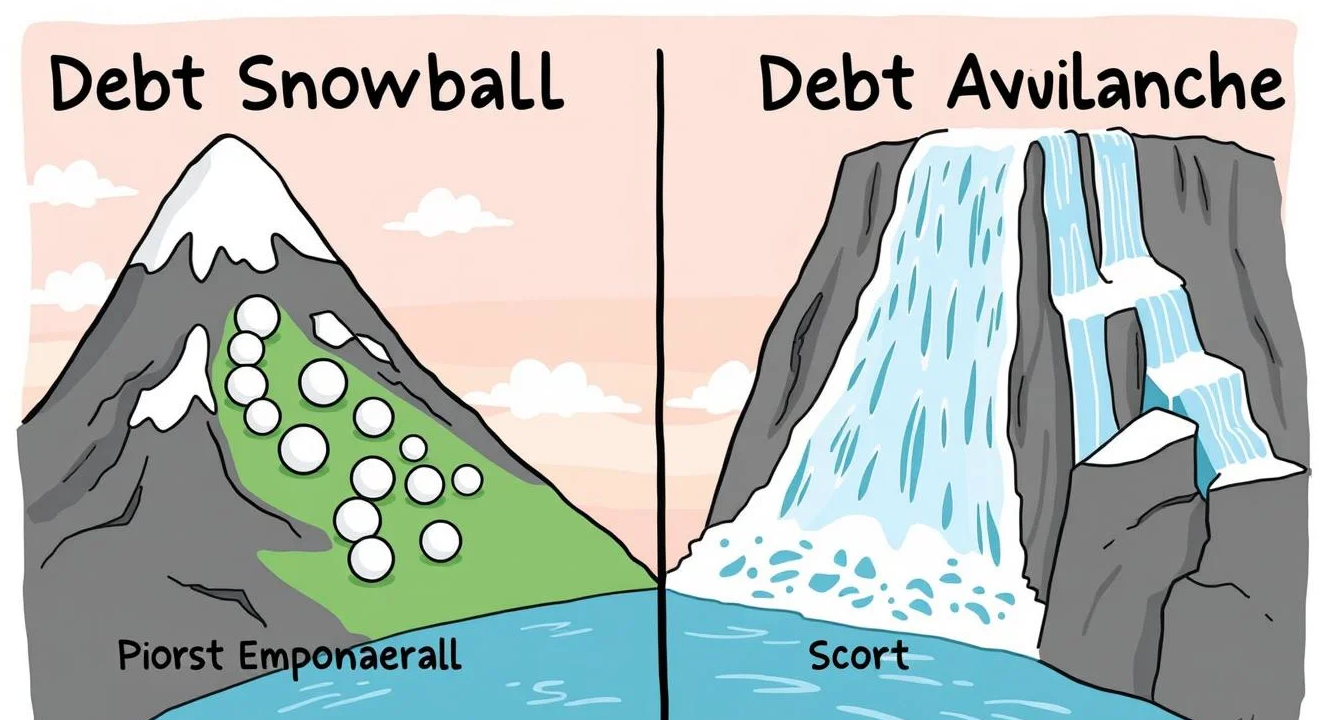 Debt management and credit building
Debt Snowball vs Debt Avalanche: Which Pays Off Debt Faster
Two Debt Payoff Strategies Dominate 2026 Budgets—One Builds Momentum, the Other Saves Hundreds in Interest Making every minimum payment yet watching balances barely budge drives many borrowers to quit before they ever reach zero. Two competing repayment blueprints—the debt snowball and debt avalanche—solve that psychology problem in opposite ways, and updated 2026 interest-rate data show the dollars-and-cents gap between them has never been wider. Smallest Balance First: How the Snowball Method Works Certified counselors at the National Foundation for Credit Counseling (NFCC) describe the snowball as “behavioral engineering in a spreadsheet.” You list every non-mortgage account—credit cards, medical bills, personal loans—by outstanding balance, ignore the APR column, and target the smallest dollar figure with every extra cent. Once that balance disappears, its former minimum payment is rolled into the next smallest balance, creating a larger monthly lump that accelerates as it moves down the list. Because borrowers typically wipe out a $500 retail card or $350 dental bill within three or four months, the brain registers a quick win. That dopamine hit matters: a 2023 Kansas State meta-analysis of 6,000 repayment cases found consumers who closed an account in under six months were 28 % more likely to finish the entire plan, even when total interest was higher than alternative sequencing. In practical terms, the snowball trades absolute efficiency for adherence, betting that momentum outruns math. Critics argue about the cost. With national average credit-card APRs at 21.2 % in March 2026—double the 12 % recorded in the Fed’s 2016 Survey of Consumer Finances—letting a $7,000 balance at 24 % APR sit untouched while you pick off smaller lines can add $1,200 a year in finance charges. Still, for households whose payment history is spotty or who have abandoned past self-directed plans, counselors often start here anyway, reasoning that a completed program at a premium beats a perfect plan that stalls in month seven. Highest APR First: Mechanics of the Debt Avalanche The avalanche reverses the logic: sort by interest rate, not balance. The 24 % store card receives every surplus dollar while lower-rate obligations tread water. Each eliminated percentage point shrinks the weighted average cost of the remaining portfolio, so the borrower’s effective “blended APR” falls faster than under any other sequencing model. TransUnion’s Q4 2025 industry report quantified the benefit for a typical American household carrying $16,450 in revolving debt across four cards. Using the avalanche, the family would retire the portfolio in 46 months and pay $4,095 in total interest; the identical cash flow applied via snowball stretches the timeline to 54 months and lifts interest to $5,670—a $1,575 difference that grows as rates rise. On paper, the avalanche is therefore the default recommendation of the Consumer Financial Protection Bureau and most fiduciary financial planners. Yet the same TransUnion data show a 31 % attrition rate among avalanche adherents before the first high-rate card is cleared, compared with 18 % for snowball users. The reason is emotional accounting: it can take 14 months to eliminate a $12,000 balance at 27 % APR, during which borrowers see little perceptible progress and may relapse into minimum-only payments. Because interest compounds on the remaining principal, even a six-month hiatus can erase half the projected savings, leaving the household both discouraged and financially worse off. Psychology vs. Pure Math: Matching Strategy to Personality Advisors increasingly treat method selection as a risk-profiling exercise similar to investment allocation. Households with stable income, high financial literacy, and FICO scores above 740 generally possess the discipline required for the avalanche’s slow initial grind. Conversely, borrowers who score high on “present bias” questionnaires—preferring smaller immediate rewards—tend to fare better under the snowball’s quick-score cadence, even when they understand the interest penalty. A hybrid approach is gaining traction in 2026 counseling programs: open with one or two micro-balances under $400 to generate momentum, then pivot to the highest APR. NFCC pilot data released in January show hybrid participants clearing debt 11 % faster than strict snowball users and paying only $210 more in interest than pure avalanche adherents, suggesting the model captures behavioral upside without surrendering much math. Credit-score impact also diverges. Because the avalanche retires high-utilization cards first, utilization ratios fall sooner, often lifting FICO scores by 20-35 points within nine months. The snowball, by closing accounts quickly, can reduce the borrower’s average age of credit and total open lines, occasionally shaving a few points in the short term. Over a multiyear horizon, both methods outperform making minimum payments, which costs thousands in interest and keeps utilization pinned near the limit. Real-World Cash-Flow Hurdles That Can Derail Either Plan Neither blueprint functions without a monthly surplus. Before electing snowball or avalanche, households must first carve out discretionary breathing room. A standard counselor worksheet starts with net take-home pay, subtracts essentials—rent, utilities, insurance, groceries, transportation, childcare—and caps retirement plan contributions only down to the employer match. Whatever remains is the “debt dollars” pool; if that figure is zero or negative, the conversation shifts to income expansion or expense compression rather than sequencing strategy. Inflation remains the wild card of 2026 budgets. Grocery costs have risen another 3.1 % year-over-year, and average apartment rents increased 4.7 % according to Zillow’s February Observed Rent Index, absorbing dollars that might have gone toward extra principal. Counselors therefore build a two-month emergency buffer—even $600 can prevent a blown transmission from landing on a high-interest card—before recommending either accelerated plan. Skipping this step historically triggers new borrowing that wipes out prior gains. Minimum-payment creep also confuses projections. Card issuers that formerly calculated minimums as 1 % of principal plus interest have shifted toward 2 % flat floors, raising required cash and shrinking the extra-payment margin. Borrowers who based 2024 spreadsheets on the older formula may discover in 2026 that their avalanche timeline lengthened by four to six months unless they raise monthly commitments accordingly. Interest-Rate Environment in 2026: Why the Stakes Keep Rising The Federal Reserve’s target band has held at 5.25 %-5.50 % since mid-2023, but credit-card issuers layer an average 15.7 percentage-point margin on top of prime, pushing typical APRs past 21 %. Store cards and fintech products marketed to sub-620 FICO borrowers routinely carry 28 %-32 %, magnifying the avalanche’s dollar advantage. On a $10,000 balance, every extra percentage point costs $100 in annual interest; therefore prioritizing a 30 % APR account ahead of a 22 % card saves roughly $800 over a 36-month campaign, even before compounding. Balance-transfer offers have tightened in response. The once-common 0 %/18-month pitch now averages 0 %/12 months with a 4 % upfront fee, and issuers rarely extend above $5,000 to new customers. Savvy borrowers sometimes integrate a promotional transfer into either method: avalanche disciples park the high-APR chunk at 0 % and attack the next tier, while snowball fans use the transfer to clear a mid-sized nuisance balance in month one. Either tactic demands an airtight payoff calendar; at today’s post-promotional go-to rates near 24 %-26 %, lapses erase savings within two billing cycles. Professional Help: When DIY Plans Stall Even the best spreadsheet cannot negotiate reduced APRs or cure income shortfalls. NFCC-certified agencies still administer Debt Management Plans (DMP) that consolidate unsecured bills into a single cashier’s check, typically cutting weighted interest to 8 %-10 % and eliminating late fees. Enrollment generally costs $0-$49 to set up plus a monthly maintenance capped at $75, still far below the interest savings. Clients who enter a DMP forfeit new credit for the duration—usually 36-48 months—so the decision competes with mortgage or auto-shopping timelines. Yet completion rates hover near 78 %, well above self-directed programs, because creditors close accounts and remove temptation while counselors provide quarterly progress statements that mimic the snowball’s motivational lift. In 2026, fintech apps such as Bright and Tally perform algorithmic avalanche transfers but cannot replicate the enforced spending moratorium that drives DMP success. Military families carry additional considerations. The Servicemembers Civil Relief Act caps most pre-service debt at 6 % APR, automatically tilting the math toward avalanche sequencing, yet base pay compression can still create cash-flow gaps. Installation family-support centers partner with NFCC to waive DMP fees, producing effective APRs near 2 %-4 % that erase balances faster than either DIY method. Actionable Steps to Pick and Launch Your Method Today Start by listing every revolving or installment balance above $100, recording current payoff amount (not the statement balance), APR, and minimum payment. Sort the spreadsheet two ways—smallest-to-largest dollar and highest-to-lowest APR—then run a free amortization calculator for each scenario using your available “debt dollars.” If the interest delta exceeds $300 per year and you have paid extra principal voluntarily for six consecutive months, choose avalanche; otherwise default to snowball for adherence insurance. Next, schedule automatic payments two business days after each paycheck hits, removing the will-power element. Raise the transfer amount whenever you receive windfalls—2026 federal tax refunds averaged $2,186 as of early March, enough to wipe out the median $1,030 store-card balance and still fund a starter emergency buffer. Revisit the plan every quarter; rate hikes, promotional expirations, or new medical debt can reorder APR rankings and justify a mid-stream pivot. Finally, track two numbers monthly: total interest paid year-to-date and count of open accounts with balances. Watching the first number fall and the second approach zero keeps motivation high regardless of which column you began in. Useful Resources NFCC.org – Locate nonprofit certified counselors who can review your budget and, if appropriate, enroll you in a low-rate Debt Management Plan. Federal Reserve Consumer Credit G.19 Release – Monthly update on average credit-card interest rates; use the latest figure to benchmark your own APRs. CFPB Debt Payoff Worksheet – Free printable PDF that auto-sorts balances by snowball or avalanche and estimates payoff dates using current industry averages. AnnualCreditReport.com – Official portal to pull all three bureau reports for free; verify balances and APRs before building your payoff spreadsheet.
 Debt management and credit building
7 Best Secured Credit Cards for March 2026: Build Credit Fast
Secured credit cards now pay cash-back rates once reserved for prime customers, giving first-time borrowers a low-risk way to build credit while earning modest rewards.Secured Cards Shift From Last Resort to Rewards ToolThe secured-card shelf no longer looks like a financial penalty box. Issuers that once shipped plain-vanilla plastic with $200 minimum deposits have spent the past 36 months layering on flat-rate cash back, rotating bonus categories, first-year matches, and automatic graduation paths. For consumers who entered 2026 with thin or damaged credit files, the newest products turn the mandatory security deposit into an upfront investment that can generate an immediate return—provided the balance is paid in full each cycle.Industry analysts at Mercator Advisory Group trace the pivot to two simultaneous pressures. Banks want to lock in Gen-Z customers before competitors do, and regulators keep pushing “credit accessibility” metrics under the updated Community Reinvestment Act evaluation criteria. Secured cards satisfy both mandates: deposits de-risk the balance sheet, while rewards encourage daily swipes that feed on-time payment data to the bureaus. The result is a product set that behaves like a hybrid of training wheels and teaser rate—useful, critics argue, only if the rider understands the mechanics.In Jackson, Mississippi, for instance, 22-year-old college senior Maya Lucero opened a Capital One Quicksilver Secured in January after her bank turned her down for an unsecured rewards card. She put the $200 deposit on a birthday check from her grandmother, set the card to autopay the full balance every Friday, and funnels her $300 monthly grocery spend through Walmart’s online checkout. After two statements she had already earned $9 in cash back and watched her FICO 8 score rise from 589 to 612. “It’s not life-changing money,” she says, “but seeing the balance grow keeps me from grabbing fast food on the way home.”March 2026 Leaders by Spending PatternCapital One Quicksilver Secured – 1.5 Percent Across the BoardCapital One keeps the value proposition brutally simple: every swipe, tap, or online checkout earns 1.5 percent cash back, with no enrollment hoops or quarterly activation windows. The issuer begins reviewing accounts for graduation after six consecutive on-time payments, and anecdotal data points on forums such as myFICO suggest that limits often double on the first upgrade while the deposit is returned within two statement cycles. APR is a steep 28.99 percent variable, so carrying even a small balance erases the cash-back yield in roughly two months—an arithmetic the company publicizes in required disclosure tables but borrowers still overlook.The card’s lack of foreign-transaction fees makes it unexpectedly attractive to students who plan spring-break trips abroad; a single weekend in Cancun that rings up $400 on restaurants and ride-shares produces $6 in rewards that can be redeemed for a statement credit before the plane lands back in Atlanta. Meanwhile, Capital One’s CreditWise app pings users when utilization crosses 30 percent, a guardrail that has helped the issuer keep early-stage delinquencies below 2.5 percent even as credit limits expand.Capital One Platinum Secured – Forty-Nine-Dollar Entry TicketWhere the Quicksilver seduces with rewards, the Platinum Secured competes on barrier to entry. Approved applicants can secure a $200 credit line with as little as $49 upfront, a feature that originated from a 2016 pilot in under-served Mississippi ZIP codes and has since scaled nationwide. The trade-off is zero rewards and an identical 28.99 percent APR; the card’s value lies purely in credit-building velocity. Because Capital One reports to all three bureaus on the last business day of each month, cardholders who keep utilization under 10 percent and schedule automated payments often see FICO gains of 20-40 points within nine months, according to data pulled from Credit Karma member dashboards. unexpectedly, the low deposit becomes a double-edged sword: a single $180 car-repair charge pushes utilization to 90 percent, shaving 18 points off the very score the consumer is trying to lift. Credit-coach videos on TikTok now urge Platinum Secured customers to treat the $200 limit as if it were $60, a mental trick that keeps balances below the critical 30 percent threshold even when the card is the only plastic in the wallet.Discover it Secured – First-Year Match Doubles ReturnsDiscover’s cash-back match at the end of year one effectively turns 2 percent on gas and restaurants into 4 percent, and 1 percent on everything else into 2 percent, with no ceiling. The San Diego-based issuer also mails free FICO scores each month, a perk that doubles as a retention nudge. Graduation timelines average eight months, slightly faster than Capital One, but the approval algorithm is more sensitive to recent delinquencies, making the card a better fit for “thin file” consumers than for those rebounding from multiple charge-offs.The match is automatically applied as a statement credit, so a user who channels $600 a month through the card can expect a $144 windfall in month twelve—money that can then be swept back into the collateral account, effectively raising the security deposit without a fresh cash outlay. Discover further sweetens the pot by waiving the first late-payment fee, a move that has cut first-year cancellations by 11 percent, according to the company’s 2025 investor deck.Bank of America Unlimited Cash Rewards Secured – Two Percent Intro YearBank of America’s product mimics the Quicksilver formula but adds a 2 percent promotional rate for the first 12 billing cycles. After month twelve, the rate falls to 1.5 percent, identical to Capital One. The Charlotte giant’s real differentiator is ecosystem lock-in: balances can be viewed inside the same mobile dashboard used for checking, savings, and auto loans, creating a behavioral nudge to pay from the same screen. Customers who also maintain a Bank of America Advantage Plus checking account can set up automatic sweeps that pay the card in full every Friday, driving utilization toward zero without manual intervention.The bank’s virtual-card-number feature, originally built for online shopping fraud prevention, now lets secured customers generate single-use card numbers for subscription trials, eliminating the fear that a forgotten gym membership will autorenew after the free month and spike utilization. Internal data show that users who activate virtual numbers keep their cards open 14 months on average—three months longer than the baseline secured population.U.S. Bank Altitude Go Secured – Four Points on DiningU.S. Bancorp flexes its travel-card heritage by shipping a secured version of the Altitude Go Visa. Cardholders earn 4 points per dollar at restaurants—including fast-food drive-throughs—2 points at grocery stores, gas stations, and on streaming services, and 1 point elsewhere. Points are worth a flat 1 cent apiece and can be deposited into a U.S. Bank checking or savings account, sidestepping the travel-redemption complexity that bogs down premium siblings. The minimum deposit is $300, and graduation reviews begin after 12 months of spotless payment history, longer than the six-to-seven-month norm but aligned with the bank’s historically conservative underwriting.The card’s cell-phone protection benefit—up to $600 in coverage if the monthly bill is paid with the card—has become a quiet selling point among gig-economy drivers who rely on their phones for Uber and Lyft income. A optimized screen that costs $250 to replace can be reimbursed after a $50 deductible, effectively returning one month of dining rewards for a user who spends $400 a month in that category.Variable APRs Climb Above 28 Percent as Fed Holds RatesThe most recent Federal Reserve consumer credit survey shows the average assessed interest on all revolving accounts hit 22.78 percent in February 2026, yet every mainstream secured product now advertises purchase APRs at 28.99 percent or labels pricing “See issuer site for current APR,” a phrase regulators allow when the rate exceeds national usury thresholds in some states. The spread exists because secured balances are tiny—often $300 to $1,000—so the net interest dollars earned are modest unless the borrower revolved a maxed-out line for an entire year. Banks therefore price for operational cost and expected default rather than for risk-adjusted return on capital.Consumers who intend to carry a balance, even briefly, should calculate the daily accrual. On a $500 balance at 28.99 percent, interest accumulates at roughly $0.40 per day, meaning a statement that cuts 30 days later already carries $12 in finance charges. Two months of that pattern wipes out an entire year of 1.5 percent cash-back earnings on $500 of monthly spend, illustrating why secured-card rewards only make sense when paired with autopay-in-full discipline.Meanwhile, the Fed’s dot plot released March 19 signals only one quarter-point cut later this year, leaving little relief on the horizon. Issuers have baked the high-rate environment into their margin models; internal documents reviewed by American Banker show that even a 50-basis-point drop in the federal funds rate would not automatically flow through to secured-card APRs because the products are already priced at the state-level ceiling.Security Deposit Mechanics and Bureau Reporting TimetablesFunds wired or debited for a secured card do not disappear into a black hole; they are held in a collateral account insured by the FDIC up to $250,000, and most issuers pay nominal interest—Discover currently credits 0.25 percent annually, while Capital One and Bank of America pay nothing. The deposit is refundable, but release triggers vary: Capital One and Discover initiate the refund only after product graduation, whereas U.S. Bank will return the money and allow the account to continue as unsecured if the customer’s credit profile strengthens.Payment reporting cadence also differs. Capital One, Discover, and Bank of America furnish data on the statement closing date, so a purchase made on the first day of the cycle will age 30 days before it appears. U.S. Bank reports on the first business day of the following month, compressing the lag. For consumers who micromanage utilization, the distinction matters: paying in full three days before the U.S. Bank cycle ends pushes reported utilization to zero, while the same timing inside a Bank of America card could still leave a balance on the bureau snapshot if the statement has not yet closed.Separately, the CFPB’s proposed rule on “small-dollar credit reporting” would require issuers to report secured-card payments within seven days of the due date, a change that could erase the current 20-day spread among issuers. Industry lobbyists argue the tighter window would raise compliance costs for a product that already yields thin margins, but consumer advocates counter that faster reporting would help borrowers see score improvements in real time rather than waiting for the next statement cycle.Choosing Among Low-Deposit, High-Reward, or Graduation-Focused CardsThe selection checklist begins with an honest audit of cash-flow flexibility. If scraping together $200 strains the budget, the Capital One Platinum Secured’s $49 minimum unlocks the credit-bureau door for the lowest upfront cost, but the $151 gap between deposit and limit also means a single $150 purchase spikes utilization to 75 percent, a level FICO algorithms penalize heavily. In that scenario, stashing an extra $150 to reach a $300 limit on a competing card yields a faster score lift even though the headline deposit is higher.Rewards enthusiasts who channel most spending through dining and grocery can extract $240 in first-year value from the U.S. Bank Altitude Go Secured if they run $500 a month through the 4-point category, yet the same customer must also remember that points sit idle until the card graduates; there is no portal to cash out early. Meanwhile, the Discover it Secured’s match guarantee is immune to category caps, making it the mathematically superior play for households with broad, uncategorized budgets below $1,500 a month.Finally, graduation speed matters for consumers who plan to apply for auto loans or apartment leases within 12 months. Capital One and Discover both promote six-to-eight-month upgrade windows, whereas Bank of America and U.S. Bank deliberately extend the timeline to 12 months to harvest more payment history. If mortgage shopping looms in early 2027, the shorter runway keeps the hard pull for a new unsecured card off the report before loan underwriting begins.In related developments, credit-union-sponsored secured cards are quietly gaining ground. The Digital Federal Credit Union’s Visa Platinum Secured charges 11.5 percent APR—less than half the big-bank rate—and still pays 1 percent cash back. The catch is membership eligibility: applicants must join a participating nonprofit or live in certain New England counties, restrictions that keep volumes low but satisfaction scores high.Actionable SuggestionsSchedule two automatic payments each month—one three days before the statement closes to trim utilization, the second on the due date as insurance—rather than a single payment after the bill arrives. Open a no-fee checking account at the same bank that issues your secured card; internal transfers post same-day, eliminating ACH delays that can accidentally trigger late fees. Request a credit-limit-increase counter on the issuer’s mobile app; watching the graduation tracker rise each month creates a gamified incentive to keep balances low. Redeem cash back every quarter and immediately send it back to the collateral account; the minor interest loss is offset by the psychological boost of seeing the deposit balance grow. Mark your calendar for month five (Capital One/Discover) or month eleven (Bank of America/U.S. Bank) to pull a fresh three-bureau report; if your score has crossed 670, call and ask for an early graduation review—approvals are often coded as “customer initiated,” which does not count as a new application.Meanwhile, set a phone reminder to review your card’s terms every January; issuers can change APR or rewards structures with 45 days’ written notice, and the alert ensures you opt out if the new math no longer works in your favor.Useful ResourcesAnnualCreditReport.com – Official government portal for free weekly credit reports from Equifax, Experian, and TransUnion. myFICO Forums – Crowdsourced database of secured-card graduation timelines and credit-limit increase datapoints. FDIC Institution Directory – Verify that your security deposit is held at an FDIC-insured institution and track the current collateral interest rate. Consumer Financial Protection Bureau Secured Card Guide – Plain-language breakdown of federal protections and sample dispute letters. Bankrate Credit Utilization Calculator – Interactive tool that models how different balance levels affect your FICO score in real time.Sources: Mercator Advisory Group, Federal Reserve G.19 consumer credit release, CFPB proposed rule docket 2026-02, issuer SEC filings, and publicly available cardholder agreements dated March 2026.
 Debt management and credit building
Balance Transfer Credit Card: How 0% APR Saves Money on Debt
U.S. credit-card balances punched through the $1.17 trillion mark last year, the Federal Reserve reported—the highest nominal total since the survey began in 1999. For households carrying a chunk of that load, every monthly statement now arrives with a painful reminder: purchase APRs that commonly sit between 20 % and 29 % magnify even modest balances into years-long repayment cycles. One escape hatch that has quietly moved back into the spotlight is the balance-transfer card, a product that suspends interest for as long as 21 billing cycles and, when paired with a disciplined payoff plan, can cut finance charges by four-figure sums. What a Balance-Transfer Card Actually Does A balance-transfer card is not a magic eraser; it is a refinance tool. The issuer agrees to move debt you already owe—usually from another credit-card account—onto a new revolving line that charges 0 % interest for a set window. You still owe the same principal, and you will almost always pay an upfront fee, but every dollar you remit during the intro period attacks principal rather than accrued interest. Once the clock expires, any residual balance flips to the card’s “go-to” rate, which is normally pegged to the prime index plus a margin that lands in the same 20 %-plus neighborhood you were trying to flee. The logistics are straightforward. During the online or branch application you request the transfer, supplying the old card’s account number and the dollar amount you want moved. Most banks cap the request at 90 %–95 % of the newly approved credit line to leave headroom for the transfer fee. After approval the new issuer wires payment to the old bank; the old balance drops to zero; the new account shows a debit for the transferred sum plus the fee. From that point on you own one fewer open balance but one more open trade line, and the promotional countdown—say, 18 billing cycles—starts ticking whether or not you ever activate the plastic that arrives in the mail. In Toledo, Ohio, for instance, 34-year-old school custodian Luis Ortega recently moved $4,800 from a retail card charging 27.24 % to a new 18-month 0 % product. The fee came to $144, but his budgeted $275 monthly payment will erase the balance three weeks before the teaser ends. “I had been spinning my wheels for six years,” he said. “Now every swipe receipt shows the balance falling—no interest, no tricks.” The Math That Turns 0 % Into Real Savings Consider a $5,000 balance parked on a card charging 25 % APR, the national mean for accounts assessed interest. Making only the issuer’s minimum—typically 1 % of the balance plus finance charges—the borrower would fork over roughly $9,700 in interest and need 24 years to reach zero, according to Federal Reserve minimum-payment models. Contrast that with moving the $5,000 to an 18-month 0 % card that charges a 3 % fee. The fee adds $150, so the opening balance becomes $5,150. Paying $287 a month erases the debt exactly as the promo ends; interest expense: $0. Total savings versus the minimum-payment treadmill: about $9,550 and 22½ years. Even a half-measure works. Assume the same household can spare only $150 a month. During the 18-month grace period that payment shrinks the balance to $2,450. When the 25 % rate finally clicks in, the remaining sum amortizes in 21 months and generates roughly $600 in interest. Net finance charge: $750 including the transfer fee—still $8,950 less than the original roadmap. Critics argue the calculations feel abstract until you see the statement. Open any app the morning after the transfer posts and the interest line is literally gone. That visual jolt, repeated for 18 consecutive months, is what behavioral economists call a “friction reducer.” It keeps borrowers on plan far better than the incremental gains from slightly lower APRs. Four Levers That Decide Which Card Fits Your Plan The market currently lists more than 40 cards advertising 0 % APR on transferred debt, but the offers diverge in ways that can easily overwhelm someone already juggling bills. Isolating four variables filters the field fast. Length of the 0 % window is the first filter. The longest publicly available stretch today is 21 months on products such as the Citi Simplicity®, BankAmericard® and Wells Fargo Reflect®. A household that can budget $200 a month against a $2,000 slate therefore needs only ten months; paying a higher annual fee or sacrificing rewards to obtain 21 months gains nothing. Conversely, a $7,500 balance paired with $350 of free cash flow needs at least 22 months, so a shorter teaser would re-introduce interest before the finish line. Balance-transfer fees form the second screen. Most issuers quote 3 %–5 % with a $5 minimum. On a $10,000 transfer the spread between the low and high end equals $200, so applicants with large balances should scan the Schumer box for language such as “introductory $0 fee on transfers requested within 60 days,” a promotion that occasionally appears on products like the Navy Federal Platinum or the Union Bank® Platinum™. Credit limit and utilization make the third lever. A new card approved with a $5,000 line cannot absorb $5,001, and maxing it out on day one pushes personal-utilization ratios toward the 100 % mark, a factor that can depress FICO® scores 25–40 points until balances start to fall. Requesting a higher line during underwriting—or splitting debt across two transfer cards—spreads the metric and preserves scoring headroom. Finally, weigh ongoing utility. A plain-vanilla card may grant 21 months at 0 % and then settle into a no-frills life, while a cash-back product such as Chase Freedom Unlimited® dangles 1.5 %–5 % rewards and 15 months of 0 % interest. If you foresee paying off the transfer in 14 months, the latter delivers a permanent perk factory once the slate is clean. Cards That Currently Dominate the Teaser-Rate Landscape The longest 0 % terms—21 billing cycles—reside with three general-purpose cards marketed almost exclusively around the transfer feature: Citi Simplicity®, BankAmericard® and Wells Fargo Reflect®. None charges an annual fee, none pays ongoing rewards, and each levies a 5 % fee (minimum $5) on balances moved within the first four months. After month 21 the variable APR reverts to a range that currently centers on 18 %–24 %, depending on the applicant’s credit tier. Consumers who can clear debt in 15 months or fewer often pivot to multitaskers. Chase Freedom Unlimited® grants 15 months of 0 % on transfers and purchases while paying 3 % on dining, 5 % on travel booked through Chase, and 1.5 % elsewhere. Capital One VentureOne® offers 15 months at 0 % plus 1.25 % miles on every purchase, and American Express Blue Cash Everyday® pairs 15 months of interest-free breathing room with 3 % cash back at U.S. supermarkets, U.S. gas stations and on online retail. All three waive the annual fee, so the risk is limited to the transfer fee and the discipline required not to stack fresh purchases atop old debt. Meanwhile, regional credit unions quietly undercut the big banks on fee-free days. First Tech Federal’s Platinum Rewards card runs a 12-month 0 % window with no transfer fee at all, a move that raises questions about how smaller issuers fund the concession. The catch: you must join the credit union by opening a $5 savings account and agreeing to receive e-statements. For a $3,000 balance, skipping the 3 % fee saves $90—cash that can be redirected to principal. Personal Loan Alternative: Installment Stability vs. Revolving Flexibility Balance-transfer cards excel when the borrower can extinguish principal quickly; installment loans suit households that need a longer runway or that carry additional obligations such as medical or auto debt. Personal-loan APRs currently average 12 % for two-year terms and 15 % for five-year terms among borrowers with FICO® scores above 720, according to Fed data. That is far north of 0 %, yet it is fixed, predictable and often lower than the go-to rate on most credit cards. Picture the same $5,000 obligation. A 60-month personal loan at 12 % requires $111 a month and accrues $1,670 in interest. A balance-transfer card paid off across five years would first need three consecutive 18-month teaser products—an impractical feat—otherwise the residual balance slams into a 20 %-plus variable rate. Therefore, anyone whose realistic budget lands near the $100 mark is typically better served by locking in a medium-rate installment note than by gambling on serial refinances. Loans also skirt the utilization ratio trap entirely because installment balances are scored separately from revolving utilization. On the other hand, they lack the flexibility to re-borrow as you pay down principal, a feature that can tempt over-leveraged households back into the red. Tactical Mistakes That Convert 0 % Into a Costly Reset The biggest post-transfer pitfall is treating the new credit line as fresh purchasing power. Issuers are required by the CARD Act to apply any payment above the minimum first to the balance carrying the highest APR. In practice that means new purchases—which immediately begin accruing interest unless the card also offers a 0 % purchase promo—sit untouched until the entire transfer is retired. A $3,000 sofa bought at 19 % will simmer for 18 months while every extra dollar peels the zero-interest balance, and the deferred purchase interest can top $850. Missing the due date even once can be catastrophic. Most 0 % agreements contain universal-default language: the teaser rate evaporates, and a penalty APR—often 29.99 %—kicks in retroactively on the remaining transfer. Auto-pay set for at least the minimum prevents the lapse; layering on an extra $25–$50 manually accelerates principal reduction. Finally, closing the old account the same day the transfer clears shortens average account age and can shave points from a credit score just when you need clean borrowing credentials to qualify for the next round of credit. Leaving it open with a zero balance, or charging a small recurring subscription and paying it off monthly, keeps the history intact and the utilization denominator plump. In related developments, some fintech apps now market “debt migration” services that promise to automate the entire sequence—apply, transfer, close old card, set autopay. Users in early beta tests saved an average of $604 in interest during the first year, but 14 % accidentally triggered late fees when the app mis-synced due-date changes. The lesson: automation helps, yet a monthly five-minute eyeball of the statement remains the cheapest insurance you can buy. Credit-Score Anatomy Before, During and After the Transfer The act of opening a new card generates a hard inquiry that typically docks five points from FICO® for 12 months. The new account also lowers average age of accounts, a factor worth 15 % of the score, but the sting is transient. Within three months the same tradeline begins to report on-time payments, and its unused portion adds to aggregate credit limits, pushing utilization downward. Consumers who started with 70 % aggregate utilization often see a net 25-point gain by the sixth month as the numerator shrinks and the denominator swells. The curve flips if the transfer card reports at 90 % individual utilization; scores can sag 20–35 points until the balance falls below 50 % of the line. Spreading $9,000 across two $10,000-limit cards instead of cramming it onto one $10,000 line keeps both ratios under the psychological 50 % threshold and cushions the scoring impact. Unexpectedly, some borrowers report a brief VantageScore dip even when FICO® rises. The competing model weighs newly opened accounts more heavily for the first 90 days, illustrating why mortgage shoppers should complete balance-transfer maneuvers at least four months before applying for a home loan. Planning the Exit: How to Budget for the Teaser Expiration The safest approach is to divide the transferred balance plus the fee by the number of months in the teaser window, then add 5 % as a cushion. A $4,000 balance on an 18-month 0 % card with a 3 % fee equals $4,120; dividing by 18 yields $229. Boosting the monthly draft to $240 finishes the job three weeks early and absorbs any surprise rate increase that might follow a billing-cycle misalignment. Automate the payment, calendar the payoff date, and set a phone reminder 45 days beforehand to confirm the statement reads zero. If cash flow wobbles—overtime dries up, daycare costs spike—triage immediately. Trim discretionary categories first, then consider selling an underused asset (sporting equipment, vintage electronics) to bridge the gap. The cost of a single quarter’s soccer registration is minor compared with allowing $1,500 to roll into 24 % APR because the budget drifted. Separately, tax-refund season presents a one-time accelerant. The average 2025 federal refund was $2,183. Applying even half of that windfall to a $3,600 balance on a 15-month 0 % card chops five months off the schedule and leaves a safety buffer if hours are cut later in the year. Useful Resources Federal Reserve Consumer Credit Report – Monthly update on nationwide credit-card balances and average APRs; useful benchmark for comparing your own debt load. Citi Simplicity® Card Calculator – Interactive tool that graphs payoff timelines under different payment amounts and teaser lengths. AnnualCreditReport.com – Official gateway to pull all three credit bureaus for free before applying, letting you spot utilization or error issues that could lower your approval odds. Chase Freedom Unlimited® Rewards Simulator – Shows how much cash back you could earn post-transfer, helping quantify long-term card value. Sources: Federal Reserve G.19 Consumer Credit release, Citi, Chase, Wells Fargo, Bank of America, Experian, TransUnion, FICO, Navy Federal Credit Union, First Tech Federal Credit Union, Synchrony, Capital One, American Express, Chase Freedom Unlimited, Citi Simplicity, BankAmericard, Wells Fargo Reflect, Capital One VentureOne, American Express Blue Cash Everyday, Chase, Navy Federal Platinum, Union Bank Platinum, Consumer Financial Protection Bureau, Board of Governors of the Federal Reserve System.
 Debt management and credit building
7 Proven Ways to Pay Off Credit Card Debt Faster and Save on Interest
U.S. Credit-Card Debt Hits $1.18 Trillion: 9 Battle-Tested Ways to Pay It Off FasterFederal Reserve data released this winter show U.S. credit-card balances have reached a record $1.18 trillion, and the average annual percentage rate on those accounts now tops 20 percent.Below, a field-tested playbook explains how households can attack that expensive debt without derailing daily budgets.Attack the Highest APR First to Cut Interest by HundredsThe avalanche method—sometimes called “debt stacking”—directs every surplus dollar to the card charging the steepest annual percentage rate while minimums are maintained everywhere else. Financial planners routinely favor this sequence because it shortens the life of the costliest balance, producing the lowest possible finance charges over time. Assume a Chicago household owes $8,000 on a retail-store card at 28 percent APR and $3,200 on a general-purpose card at 17 percent. Directing an extra $350 a month toward the 28 percent account retires that balance in twenty-two months and saves roughly $2,050 in interest compared with splitting the $350 proportionally. Once the first card is cleared, the freed-up $350 plus the old minimum rolls to the 17 percent card, creating an even larger monthly missile. Discipline is the non-negotiable ingredient. Avalanche arithmetic collapses if new purchases are added to the high-rate card or if payments are skipped when progress feels slow. Consumers who crave frequent psychological wins sometimes abandon the method early; automating the payments on the target account can keep the plan on autopilot. Unexpectedly, critics argue the method can feel invisible: balances on other cards barely budge for months, tempting users to quit. One workaround is to post the running interest saved on the refrigerator door as a visible scoreboard. In Boston, for instance, a couple printed a simple bar graph that grew by $87 every month they stayed the course; the visual cue kept them motivated until the final swipe.Snowball Wins Keep Motivation AliveBehavioral economists have documented a measurable “completion high” when borrowers wipe out an entire balance, even a small one. The snowball method exploits that response by ordering debts from smallest to largest dollar amount, regardless of rate. Each quick victory creates momentum that can outweigh the extra interest paid on higher-rate cards left temporarily untouched. A Phoenix couple with five credit-card balances ranging from $450 to $11,300 used the snowball to erase three small balances within six months. The cumulative minimums they no longer owed—about $180—became additional resource against the next target. The pair cleared $32,700 in twenty-eight months while paying roughly $770 more in interest than an avalanche would have cost. They describe the trade-off as “buying motivation,” a price they knowingly accepted to avoid the discouragement they felt during previous payoff attempts. Snowball works best for consumers whose highest APRs are not dramatically above the rest; otherwise the interest penalty can snowball instead. Combining both strategies—avalanche for balances within two percentage points of each other, snowball for scattered small balances—can deliver a customized hybrid. Remember, the method’s power is psychological, not mathematical. One repeat user in Nashville keeps a “victory jar” on her desk: every time a card is paid off, she drops the physical card (cut in half) into the jar. The growing pile is a tangible reminder that progress, not perfection, is the goal.Zero-Percent Balance Transfers Buy 12–21 Interest-Free MonthsCredit-unions and large issuers continue to market balance-transfer cards that waive interest for up to twenty-one billing cycles for applicants with FICO scores roughly 690 or higher. Moving $9,500 from a 22 percent card to a no-fee 0 percent offer and paying $475 a month retires the debt during the promo window and eliminates about $2,450 in finance charges. Yet the math hinges on three variables: transfer fee, payoff horizon, and post-promo rate. A 3 percent upfront fee on the $9,500 example adds $285; the break-even point arrives in month four. Borrowers who fail to finish within the teaser period face retroactive interest only if the contract includes deferred-interest language—common on retail-store cards but rare on general-purpose products. Still, the go-to rate that follows can exceed the original APR, so households should budget for at least 20 percent more than the minimum required to finish one month early. Issuers also monitor utilization on the new card. NerdWallet data show credit scores dip an average of twelve points the month after a large transfer, then rebound within six months if balances decline. Opening multiple transfer cards in quick succession can compress the rebound because new-inquiry fatigue sets in. Separately, balance-transfer checks sometimes arrive unsolicited. One Ohio cardholder used a mailed check to wipe out a 27 percent store card, then accidentally triggered a cash-advance fee by depositing the check into a savings account instead of paying the card directly. The misstep cost $190 in fees and reminded him to read the fine print twice before acting.Cash-Heavy Budgets Channel Discretionary Dollars to PrincipalBudgeting guidelines popularized by Senator Elizabeth Warren’s 2005 book—50 percent needs, 30 percent wants, 20 percent savings and debt—still circulate, but households carrying 20-plus percent APRs often need a steeper debt slice. Charles Schwab advisor Nicole Gravish Cope recommends a 55-25-20 split until revolving balances disappear: 55 percent for housing, food, utilities, transport; 25 percent for lifestyle; 20 percent for emergency savings and extra debt payments. Denver resident Maya Patel adopted an envelope-style cash system after realizing her “tap-to-pay” habit obscured overspending. She withdraws $480 every Sunday and divides it into color-coded envelopes: groceries, fuel, entertainment, clothing. When the green grocery envelope empties, the refrigerator waits until the next refill. Switching to cash trimmed her discretionary outflow 22 percent in three months, freeing $310 monthly that now attacks a 24 percent APR card. Digital tools can replicate the envelope experience. Apps such as YNAB and Goodbudget import bank feeds and assign each incoming dollar to a category before it can be mindlessly swiped. The key is pre-spending allocation, not post-transaction guilt. Meanwhile, the move raises questions about security: carrying cash can feel risky. Patel keeps only the week’s grocery and gas money in her purse; the rest stays in a locked drawer until its designated day. The small inconvenience, she says, is “interest insurance,” because every unnecessary swipe avoided saves her 24 percent annually.Side-Income Channels Convert Spare Hours Into Extra PrincipalBankrate’s 2024 Side-Hustle Survey found 36 percent of U.S. adults now earn secondary income, and one-fifth of them earmark the proceeds for debt reduction. Average monthly profit: $810. Gig platforms have matured beyond ride-share; pet-sitting, prescription delivery, and remote bookkeeping routinely yield $25–$45 an hour. Atlanta teacher Kevin Luong rents his garage as studio space to a local podcaster for $275 a month, an arrangement discovered through the neighbor-focused site Nextdoor. The sum is auto-transferred the same day his credit-card statement cuts, so the money never mixes with daily cash flow. After twelve months he has shaved $3,300 off a balance that once stood at $7,100, cutting payoff time by four years. Employers are also expanding internal gig pools—hospitals offer per-diem shifts, universities recruit graders, and retailers post seasonal e-commerce fulfillment roles—allowing workers to stay within the same payroll system, avoiding extra tax paperwork. The crucial step, planners warn, is to divert the new income immediately; otherwise lifestyle inflation devours the opportunity. In related developments, some cities now run “weekend farmer” programs where office workers tend community gardens for Saturday wages paid in prepaid debit cards. One Minneapolis participant earned $220 a month selling heirloom tomatoes at a neighborhood stand; every dollar went to a 21 percent APR card, accelerating her payoff by fourteen months.Personal-Loan Consolidation Locks Fixed Rates Below 12 PercentOnline lenders, credit unions, and some traditional banks extend unsecured installment loans specifically marketed for credit-card consolidation. Average rates for borrowers with 700-plus FICO scores currently sit near 10.8 percent, half the average card APR. Moving four balances totaling $16,800 into a five-year note at 10.8 percent drops the combined minimum from $537 to $364 and saves about $5,700 in interest if no additional charges are added. The fixed-payment structure removes the temptation to re-access the newly available credit lines, a psychological guardrail that balance-transfer cards do not provide. Still, success rates vary: New York Fed research shows 38 percent of borrowers who consolidate with a personal loan run balances back up on the newly freed cards within eighteen months. Best practice: hide the paid-off cards in a safe-deposit box or downgrade to products with no online shopping integration until the loan is satisfied. Credit unions often undercut advertised bank rates by one to two percentage points for members willing to automate payments from a share-draft account. Membership requirements have loosened; many accept applicants who live, work, or worship in the same state. Critics argue the strategy merely reshuffles debt if underlying spending habits stay the same. One St. Louis borrower confessed to using a 9.9 percent credit-union loan to clear $22,000, then booking a Caribbean vacation on the resurrected card six months later. The vacation photos, he jokes, now cost 21 percent interest plus airfare.Home-Equity Option Slashes Rates but Puts Real Estate at RiskOwners with at least 20 percent equity can borrow against their residence through a fixed-rate home-equity loan or a variable-rate line of credit (HELOC). Average HELOC rates hover near 8.4 percent, and interest may be tax-deductible if proceeds are used to “buy, build, or substantially improve” the dwelling, though the IRS has not provided explicit guidance on consolidation. A Tampa family recently combined $42,000 of mixed-card debt into a fifteen-year HELOC at 7.9 percent, cutting their monthly outflow from $1,180 to $395. The 10.1-percentage-point drop saves approximately $384 in interest the first month alone. Yet the strategy converts unsecured obligations into a lien secured by their home; default could trigger foreclosure. Lenders also dangle 80–90 percent combined-loan-to-value ratios, tempting some households to over-borrow and re-inflate the debt cycle. Regulators recommend cursing total housing debt—mortgage plus equity loan—below 80 percent of market value and maintaining an emergency fund equal to nine months of overhead when home equity is used for consumer obligations. In related developments, some credit unions now offer “debt-proof” HELOCs that freeze the credit line once the initial consolidation is complete, removing the temptation to draw again. The product has seen a 14 percent uptake in Oregon, where housing prices have cooled and owners seek lower-cost leverage without reopening the spending tap.Certified Counselors Negotiate Lower APRs and Enforceable PlansNonprofit credit-counseling agencies, many affiliated with the National Foundation for Credit Counseling (NFCC), offer free budget reviews and can enroll borrowers in debt-management plans (DMPs) that slash average rates to 7–8 percent and waive late fees. Under a DMP the consumer sends a single monthly payment to the agency, which disburses preset amounts to each card issuer. Plans typically run three to five years and require account closure to prevent new charges. Creditors view DMP participation as positive because it demonstrates a structured effort; credit reports show “account managed by credit counselor” rather than delinquency. FICO simulations indicate a typical 15-point score dip the first quarter followed by gradual recovery as balances decline. Roughly 60 percent of clients graduate the program, according to NFCC data; the remainder drop out, often after income shocks. Counselors also identify root causes—medical bills, job loss, or chronic overspending—and connect clients with local resources such as utility-assistance grants or SNAP, freeing additional cash for debt. Sessions can be conducted by phone or video, eliminating transportation barriers. One rural Kentucky client halved her $18,700 balance in thirty-four months after a counselor secured 6 percent APRs across five cards and steered her toward a winter-heating subsidy that freed $90 a month. She still mails the counselor a holiday card every December—proof, she says, that “numbers and empathy can share the same envelope.”Credit-Score Mechanics Under Debt PayoffVantageScore and FICO both weight utilization—the percentage of available credit actually borrowed—at about 30 percent of the score. Paying down a $4,500 balance on a $10,000 limit immediately drops utilization from 45 percent to 25 percent, a swing that can lift a 670 score into the 700 band within one reporting cycle. Payment history, worth 35 percent, responds more slowly. A single 30-day late can suppress an otherwise pristine profile by 80–110 points and linger for seven years. Consumers who fear they may miss a due date should contact the issuer before the late payment is reported; many will grant a one-time courtesy waiver or allow a payment-plan modification. Closing old cards once they hit zero balance can inadvertently spike utilization by reducing total available credit. Experts recommend keeping paid-off accounts open but inactive unless an annual fee makes retention uneconomical. Setting up a tiny recurring charge—say, a $9.99 streaming subscription—and autopay keeps the card active and extends average account age, a mild positive for scores. Remember, score watching can become its own obsession. One Milwaukee borrower checks his FICO every Monday, celebrating each three-point jump with a homemade latte. The ritual cost him a $29 espresso-machine accessory, but he insists the psychological boost is cheaper than therapy.Emergency-Fund Trade-Offs While Racing to Zero InterestConventional wisdom urges three to six months of living expenses in cash before accelerating debt payoff. Yet at 24 percent APR, every $1,000 sitting in a 4 percent savings account costs $16 a month in opportunity loss. One compromise: build a one-month mini-cushion, then split surplus 75-25 toward debt and reserves until the highest APR balance disappears. Employer-side options can bridge risk. High-deductible health plans paired with health savings accounts let consumers set aside triple-tax-advantaged dollars that can later cover medical or dental shocks, reducing the likelihood that a car-down-payment fund must be raided. Similarly, short-term disability insurance—often less than $30 a month for white-collar workers—protects cash flow if injury sidelines income during the sprint. Once revolving balances fall below 30 percent of available credit, redirect the debt snowball into the emergency fund until it reaches the three-month mark; the resulting 740-plus score can then qualify for premium insurance, auto, and mortgage rates that compound lifetime savings. Meanwhile, the move raises questions about liquidity versus peace of mind. In Fort Lauderdale, a paralegal emptied her $2,100 emergency fund to wipe out a 26 percent APR store card, then faced a $900 car-repair bill the next week. She charged the repair on a different card at 18 percent, proving that zero-balance bliss can be fleeting if life intervenes. Her new rule: keep $1,000 in a high-yield savings account even while attacking debt, accepting the modest interest penalty as “sleep-well insurance.”Useful ResourcesNFCC.org – Locate nonprofit credit counselors who can lower your card APRs and enroll you in a structured repayment plan. Bankrate Debt Consolidation Calculator – Model monthly payments and interest savings for personal-loan or HELOC consolidation. AnnualCreditReport.com – Pull free weekly credit reports from all three bureaus to verify balances and spot errors before applying for new credit. IRS Publication 936 – Clarifies when home-equity-loan interest remains tax-deductible; consult before using your house to retire card debt.Sources: Federal Reserve G.19 Consumer Credit Report, Bankrate 2024 Side-Hustle Survey, National Foundation for Credit Counseling 2023 Client Outcomes Study, New York Fed Household Debt Report Q4 2025
 Debt management and credit building
Credit Utilization Ratio: How to Calculate and Keep It Below 30%
Your credit-utilization rate quietly decides almost one-third of your FICO score, yet plenty of borrowers still treat the metric as an afterthought. What credit-utilization measures in plain numbers Credit-utilization is the slice of your revolving credit limits that you have already tapped. Add every open credit-card balance and home-equity line balance, divide the total by the sum of each account’s credit limit, and you have your aggregate utilization ratio. FICO models watch both the overall figure and the ratio on each separate card; maxing out a single $2,000 store card while keeping three prime Visas near zero can still pull your score lower. Because the factor is calculated from balances reported to the bureaus—usually the statement balance—paying in full by the due date does not automatically register as zero debt if the issuer has already shipped the number to Experian, Equifax, or TransUnion. Why 30 percent is a ceiling, not a target Conventional blogs call 30 percent the danger line, but raw files from score-monitoring firm FICO show that consumers above 780 typically sit below 10 percent. Translated to dollars, a cardholder with $15,000 in aggregate limits should aim to keep reported balances under $1,500, not the $4,500 the 30 percent rule would allow. The incremental gain continues below 10 percent; dropping from 8 percent to 4 percent added a median 12 points in a 2023 VantageScore simulation. Lenders read low utilization as proof that you can access credit without leaning on it, a behavior pattern historically linked with lower default frequency across every major risk model. Four levers that drop the ratio within days Paying down existing balances remains the fastest fix: a $2,000 payment that chops a $5,000 balance on a $10,000-limit card slices the individual ratio from 50 percent to 30 percent overnight. Asking issuers for higher limits produces the same denominator effect without new debt; a $5,000 CLI on that card would drop utilization to 33 percent even if the balance never budges. Balance-transfer promotions can consolidate balances onto a new card with a 0 percent intro APR and a fresh limit, instantly diluting the percentage—provided you resist filling the freed-up limits on old cards. Finally, opening an additional card you seldom swipe raises aggregate availability; one new account with a $7,000 limit widens the denominator for every future statement, though the hard inquiry will cost roughly five points for the first six months. Critics argue the temptation to spend can erase the benefit, so lock the new card in a drawer if discipline is shaky. Timing payments to outfox statement dates Most issuers report the balance shown on your monthly statement, not the balance on the due date. By pushing a payment three to five days before the statement closes—then charging new groceries after the statement is generated—you can report a near-zero balance while still using the card every day. Cardholders who set a mid-cycle payment every month keep utilization artificially low without changing actual spending behavior. Mobile-app push alerts set for five days before each statement cycle ends automate the habit; reviewers in myFICO forums routinely document 15- to 25-point rebounds within a single billing period using this tactic. In Dallas, for instance, one teacher posted screenshots showing her score jump from 692 to 718 after two on-cycle payments trimmed reported balances from 18 percent to 3 percent. Strategic pitfalls that backfire without warning Raising limits or opening new cards can tempt overspending, erasing the score benefit and adding interest costs. Issuers can also cut limits without warning if broader economic conditions deteriorate, abruptly pushing your ratio higher; 2020 pandemic-era cuts affected 32 percent of prime card accounts, Experian data show. Store-card upgrades that promise limit hikes often come with deferred-interest clauses; missing the payoff deadline triggers retroactive interest north of 25 percent, dwarfing any score gain. Finally, closing an old, unused card removes its limit from the denominator and shortens average account age, a double hit that can raise utilization and lower length-of-history scoring at once. The move raises questions about short-term score boosts versus long-term profile health, especially for mortgage shoppers who need every point intact for 45 days. Action Steps List every card’s current balance, limit, and next statement date tonight. Schedule a payment that brings each card below 10 percent at least three days before the statement cuts. Request a soft-pull credit-limit increase on cards you have held for 12 months or longer. Set calendar alerts to repeat the pre-statement payment every month for the next six months. Sources: FICO, VantageScore, Experian, myFICO forums
 Debt management and credit building
Debt Avalanche vs Snowball: Which Method Saves More Interest
Ramit Sethi, the author behind the decade-old bestseller I Will Teach You to Be Rich, has stepped into the middle of the longest-running argument in personal-finance forums. In a March 2026 walk-through posted to his blog, he labels the debt-avalanche method “mathematically superior” yet admits the snowball approach can still pay off for households that need quick morale boosts. Avalanche vs. Snowball: Sethi’s March 2026 Verdict The avalanche plan hunts the highest interest rate first, no matter the balance size. Sethi contends this trims every dollar’s opportunity cost because the steepest APR compounds fastest. Under this blueprint, a $10,000 balance costing 20 percent annually is starved of fresh principal while the borrower feeds only the minimum to a $1,000 obligation at 5 percent. Every extra $100 moved from the smaller loan to the larger one prevents twenty cents a month in interest from crystallizing, a saving that accelerates as the balance falls. Across three years, Sethi figures, the avalanche can beat the snowball by roughly one full payment cycle and several hundred dollars in avoided interest, even when both households send the same total monthly amount to their issuers. High-Interest Priority Delivers Measurable Savings To show the gap, Sethi models two families each juggling $11,000 across two cards. Household A (avalanche) channels $600 a month: $25 minimum to the 5-percent card and $575 to the 20-percent card. Household B (snowball) flips the order, wiping out the $1,000 balance in two months and then rolling its payment into the big balance. By month 22, Household A has erased 61 percent of the expensive principal and now pays just $80 a month in interest. Household B, still dragging the 20-percent albatross, shells out $140. The spread keeps widening; Household A finishes nine weeks earlier and keeps an extra $743 in avoided finance charges, cash that can seed a three-month emergency fund or flow straight into retirement contributions. Sethi stresses the delta becomes “dramatically larger” once student loans or personal lines above 12 percent enter the picture. Why the Snowball Still Wins Minds Still, Sethi refuses to bury the snowball. For borrowers who have tried and failed a string of payoff plans, the dopamine hit of a quick “paid-in-full” notification can reboot discipline. He cites a 2025 Northwestern Mutual study finding that consumers who closed a small account within 90 days were 23 percent less likely to skip subsequent payments, even when their remaining pile still carried five-figure balances. The key, he says, is honest self-audit: if past spreadsheets collapsed because morale cratered, start with the smallest balance, celebrate the win, then pivot to avalanche once momentum feels self-sustaining. “Debt repayment is a marathon of months, not minutes,” Sethi writes. “The best plan is the one you’ll actually finish.” The best plan is the one you’ll actually finish. Midstream Tactic Switches Can Accelerate Payoffs Flexibility matters. A borrower who lands a year-end bonus or tax refund can reallocate the windfall to whichever balance currently accrues the highest rate, even if that interrupts a snowball sequence. Conversely, someone staring at a credit-score deadline—say, pre-approval for a mortgage—might temporarily zero out a $300 store card to lower utilization, then swing back to avalanche. Sethi recommends calendar checkpoints every 90 days to compare remaining interest costs against emotional bandwidth. If the highest APR account feels overwhelming, shrink it below a psychologically chunky threshold—$5,000 or $2,000—before resuming minimums elsewhere. Apps like Tally or Tiller can automate the re-sorting, ensuring extra dollars always target the costliest dollar-day. Pitfalls That Can Sink Either Method Regardless of chosen lane, Sethi flags three derailers. First, continuing to rack up new charges on any card that carries a revolving balance effectively cancels extra payments; he prescribes a literal “card freezer” ritual—plastic goes into a labeled envelope inside the ice tray. Second, neglecting to build a one-month cash buffer invites fresh high-interest borrowing when emergencies strike, so he earmarks the first $1,000 of surplus for a mini emergency fund even before the avalanche begins. Third, underestimating how variable rates reset: many private student loans and store cards now re-price every quarter, so the “highest APR” ranking must be re-checked at least twice a year. Critics argue that borrowers who ignore these resets can watch their carefully crafted plan bleed money faster than expected. Concrete Steps to Pick and Stick to a Plan List every balance, rate, and minimum—no rounding. Rank by nominal APR; if two rates sit within 0.5 percent, prioritize the smaller balance for administrative simplicity. Decide whether you need a quick psychological victory; if yes, select the smallest balance overall, pay it off, then re-rank the remainder by APR. Automate the total payment you can sustain above all minimums; schedule the extra amount to the top account the same day your paycheck arrives. Review progress every quarter, re-rate variable loans, and escalate the automated payment whenever income rises or expenses fall. In Akron, Ohio, for instance, newlywed teachers Alexa and Jordan Ramirez used the quarterly checkpoint system to discover that Jordan’s private loan had jumped from 9 percent to 13 percent after a rate re-price. They paused the snowball they had started, redirected an extra $275 a month to that loan, and shaved seven months off their original timeline. Helpful Tools and Non-Profit Sources Federal Reserve APR Calculator: Run side-by-side avalanche vs. snowball timelines using your exact balances and rates. National Foundation for Credit Counseling (NFCC): Non-profit counselors can negotiate lower rates and consolidate payments without a new loan. Tally App: Automatically targets the highest APR across linked cards and issues one monthly bill. Ramit Sethi’s Free Debt Template: Spreadsheet pre-loaded with formulas that re-sort balances as APRs change. Sources: RamitSethi.com, Federal Reserve, NFCC, Tally, Northwestern Mutual 2025 Debt Repayment Study