


Secured credit cards now pay cash-back rates once reserved for prime customers, giving first-time borrowers a low-risk way to build credit while earning modest rewards.
Secured Cards Shift From Last Resort to Rewards Tool
The secured-card shelf no longer looks like a financial penalty box. Issuers that once shipped plain-vanilla plastic with $200 minimum deposits have spent the past 36 months layering on flat-rate cash back, rotating bonus categories, first-year matches, and automatic graduation paths. For consumers who entered 2026 with thin or damaged credit files, the newest products turn the mandatory security deposit into an upfront investment that can generate an immediate return—provided the balance is paid in full each cycle.
Industry analysts at Mercator Advisory Group trace the pivot to two simultaneous pressures. Banks want to lock in Gen-Z customers before competitors do, and regulators keep pushing “credit accessibility” metrics under the updated Community Reinvestment Act evaluation criteria. Secured cards satisfy both mandates: deposits de-risk the balance sheet, while rewards encourage daily swipes that feed on-time payment data to the bureaus. The result is a product set that behaves like a hybrid of training wheels and teaser rate—useful, critics argue, only if the rider understands the mechanics.
In Jackson, Mississippi, for instance, 22-year-old college senior Maya Lucero opened a Capital One Quicksilver Secured in January after her bank turned her down for an unsecured rewards card. She put the $200 deposit on a birthday check from her grandmother, set the card to autopay the full balance every Friday, and funnels her $300 monthly grocery spend through Walmart’s online checkout. After two statements she had already earned $9 in cash back and watched her FICO 8 score rise from 589 to 612. “It’s not life-changing money,” she says, “but seeing the balance grow keeps me from grabbing fast food on the way home.”
March 2026 Leaders by Spending Pattern
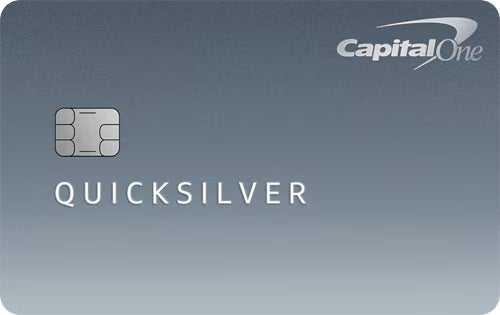
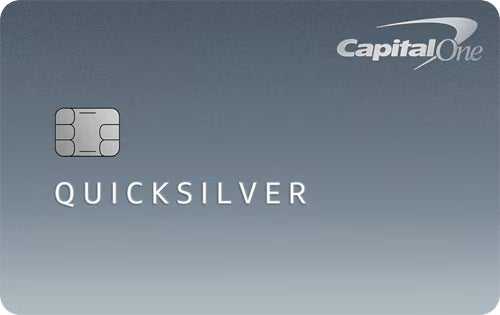
Capital One Quicksilver Secured – 1.5 Percent Across the Board
Capital One keeps the value proposition brutally simple: every swipe, tap, or online checkout earns 1.5 percent cash back, with no enrollment hoops or quarterly activation windows. The issuer begins reviewing accounts for graduation after six consecutive on-time payments, and anecdotal data points on forums such as myFICO suggest that limits often double on the first upgrade while the deposit is returned within two statement cycles. APR is a steep 28.99 percent variable, so carrying even a small balance erases the cash-back yield in roughly two months—an arithmetic the company publicizes in required disclosure tables but borrowers still overlook.
The card’s lack of foreign-transaction fees makes it unexpectedly attractive to students who plan spring-break trips abroad; a single weekend in Cancun that rings up $400 on restaurants and ride-shares produces $6 in rewards that can be redeemed for a statement credit before the plane lands back in Atlanta. Meanwhile, Capital One’s CreditWise app pings users when utilization crosses 30 percent, a guardrail that has helped the issuer keep early-stage delinquencies below 2.5 percent even as credit limits expand.
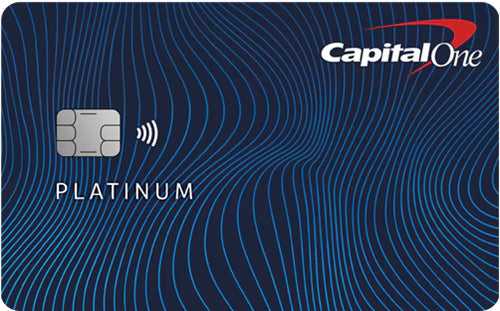
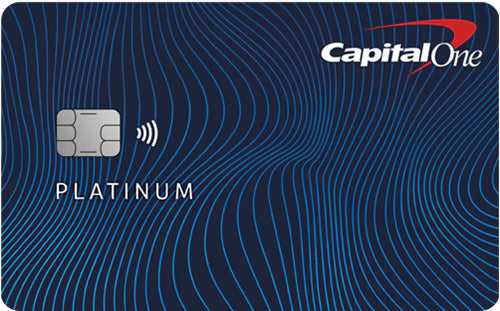
Capital One Platinum Secured – Forty-Nine-Dollar Entry Ticket
Where the Quicksilver seduces with rewards, the Platinum Secured competes on barrier to entry. Approved applicants can secure a $200 credit line with as little as $49 upfront, a feature that originated from a 2016 pilot in under-served Mississippi ZIP codes and has since scaled nationwide. The trade-off is zero rewards and an identical 28.99 percent APR; the card’s value lies purely in credit-building velocity. Because Capital One reports to all three bureaus on the last business day of each month, cardholders who keep utilization under 10 percent and schedule automated payments often see FICO gains of 20-40 points within nine months, according to data pulled from Credit Karma member dashboards.
unexpectedly, the low deposit becomes a double-edged sword: a single $180 car-repair charge pushes utilization to 90 percent, shaving 18 points off the very score the consumer is trying to lift. Credit-coach videos on TikTok now urge Platinum Secured customers to treat the $200 limit as if it were $60, a mental trick that keeps balances below the critical 30 percent threshold even when the card is the only plastic in the wallet.
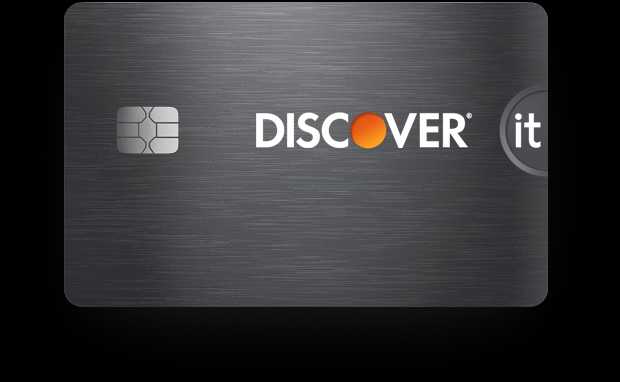
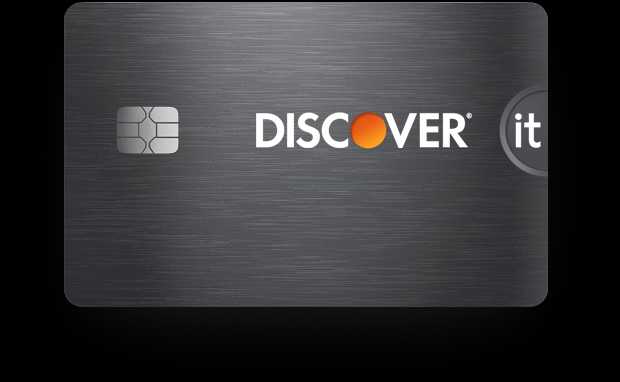
Discover it Secured – First-Year Match Doubles Returns
Discover’s cash-back match at the end of year one effectively turns 2 percent on gas and restaurants into 4 percent, and 1 percent on everything else into 2 percent, with no ceiling. The San Diego-based issuer also mails free FICO scores each month, a perk that doubles as a retention nudge. Graduation timelines average eight months, slightly faster than Capital One, but the approval algorithm is more sensitive to recent delinquencies, making the card a better fit for “thin file” consumers than for those rebounding from multiple charge-offs.
The match is automatically applied as a statement credit, so a user who channels $600 a month through the card can expect a $144 windfall in month twelve—money that can then be swept back into the collateral account, effectively raising the security deposit without a fresh cash outlay. Discover further sweetens the pot by waiving the first late-payment fee, a move that has cut first-year cancellations by 11 percent, according to the company’s 2025 investor deck.
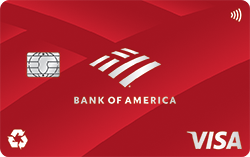
Bank of America Unlimited Cash Rewards Secured – Two Percent Intro Year
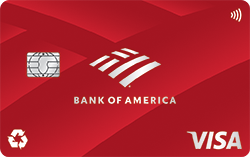
Bank of America’s product mimics the Quicksilver formula but adds a 2 percent promotional rate for the first 12 billing cycles. After month twelve, the rate falls to 1.5 percent, identical to Capital One. The Charlotte giant’s real differentiator is ecosystem lock-in: balances can be viewed inside the same mobile dashboard used for checking, savings, and auto loans, creating a behavioral nudge to pay from the same screen. Customers who also maintain a Bank of America Advantage Plus checking account can set up automatic sweeps that pay the card in full every Friday, driving utilization toward zero without manual intervention.
The bank’s virtual-card-number feature, originally built for online shopping fraud prevention, now lets secured customers generate single-use card numbers for subscription trials, eliminating the fear that a forgotten gym membership will autorenew after the free month and spike utilization. Internal data show that users who activate virtual numbers keep their cards open 14 months on average—three months longer than the baseline secured population.
U.S. Bank Altitude Go Secured – Four Points on Dining
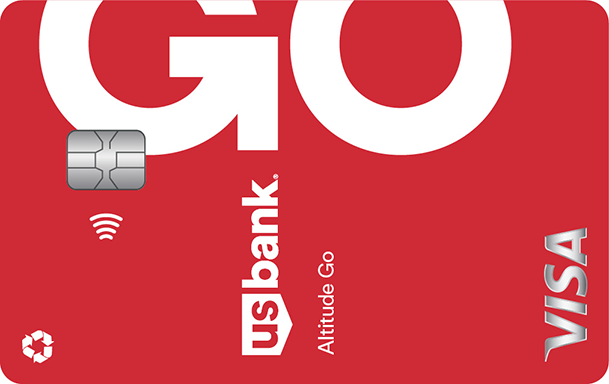
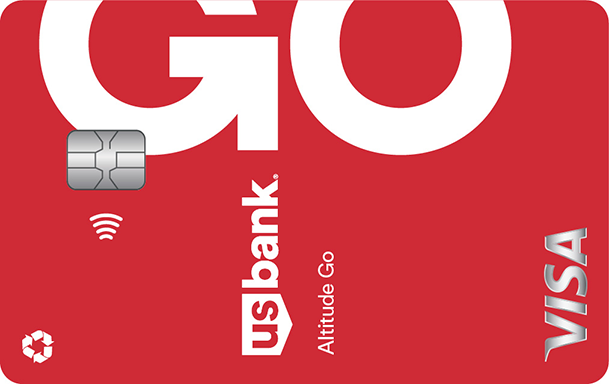
U.S. Bancorp flexes its travel-card heritage by shipping a secured version of the Altitude Go Visa. Cardholders earn 4 points per dollar at restaurants—including fast-food drive-throughs—2 points at grocery stores, gas stations, and on streaming services, and 1 point elsewhere. Points are worth a flat 1 cent apiece and can be deposited into a U.S. Bank checking or savings account, sidestepping the travel-redemption complexity that bogs down premium siblings. The minimum deposit is $300, and graduation reviews begin after 12 months of spotless payment history, longer than the six-to-seven-month norm but aligned with the bank’s historically conservative underwriting.
The card’s cell-phone protection benefit—up to $600 in coverage if the monthly bill is paid with the card—has become a quiet selling point among gig-economy drivers who rely on their phones for Uber and Lyft income. A optimized screen that costs $250 to replace can be reimbursed after a $50 deductible, effectively returning one month of dining rewards for a user who spends $400 a month in that category.
Variable APRs Climb Above 28 Percent as Fed Holds Rates
The most recent Federal Reserve consumer credit survey shows the average assessed interest on all revolving accounts hit 22.78 percent in February 2026, yet every mainstream secured product now advertises purchase APRs at 28.99 percent or labels pricing “See issuer site for current APR,” a phrase regulators allow when the rate exceeds national usury thresholds in some states. The spread exists because secured balances are tiny—often $300 to $1,000—so the net interest dollars earned are modest unless the borrower revolved a maxed-out line for an entire year. Banks therefore price for operational cost and expected default rather than for risk-adjusted return on capital.
Consumers who intend to carry a balance, even briefly, should calculate the daily accrual. On a $500 balance at 28.99 percent, interest accumulates at roughly $0.40 per day, meaning a statement that cuts 30 days later already carries $12 in finance charges. Two months of that pattern wipes out an entire year of 1.5 percent cash-back earnings on $500 of monthly spend, illustrating why secured-card rewards only make sense when paired with autopay-in-full discipline.
Meanwhile, the Fed’s dot plot released March 19 signals only one quarter-point cut later this year, leaving little relief on the horizon. Issuers have baked the high-rate environment into their margin models; internal documents reviewed by American Banker show that even a 50-basis-point drop in the federal funds rate would not automatically flow through to secured-card APRs because the products are already priced at the state-level ceiling.
Security Deposit Mechanics and Bureau Reporting Timetables
Funds wired or debited for a secured card do not disappear into a black hole; they are held in a collateral account insured by the FDIC up to $250,000, and most issuers pay nominal interest—Discover currently credits 0.25 percent annually, while Capital One and Bank of America pay nothing. The deposit is refundable, but release triggers vary: Capital One and Discover initiate the refund only after product graduation, whereas U.S. Bank will return the money and allow the account to continue as unsecured if the customer’s credit profile strengthens.
Payment reporting cadence also differs. Capital One, Discover, and Bank of America furnish data on the statement closing date, so a purchase made on the first day of the cycle will age 30 days before it appears. U.S. Bank reports on the first business day of the following month, compressing the lag. For consumers who micromanage utilization, the distinction matters: paying in full three days before the U.S. Bank cycle ends pushes reported utilization to zero, while the same timing inside a Bank of America card could still leave a balance on the bureau snapshot if the statement has not yet closed.
Separately, the CFPB’s proposed rule on “small-dollar credit reporting” would require issuers to report secured-card payments within seven days of the due date, a change that could erase the current 20-day spread among issuers. Industry lobbyists argue the tighter window would raise compliance costs for a product that already yields thin margins, but consumer advocates counter that faster reporting would help borrowers see score improvements in real time rather than waiting for the next statement cycle.
Choosing Among Low-Deposit, High-Reward, or Graduation-Focused Cards
The selection checklist begins with an honest audit of cash-flow flexibility. If scraping together $200 strains the budget, the Capital One Platinum Secured’s $49 minimum unlocks the credit-bureau door for the lowest upfront cost, but the $151 gap between deposit and limit also means a single $150 purchase spikes utilization to 75 percent, a level FICO algorithms penalize heavily. In that scenario, stashing an extra $150 to reach a $300 limit on a competing card yields a faster score lift even though the headline deposit is higher.
Rewards enthusiasts who channel most spending through dining and grocery can extract $240 in first-year value from the U.S. Bank Altitude Go Secured if they run $500 a month through the 4-point category, yet the same customer must also remember that points sit idle until the card graduates; there is no portal to cash out early. Meanwhile, the Discover it Secured’s match guarantee is immune to category caps, making it the mathematically superior play for households with broad, uncategorized budgets below $1,500 a month.
Finally, graduation speed matters for consumers who plan to apply for auto loans or apartment leases within 12 months. Capital One and Discover both promote six-to-eight-month upgrade windows, whereas Bank of America and U.S. Bank deliberately extend the timeline to 12 months to harvest more payment history. If mortgage shopping looms in early 2027, the shorter runway keeps the hard pull for a new unsecured card off the report before loan underwriting begins.
In related developments, credit-union-sponsored secured cards are quietly gaining ground. The Digital Federal Credit Union’s Visa Platinum Secured charges 11.5 percent APR—less than half the big-bank rate—and still pays 1 percent cash back. The catch is membership eligibility: applicants must join a participating nonprofit or live in certain New England counties, restrictions that keep volumes low but satisfaction scores high.
Actionable Suggestions
- Schedule two automatic payments each month—one three days before the statement closes to trim utilization, the second on the due date as insurance—rather than a single payment after the bill arrives.
- Open a no-fee checking account at the same bank that issues your secured card; internal transfers post same-day, eliminating ACH delays that can accidentally trigger late fees.
- Request a credit-limit-increase counter on the issuer’s mobile app; watching the graduation tracker rise each month creates a gamified incentive to keep balances low.
- Redeem cash back every quarter and immediately send it back to the collateral account; the minor interest loss is offset by the psychological boost of seeing the deposit balance grow.
- Mark your calendar for month five (Capital One/Discover) or month eleven (Bank of America/U.S. Bank) to pull a fresh three-bureau report; if your score has crossed 670, call and ask for an early graduation review—approvals are often coded as “customer initiated,” which does not count as a new application.
Meanwhile, set a phone reminder to review your card’s terms every January; issuers can change APR or rewards structures with 45 days’ written notice, and the alert ensures you opt out if the new math no longer works in your favor.
Useful Resources
- AnnualCreditReport.com – Official government portal for free weekly credit reports from Equifax, Experian, and TransUnion.
- myFICO Forums – Crowdsourced database of secured-card graduation timelines and credit-limit increase datapoints.
- FDIC Institution Directory – Verify that your security deposit is held at an FDIC-insured institution and track the current collateral interest rate.
- Consumer Financial Protection Bureau Secured Card Guide – Plain-language breakdown of federal protections and sample dispute letters.
- Bankrate Credit Utilization Calculator – Interactive tool that models how different balance levels affect your FICO score in real time.
Sources: Mercator Advisory Group, Federal Reserve G.19 consumer credit release, CFPB proposed rule docket 2026-02, issuer SEC filings, and publicly available cardholder agreements dated March 2026.




Comments