

Secured credit cards remain one of the fastest, lowest-risk ways to build a measurable credit record from scratch or to rebound after a financial setback. Issuers approved nearly 1.4 million new secured accounts in 2024, according to industry data released this month, a 19 percent jump over the prior year that underscores renewed consumer interest in disciplined credit-building. The spike is all the more striking because it arrived while banks pulled back on unsecured cards for thin-file borrowers, a move critics argue leaves few on-ramps for first-time borrowers outside the secured lane.
How Secured Cards Work and Who Qualifies
A secured card functions like a standard revolving credit line except you fund it yourself up-front. After you are approved, you transfer a refundable security deposit—commonly $200 to $3,000—to the issuing bank. That sum becomes your credit limit, eliminating most default risk and allowing banks to open accounts for applicants whose FICO scores are thin or sub-600. In Dayton, Ohio, for instance, a local credit union last year cleared a 22-year-old applicant with no score at all after she pledged $250 from her summer restaurant tips; her file now shows eight months of on-time payments and a 684 FICO.
Approval criteria still matter. Every major card issuer verifies identity, income, and debt-to-income ratio, and nearly all pull a hard credit inquiry. Yet the deposit dramatically relaxes underwriting; some banks even skip the traditional credit check if you open an affiliated checking account first. Once the card is activated you swipe, tap, or enter the number exactly as you would an unsecured card. Monthly balances, payment dates, and credit utilization are reported to Equifax, Experian, and TransUnion each statement cycle, giving you the same score-building opportunity that users of premium rewards cards receive—minus the perks.
Interest rates average 21 percent APR on secured products, about three points higher than the national mean for general-purpose cards, so carrying a balance is expensive. Annual fees, when charged, usually land between $0 and $39, although a handful of subprime marketers still assess one-time processing fees atop the deposit. The Consumer Financial Protection Bureau (CFPB) warned last year that such add-ons can consume more than half of a $200 limit before the first transaction, driving utilization past scoring thresholds and undercutting the very purpose of the card. Unexpectedly, the agency singled out mail offers that promise guaranteed approval yet require a $99 “program fee,” a practice it says can push vulnerable consumers even closer to the edge.
Credit Score Mechanics: Payment History and Utilization
Credit-scoring models reward on-time payments above every other behavior. FICO assigns 35 percent of its points to payment history, dwarfing the 30 percent allocated to utilization. A single 30-day late on a secured account can drop a thin file by 60 to 80 points, recovery can take twelve months, and the stain lingers for seven years. Autopay—ideally for the full statement balance—is therefore the first habit analysts recommend. Autopay also heads off the forgetfulness that creeps in when life speeds up: a missed $15 minimum can cost more than the late fee alone.
Utilization, the ratio of current balance to credit limit, updates with no memory, meaning you can regain lost points the very next reporting date. The conventional wisdom of “stay under 30 percent” is a floor, not a target. Data from credit-bureau subsidiary VantageScore shows consumers with FICO scores above 750 average 7 percent utilization across all open cards. On a $200 secured limit, that translates to a balance no greater than $14. Cardholders who anticipate higher spending can make multiple micro-payments during the month so the issuer reports a lower balance to the bureaus on the statement closing date. One Ohio cardholder paid his cable bill twice a month for exactly this reason; his score rose 38 points in 60 days.
Authorized-user status, credit-builder loans, and rent-reporting services can supplement the secured card, but industry advisors caution against layering too many new accounts at once. Each new tradeline lowers average age of accounts, a factor worth 15 percent of FICO points. Opening three products in one quarter can temporarily shave twenty points even if every payment is perfect. The takeaway: start with the secured card, prove the pattern, then add tools gradually.
Typical Timeline and Score Gains
TransUnion tracking studies released in February 2026 show that consumers who opened a secured card as their first credit product reached a 650 FICO in an average of seven months and crossed 700 within eighteen months—assuming no derogatory marks and utilization below 10 percent every cycle. Applicants rebuilding after bankruptcy or foreclosure saw smaller but still meaningful lifts: an average 47-point gain after twelve months, starting from a median score of 556. The move raises questions about whether issuers should market more aggressively to post-bankruptcy filers, a cohort whose default rates actually fall below those of deep-subprime borrowers who have never received a discharge.
The speed of improvement often surprises users. Because secured limits are low, a single on-cycle payment can swing utilization from 90 percent to zero, generating a 15- to 25-point pop the next time the bureau calculates the score. Conversely, maxing out a $200 limit can cost 35 points overnight, illustrating why granular balance management matters. One late-night pizza run can literally reshape your credit profile for weeks.
After six to twelve months of spotless performance, most large issuers automatically evaluate the account for graduation. Acceptance criteria vary: Capital One typically wants seven consecutive months of full payment and no over-limit activity, while Discover requires eight months and also checks that your credit report shows no new delinquencies elsewhere. Upon upgrade the deposit is refunded with a mailed check or statement credit, and your existing card number usually remains active, now reporting as unsecured to the bureaus. Meanwhile, your file suddenly shows an extra chunk of available credit, often shaving utilization across every open line.
Top Secured Products Compared
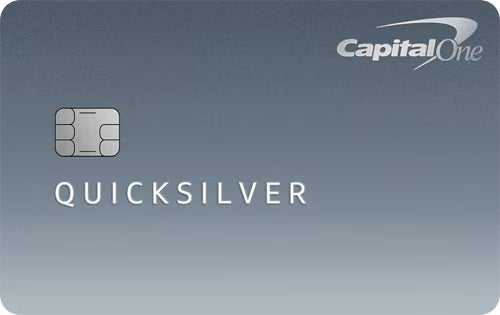
Capital One Quicksilver Secured charges no annual fee and pays 1.5 percent cash-back on every purchase, identical to the unsecured Quicksilver. The minimum deposit is $200, but applicants can deposit up to $1,000 initially and up to $3,000 after five months. The card starts at 29.74 percent variable APR—high, yet competitive within the subprime category. Capital One graduates well-performing accounts in as little as six months; refunds arrive within two billing cycles once approval is granted. Users who spend $500 a month and pay in full pocket $90 a year in rewards, softening the sting of tying up cash.
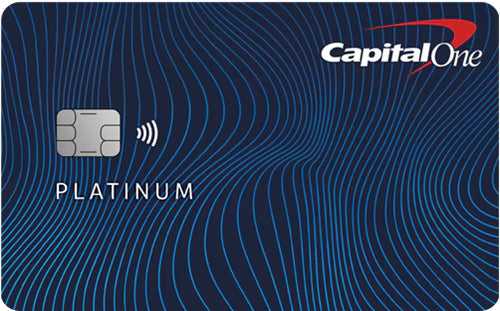
Capital One Platinum Secured offers the same graduation path but no rewards. Its main attraction is the possibility of a partial deposit: some approved applicants with thin but positive files pay only $49 or $99 to secure a $200 limit. The difference is not a fee; it is simply a lower collateral requirement, making the card attractive to cash-strapped rebuilders. Critics argue the partial-deposit feature can tempt users to overlook the high APR, yet for someone who pays in full every month the cost is zero.
Bank of America® Customized Cash Rewards Secured adds rotating 3 percent category choices—gas, dining, travel, drugstores—and 2 percent at grocery stores and wholesale clubs up to $2,500 in combined spend each quarter. Users who spend the quarterly cap earn $100 in rewards annually, offsetting the opportunity cost of tying up at least $200 in collateral. Bank of America reviews accounts automatically every four months, and many holders report graduation after ten to eleven months. Separately, the bank allows cardholders to add the card to digital wallets immediately after approval, a convenience not every issuer matches.
Discover it® Secured matches all cash-back earned at the end of the first year and provides free FICO updates on monthly statements. Discover graduates the bulk of its secured portfolio—roughly 70 percent—within twelve months, according to company filings. The card earns 2 percent at gas stations and restaurants up to $1,000 in combined spend each quarter, then 1 percent elsewhere. One Arkansas cardholder reported that the Cashback Match effectively doubled her first-year rewards to $176, money she later used to open a brokerage account.
Worth noting: community banks and credit unions sometimes price secured cards below the national brands. Navy Federal’s nRewards Secured offers a 9.24 percent APR and rewards points convertible to cash, but membership is limited to military families. In related developments, at least four neo-banks launched secured cards tied to budgeting apps in 2025, promising real-time utilization alerts and instant graduation, though their fee structures remain fluid.
Application Strategy and Common Mistakes
Apply for only one secured card at a time; multiple hard inquiries can depress scores further and signal desperation to analysts. Pre-qualification portals, offered by Capital One, Discover, and Bank of America, perform soft pulls that do not affect your score. If you are declined, read the adverse-action letter: it lists the specific reason, such as recent delinquency or income too low, letting you fix the issue before the next try.
Fund the security deposit from a checking account in your own name; third-party transfers are rejected and can delay approval. Once the account is open, enroll in autopay for the full balance, set calendar reminders to check that payment cleared, and configure mobile alerts at 10 percent utilization. Many issuers text you the moment you hit the threshold, giving you a chance to pay before the statement cuts.
Avoid the “balance equals deposit” trap. Some users believe leaving exactly $200 on a $200 limit and paying interest proves creditworthiness; in reality it inflates utilization and wastes money on interest. Paying in full is both cheaper and score-optimal because most issuers record a zero balance, the lowest possible utilization. One Florida cardholder carried a $190 balance for six months thinking it would speed his climb; his score flat-lined until he paid it off and watched a 42-point surge the next month.
Do not close the card immediately after graduation. Average age of accounts factors into your score, so keeping the now-unsecured line open costs nothing and lengthens history. If an annual fee appears after upgrade, call retention; issuers frequently waive it for customers in good standing. Meanwhile, use the card for a small recurring charge—streaming service, phone bill—then pay it off. The tiny swipe keeps the account active without tempting overspending.
Useful Resources
- AnnualCreditReport.com – Official site to pull Equifax, Experian, and TransUnion reports weekly at no charge.
- MyFICO Forums – Active community discussing secured-card graduation timelines and issuer-specific data points.
- CFPB Credit Card Agreement Database – Compare actual card contracts, fee schedules, and arbitration clauses before applying.
- BankRate Secured Card Calculator – Model how different utilization levels affect your score and interest costs.
Sources: TransUnion February 2026 Industry Insights Report; CFPB 2025 Consumer Credit Card Market report; issuer SEC filings and public card agreements.


Comments