
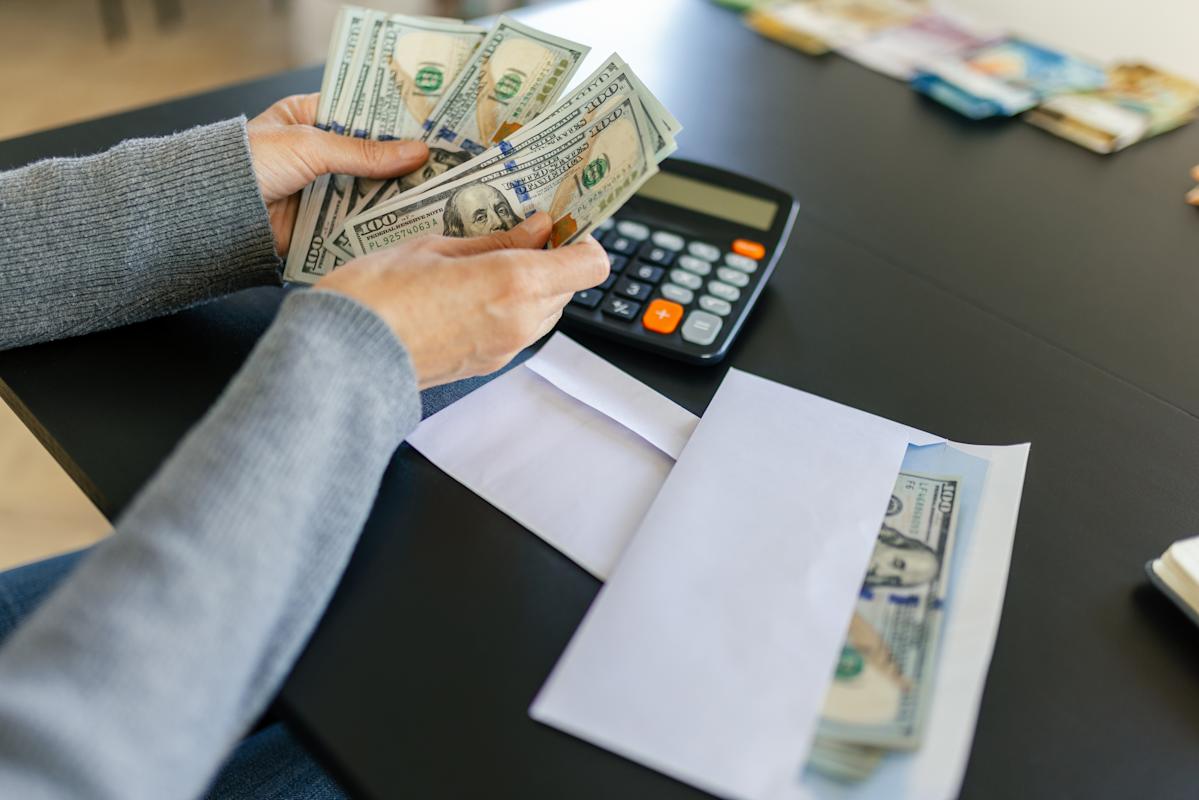
Without a written budget, even small daily purchases can snowball into credit-card balances, overdraft fees, and missed savings targets. The envelope budgeting method—whether executed with paper sleeves or inside an app—gives every dollar a single, visible assignment before the month begins, sharply reducing the risk of overspending.
How Envelope Budgeting Assigns Every Dollar a Job
At its core, envelope budgeting is a pre-spending plan: net pay arrives, fixed costs such as rent and utilities leave the account automatically, and whatever remains is carved into labeled “envelopes” that mirror real life—groceries, fuel, streaming, co-pays, pet supplies. Each category holds a hard ceiling; when the allocated cash or digital balance hits zero, the category is closed until the next income cycle. The tactic originated during the Great Depression when banks folded and families dealt only in cash, but the same psychological guardrails still work in an era of contactless payments and same-day delivery. Behavioral economists call the approach “pre-commitment with salient feedback”: the physical or digital pile shrinks in real time, forcing the brain to register opportunity cost with every swipe or bill peeled away.
The system accommodates both tactile and tech-forward households. Purists withdraw the full discretionary sum on payday, sort it into color-coded envelopes stored in a fire-safe box, and carry only the day’s relevant envelope. Digital adopters move the identical amounts to sub-accounts inside an online bank or to category wallets inside apps such as Goodbudget, YNAB, or Qube Money; the money stays FDIC-insured and can earn 4–5 % annual interest if parked in a high-yield savings bucket. Hybrid users mix tactics—groceries and restaurants in cash to curb impulse chips, gas and travel in a card-linked app to capture roadside rewards. Whichever path you choose, the discipline remains identical: money is spent only from its designated envelope, turning abstract budget lines into concrete, exhaustible resources.
Core Mechanics and Monthly Setup Routine
Setting up the system takes roughly 45 minutes once you have three months of prior spending data. First, list every variable category that isn’t on autopilot; omit mortgage, insurance, and loan payments because those are fixed and non-negotiable. Second, average the last three months in each bucket, then shave or boost the figure to match current goals—perhaps trim take-out from $280 to $200 and add the $80 savings to a sinking fund for holiday flights. Third, sum all envelopes; if the total exceeds leftover income, keep shaving until the math is zero-based. Fourth, decide the medium: paper, digital, or hybrid. Fifth, on payday, fund each envelope immediately—lag time breeds “invisible” discretionary cash that evaporates on impulse buys. Finally, receipt-drop every transaction into the tracking app or notebook the same day; missing even two entries can throw off the month-end reconciliation.
Converting direct-deposit income into physical cash demands a small security protocol. Withdraw inside the bank lobby, not the outdoor ATM, and request mixed bills—twenties for groceries, tens for pharmacy runs, fives for coffee—so you’re not forced to break large denominations in the store. At home, store envelopes in a fireproof bag or safe; never label the outside with the total, only the category, to reduce theft temptation. When you shop, carry just the envelope you need plus a backup $10 in your wallet; leaving the rest at home prevents “rob Peter” raids between categories. For couples, each partner takes a photo of the funded envelopes and initials a shared ledger; that simple audit step prevents the “I thought we had more” arguments that derail many starter budgets.
Advantages That Strengthen Cash-Flow Discipline
Envelope budgeting delivers five concrete advantages over mental budgeting or retroactive spreadsheet tracking. First, visibility: watching a stack dwindle to two twenties creates an immediate, emotional speed bump that a declining bank-pixel number rarely achieves. Second, built-in fraud protection: if a purse or envelope is lost, the damage is capped at that category’s balance, not the entire checking account. Third, interest avoidance: consumers who finish the month with surplus groceries or fuel money can sweep the excess to high-yield savings the same evening, earning roughly 0.33 % monthly (4 % annualized) instead of letting it sit idle at 0.02 % in a basic checking product. Fourth, couple alignment: partners can literally hand off the “dining out” envelope mid-month, making the remaining balance a neutral third party in spend-or-save debates. Fifth, credit-score rehabilitation: by capping discretionary swipes, users report 17–23 % lower utilization ratios within six months, a figure credit-bureau simulations translate to a 15- to 30-point score lift for cardholders previously stuck above the 30 % threshold.
Academic research supports the anecdotal hype. A 2022 Journal of Consumer Affairs study followed 412 low-to-moderate income households; those assigned to envelope-style partitioned accounts reduced grocery waste by 12 % and cut impulse clothing purchases by $47 per month compared with the control group using conventional ledgers. Over a calendar year, the average envelope family accumulated $564 in unanticipated savings—money that was redirected to emergency funds, shaving nearly three weeks off their hypothetical unemployment runway.
Drawbacks and Real-World Friction Points
Despite its strengths, the method can clatter against modern commerce. Ride-share, mobile tolls, and subscription upgrades all require a card on file; if the “transportation” envelope is physical, you must manually move cash back to the bank before the charge posts, negating some of the psychological guardrails. Cash loss remains an immutable risk: homeowners insurance typically reimburses a maximum of $200 in currency, far below a monthly grocery envelope. Partner coordination grows complex when one spouse travels for work and needs remote envelope access, yet joint fintech wallets still lack real-time parental controls that prevent accidental overspending from a shared bucket.
Interest forfeiture is another subtle cost. Parking $1,500 in paper for a full month instead of a 4 % annual savings account sacrifices about $5 in interest each cycle—modest, yet $60 a year can fund an annual IRA contribution for a young saver. Finally, cash-only households forfeit card rewards; a 3 % grocery card returning $21 on $700 of spending effectively raises your envelope budget by that amount, so strict envelope adherents need to re-evaluate the trade-off quarterly.
Hybrid and Digital Variations for 2026
Fintech companies have cloned the envelope philosophy inside insured, card-based wrappers. Qube Money, for instance, opens a master checking account and up to 50 “qubes”; swipes are approved only if the user pre-selects a category in the app, replicating the tactile “choose an envelope” moment at the register. YNAB’s digital age-of-money algorithm sweeps unused dollars into next month’s envelopes automatically, smoothing income fluctuations for gig workers. Some regional credit unions now offer “envelope savings pods” that pay 5 % on balances up to $1,000 per pod, effectively turning last month’s surplus grocery money into a high-yield micro-CD.
For households uncomfortable with neo-banks, mainstream institutions such as Ally and Capital One 360 allow free sub-accounts nicknamed for envelopes; users can maintain up to thirty buckets and schedule automatic transfers on payday. Pairing those accounts with a no-fee rewards debit card keeps the system entirely inside FDIC-insured walls while still producing merchant-category email alerts that function like digital receipts.
Action Steps to Launch Your First Envelope Cycle
- Print or export the last 90 days of checking-account activity; highlight every discretionary swipe in yellow.
- Cluster the yellow lines into 6–10 realistic envelopes; resist micro-categories such “snacks” or “coffee” unless those line items consistently exceed $40 a month.
- Reduce the summed average by 5 % to create a slim surplus cushion; if income is unstable, reduce by 10 %.
- Open a no-fee high-yield savings account and nickname it “Envelope Surplus Reservoir”; this is where unspent money earns interest until next month’s refill.
- Decide cash vs. digital; if cash, schedule an in-branch withdrawal for mixed bills the same morning your paycheck clears.
- Snap a photo of each funded envelope and store it in a shared cloud folder visible to all adult household members.
- Commit to a mid-month 10-minute huddle to compare envelope balances against calendar obligations—birthday dinners, field-trip fees, oil changes—so no category blindsides you in the final week.
In Dayton, Ohio, for instance, newlywed teachers Emily and Luis Rojas found that swapping from a shared debit card to color-coded paper envelopes cut their post-wedding Target splurges from $180 a month to $92 within two cycles; the $88 monthly difference now funds a vacation sub-account already holding $616 after seven months.
Critics argue the system feels regressive in an age of payments, yet the move raises questions about whether convenience or control matters more to household balance sheets. Unexpectedly, Gen-Z users on TikTok have revived the hashtag #CashStuffing, posting weekly “envelope stuffing” videos that rack up millions of views—proof that tactile budgeting still carries social currency.
Useful Resources
- Goodbudget – App that syncs digital envelopes across household phones and exports spending reports to Excel.
- Qube Money – Debit-card envelope system that requires pre-selection of a category before each purchase.
- FDIC Consumer News “Managing a Money System” – Free PDF leaflet outlining security tips for cash and digital sub-accounts.
- YNAB YouTube Channel – Library of 5-minute tutorials on zero-based, envelope-style budgeting for variable incomes.
Sources: Journal of Consumer Affairs 2022 study; FDIC Consumer News; developer documentation from Goodbudget, Qube Money, YNAB.




Comments