

Will your savings stretch to age 95—or 105?
Financial planner-turned-researcher William P. Bengen says most retirees can stop worrying, provided they combine the right withdrawal formula with flexible investing.
Bengen’s 4.7% Rule: Safe Withdrawal Rate Rises
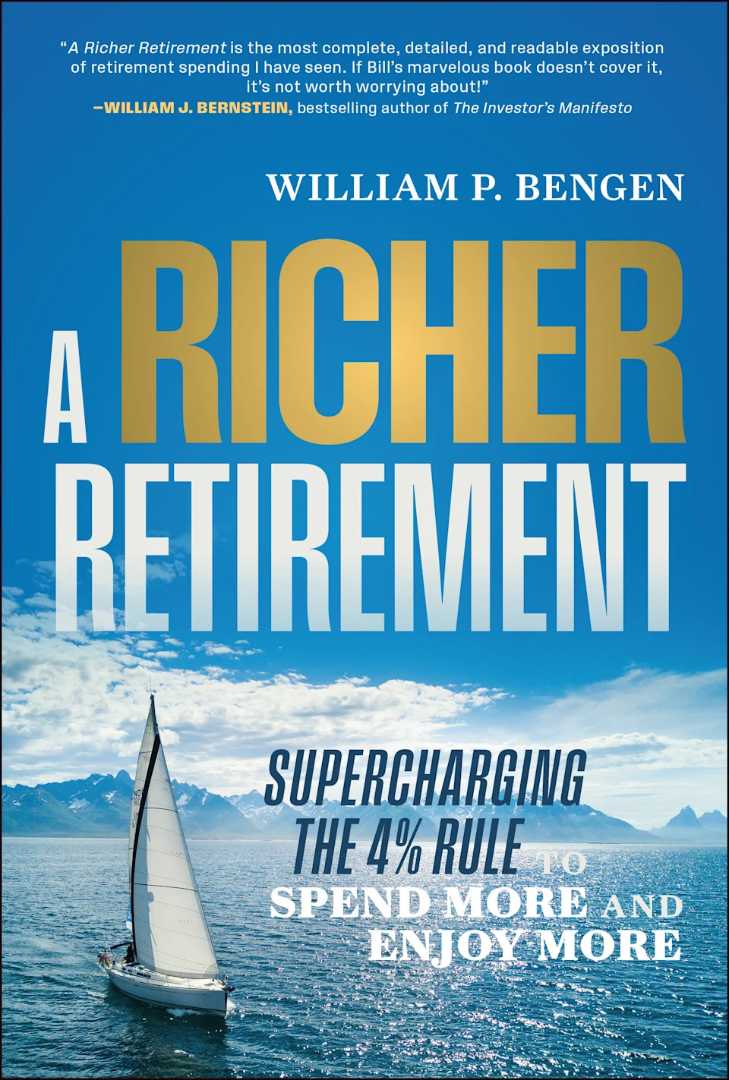
The figure everyone quotes—4%—is now 4.7%, Bengen writes in A Richer Retirement.
Running more than 1,000 market scenarios from 1926 forward, he shows that a 65-year-old holding 40% large-cap stocks, 20% small-caps, and 40% short-term Treasury bonds could have started with 4.7% of the opening balance and still ended 30 years with money remaining.
Translated: a $600,000 portfolio could fund $28,200 the first year, then rise with inflation, without any historical failure.
Bengen stresses the figure is conservative; it presumes no pension, no part-time income, and no spending flexibility—conditions few real households meet.
Yet the upgrade from 4% to 4.7% adds roughly $4,200 of annual breathing room on that same $600,000 nest egg, enough to cover Medicare Part B premiums plus a dental plan.
In Tucson, for instance, a retired couple who feared outliving their savings used the extra 0.7% to keep long-term-care insurance in force instead of letting the policy lapse.
Why Longevity Changed the Math Forever
When Bengen opened his practice in the early 1990s, retirement textbooks still pictured an eight-to-ten-year sunset.
Corporate pensions, higher bond yields, and shorter lives made withdrawal science almost unnecessary.
His baby-boomer clients, however, faced actuarial tables pointing to 25- or 30-year retirements, turning portfolio survival into uncharted territory.
Bengen built spreadsheets that mixed the Great Depression, 1970s stagflation, and the 1987 crash to see what worst-case sequences felt like.
The resulting 4% cushion, published in the Journal of Financial Planning in 1994, became the industry’s default because nobody else had stress-tested across 70 years of data.
Book Updates Add Flexibility and Tax Layers
The new release layers in three tweaks: rebalancing small-cap value, withholding taxes from withdrawals, and allowing “guardrail” cuts after big down years.
Retirees who trim spending 10% when a portfolio falls 20% can start at 5.2% instead of 4.7%, Bengen calculates.
He also sequences account types—IRA first, Roth last—to stretch tax-deferred growth.
Charts in the book show after-tax failure rates dropping by roughly one-third when withdrawals follow the tax hierarchy instead of a simple pro-rata approach.
Still, Bengen warns, any rule is only a starting point; personal health, legacy wishes, and market timing matter just as much as the percentage itself.
Critics Argue Sequence Risk Still Looms Large
Academics such as Professor Wade Pfau counter that today’s lofty equity valuations and skimpy bond yields create a “new lower normal.”
Monte-Carlo models built on 2020s conditions sometimes drop the safe rate below 3.5%, far under Bengen’s 4.7%.
Bengen replies that his dataset already includes 1929, 1968, and 2000 peaks, so current CAPE ratios are not unprecedented.
Other advisors prefer dynamic strategies—such as forgoing inflation raises after negative years—rather than locking in a fixed percent at day one.
Both camps agree on core safeguards: keep 12 months of cash, diversify globally, and delay Social Security to enlarge the inflation-protected portion of income.
Actionable Steps for Near-Retirees Today
- Multiply expected first-year expenses, minus Social Security and pensions, by 20 to 22; that approximates the portfolio size Bengen’s 4.7% produces.
- Rebalance once a year to the 40/20/40 stock blend; small-cap value exposure is critical for inflation-beating growth.
- Build a two-bucket cash sleeve—one year of living costs in high-yield savings, another in short-term Treasuries—so no shares must be sold in a 2008-style drawdown.
- Test your plan with free T. Rowe Price or Vanguard retirement calculators; if success rates fall below 85%, consider part-time work or a relocation that cuts fixed costs.
- Review the withdrawal amount every December; if the portfolio is up, take the inflation raise; if it is down more than 10%, freeze the dollar amount for the coming year.
Action Steps Checklist
- Calculate your “number” using 4.7% of today’s portfolio
- Shift allocation to 40% large-cap, 20% small-cap value, 40% short-term bond
- Open a high-yield savings account holding 12 months of expenses
- Delay Social Security to age 70 if family longevity exceeds 85
- Schedule an annual withdrawal review each December; be ready to skip an inflation bump after down years
Source attribution: Bengen, A Richer Retirement, 2026 edition





Comments