
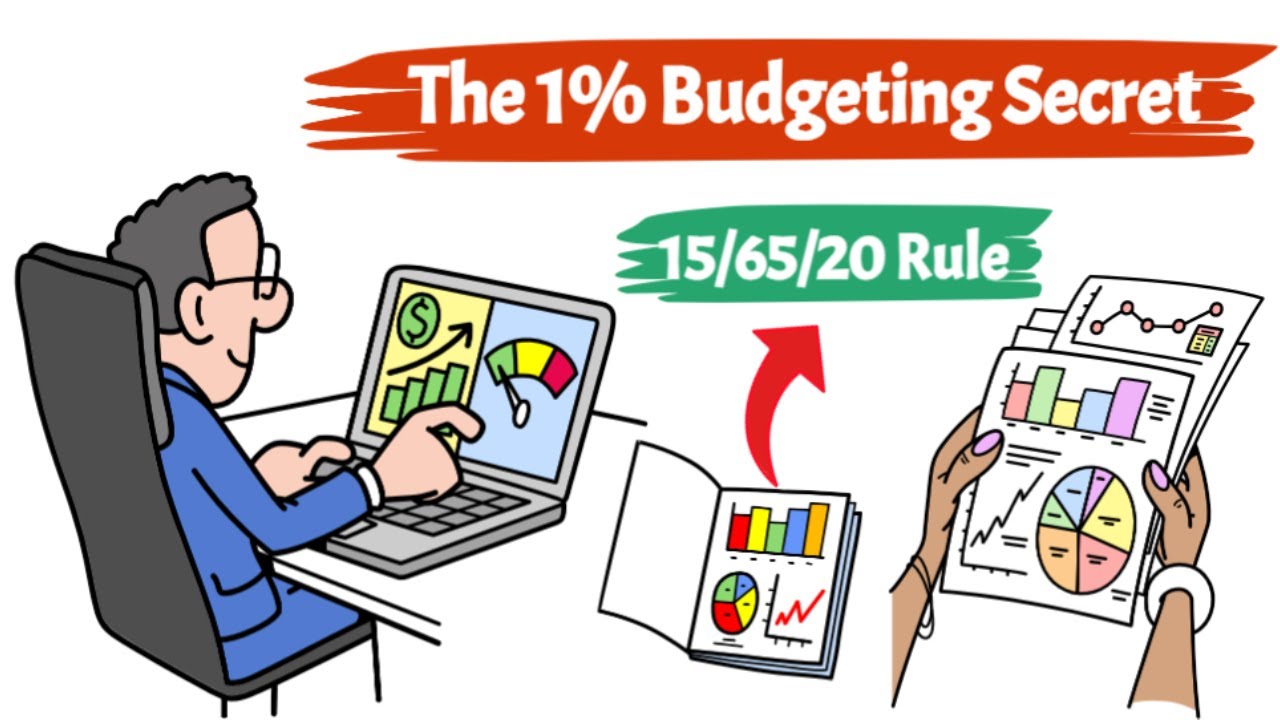
High earners hire tax attorneys, portfolio strategists, and family-office CPAs, yet the scaffolding that keeps their balance sheets intact is neither trademarked nor encrypted.
A three-bucket formula—15 % to future wealth, 65 % to daily operating costs, 20 % to fun—can be copied by anyone with a checking account and a calendar alert.
15/65/20 Formula Breakdown for Monthly Budgeting
The rule splices take-home pay into defensive, overhead, and lifestyle layers.
Fifteen cents of every after-tax dollar exit the spending economy the moment the deposit lands: automatic transfer to a high-yield savings account, Roth IRA, or zero-fee index fund.
Sixty-five cents cover the non-negotiables that keep life running—rent, utilities, insurance, groceries, commuting, minimum debt service.
The final twenty cents are guilt-free; streaming subscriptions, weekend trips, or artisan coffee remain permissible so long as the plastic swipe stays inside this fenced pasture.
Because the sequence is fixed—save first, spend last—the system prevents the human tendency to raid leftovers that never materialize.
Origins of the 15/65/20 Budget Method
Senator Elizabeth Warren’s 50/30/20 blueprint popularized percentage-based budgeting in 2005, but wealth managers noticed a flaw among six-figure clients: thirty percent for wants invited lifestyle creep.
By collapsing wants to twenty and hiking essentials to sixty-five, advisors created a steeper tilt toward investments without forcing renters to live on rice and beans.
The tweak also acknowledges today’s cost structure; healthcare premiums, phone plans, and daycare prices that did not exist in earlier decades now sit inside the “essential” tent.
Warren Buffett’s dictum—“spend what is left after saving”—is baked into the first line of the spreadsheet, turning a slogan into an ACH transfer.
How High Earners Still Miss the Mark
PYMNTS surveyed 4,000 U.S. households in 2023 and discovered that thirty-two percent of those earning above $200,000 live paycheck-to-paycheck; the culprit is mortgage-for-household-ratio above 40 % and recurring subscriptions that exceed $1,100 a month.
Wealth managers tell of clients who max out 401(k)s yet finance $90,000 SUVs at 7 % APR, illustrating that high income without a guardrail simply raises the speed limit for overspending.
The 65 % ceiling acts as an internal credit underwriter, denying permission for fixed costs to mushroom, even when a lender pre-approves a larger note.
Cutting Core Costs Without Deprivation
Bureau of Labor Statistics 2024 data show the median U.S. household lays out 34 % of income on housing, 17 % on transportation, and 13 % on food—collectively the fat target inside the 65 % lane.
House-hackers rent out basements on Airbnb, turning liability into cash flow; car-buyers purchase three-year-old off-lease vehicles whose depreciation curve has already snapped downward; meal-planners adopt “protein first” grocery lists that curb impulse snack spending.
Each percentage point shaved from these big-three categories translates into $500-$700 of annual breathing room on a $75,000 salary, money that can be rerouted to the 15 % wealth bucket with no income lift required.
In Austin, Texas, for instance, a couple trimmed their housing share from 36 % to 28 % by accepting a roommate for twelve months; the $6,200 saved financed the husband’s AWS cloud certificate, which later lifted his salary 18 %.
Automating the 20 % Lifestyle Bucket
Behavior-finance studies reveal that labeled accounts reduce spending by 10-15 % versus a generic checking balance.
Create a separate “Fun” debit card capped at 20 % of net pay; when the envelope is empty, the card declines, protecting the other 80 % from raids.
Couples report fewer money arguments because permission is preset; one partner’s concert tickets never morph into a referendum on shared priorities.
Any unspent portion rolls into next month, letting savers pre-fund larger indulgences such as international travel without tapping emergency reserves.
Critics argue the 20 % cap still rewards conspicuous consumption, yet defenders counter that a sanctioned outlet prevents the binges that blow budgets to pieces.
Action Steps
- Log last three months of take-home pay and sort transactions into savings, essential, discretionary.
- Open a high-yield online savings account and schedule an automatic 15 % transfer for the day after each paycheck.
- List fixed essentials; target 65 % by renegotiating insurance, refinancing high-rate debt, or finding a roommate.
- Create a “Fun” checking account with its own debit card and cap deposits at 20 % of income.
- Re-audit percentages every quarter; raises go 75 % to the 15 % bucket, 25 % to discretionary until the emergency fund covers nine months.
Sources: PYMNTS 2023 survey; Bureau of Labor Statistics 2024 Consumer Expenditure Report; Federal Reserve Board Survey of Consumer Finances


Comments