

Net Pay Reality Check: A $100k Salary Shrinks to Roughly $75k After Taxes and Benefits, Forcing Tight Budget Choices
A headline six-figure salary can feel like a lock on financial comfort—until the first direct deposit lands. After federal withholding, state income tax, FICA, Medicare surcharges, health-insurance premiums, and a 401(k) contribution, the $8,333 monthly gross on a $100,000 salary typically collapses to about $6,250 in take-home pay. In dollar terms, the popular “I make 100” boast is closer to “I live on 75,” and that 25 percent gap widens in high-tax jurisdictions. Critics argue the shrinkage is the clearest proof that “six figures” is no longer the safety blanket it once was.
How $100k Turns Into $75k: Tax and Payroll Deductions
The erosion starts with federal income tax. A single filer claiming the standard deduction owes roughly $13,500 for 2025, placing the marginal dollar of earnings in the 22 percent bracket. Add $7,650 in combined Social Security and Medicare (including the 0.9 percent Additional Medicare Tax that kicks in above $200,000 for joint filers), plus an average state income tax of 4 percent, and the visible subtractions already top 25 percent of gross.
Yet the quiet killers are benefits. A mid-tier family PPO plan can cost $450 per paycheck; a 6 percent of salary 401(k) deferral lops another $500 off monthly cash flow; and ancillary products such as group life, disability, commuter benefits, and legal insurance nibble away another $120. The final stub in a place like Portland, Oregon, can show $5,850 net; in Miami-Dade, with no state income tax, the figure rebounds to $6,450. Either way, the advertised “$100k” is now a memory.
Jamie Hobkirk, CFP, CFA, at Reynders, McVeigh Capital Management, tells clients to treat the missing slice as money already at work: “Every diverted dollar either cuts taxable income or buys an asset. The trick is to automate the diversion before your checking account tempts you.” Unexpectedly, she recommends new hires elect a higher-than-match 401(k) rate on day one; lifestyle then forms around the lower net, eliminating the agony of future budget cuts.
Housing Reality: Keep Core Costs Below 30 Percent of Net
Housing is the loudest line item in any budget, and lenders still quote the 28/36 rule—no more than 28 percent of gross income for the mortgage, 36 percent for all debt—even though underwriting software now approves borrowers up to 50 percent if credit scores exceed 760. On a $75,000 net, however, 30 percent equals $1,875 a month for rent or the full ownership bundle of mortgage, taxes, insurance, HOA, and minor maintenance.
In Atlanta, that threshold finances a $285,000 home with 10 percent down and a 6.25 percent rate; in Seattle, the same payment covers a 480-square-foot studio in a 1960s walk-up. The geographic mismatch forces trade-offs. Hobkirk recently worked with a tech analyst who kept a San Francisco salary but relocated to Richmond, Virginia, slashing rent from $3,400 to $1,650 and banking the $20,000 yearly difference into a down-payment fund.
Property-tax reassessment risk is under-reported. In Nashville, a 2024 city-wide reappraisal lifted the tax on a $400,000 bungalow from $3,200 to $4,100—an extra $75 a month—enough to nudge an otherwise prudent budget past the 30 percent red line. Buyers should stress-test a 20 percent tax hike before signing, not after.
The 50-30-20 Rule Applied to a $75k Net
Elizabeth Warren’s 50-30-20 framework—half for needs, 30 percent for wants, 20 percent for savings and accelerated debt payoff—translates to $3,125 for needs, $1,875 for wants, and $1,250 for wealth-building on a $6,250 monthly net. Childcare, car payments, and student loans, however, can hijack the formula. Minneapolis parents, for instance, pay a median $1,450 a month for toddler care, nearly half the “needs” allotment for one child.
Rebalancing starts with variable essentials. USDA pilot data from 2025 show households using the Mealime app cut grocery costs 23 percent by trimming waste. Transportation offers another lever: swapping a 2021 Ford F-150 (18 mpg) for a 2023 Toyota Prius (57 mpg) saves $192 monthly at $3.30 per gallon and 1,200 miles driven. Those two tweaks alone free $310—enough to restore the 50-30-20 ratio without surrendering weekend sushi night.
Emergency Fund: Nine Months of Core Costs Is the New Target
Pre-pandemic planners preached three-to-six months of cash reserves; post-pandemic job volatility has stretched the target to nine months for single earners. Core spending of $4,500 a month therefore demands a $40,500 buffer—an intimidating mountain, yet reachable through micro-deposits. Automate a weekly $75 transfer to an online savings account yielding 4.5 percent APY; compounded monthly, the balance crosses $10,000 in 2.4 years without a single belt-tightening episode.
Meanwhile, liquidity must coexist with high-interest debt eradication. When credit-card utilization tops 30 percent, redirect discretionary savings to an avalanche payoff; the 21 percent APR on rewards cards dwarfs the 4.5 percent earned in savings. Once balances fall below 10 percent, resume the automatic transfer schedule. This toggle keeps cash reserves intact while attacking the highest after-tax “return” available—eliminating expensive debt.
Budget Frameworks: Zero-Based, Envelope, and Reverse Strategies
Zero-based budgeting grants every incoming dollar a mission before the month begins, driving mindfulness at the cost of granular tracking. Apps such as YNAB import bank feeds and color-code underfunded categories in real time; users report a 17 percent spending reduction in the first quarter, per a 2025 survey of 4,800 paying subscribers.
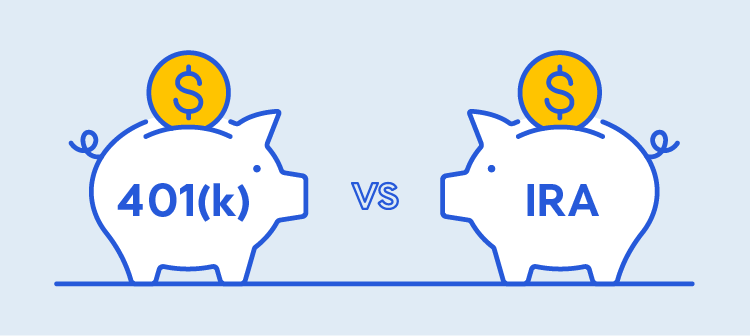
Cash loyalists still swear by the envelope system, now digitized. Goodbudget creates virtual envelopes synced across spouses’ phones; when the “Eating Out” envelope hits zero, the app declines the debit card, eliminating overdraft surprises. Reverse budgeting flips the sequence: fund goals first—retirement, vacation, down-payment—then live on the remainder. A $100,000 earner maxing a 401(k) at $23,000 and a Roth IRA at $7,000 must fit lifestyle into $45,000 net, forcing creative housing solutions such as co-buying with friends or accepting a 20-minute longer commute.
Calendar Triggers and Life Events: When to Re-run the Numbers
Budgets ossify without scheduled reviews. Link a quarterly calendar reminder to property-tax notices, insurance renewals, and open-enrollment windows. A 2 percent raise ($2,000 gross) should automatically escalate 401(k) deferrals by 1 percent and divert another 0.5 percent to a 529 college plan—strategies known as “raise parking.” Life events scramble assumptions: a July 2025 childbirth triggers $1,600 in new monthly expenses (diapers, formula, added health premium), but also a $2,000 child tax credit and $5,000 dependent-care FSA, net positive by $3,400 annually if cash-flowed correctly.
Review subscription creep annually; the average consumer underestimates recurring charges by $79 a month, according to 2024 C+R Research. Canceling three dormant apps and renegotiating a $150 Comcast bill to $95 via the retention desk liberates $134—enough to fund a 529 plan at $100 and still pocket splurge money.
Psychological Guardrails: Spending Speedbumps and Social Contracts
Behavioral economists recommend “speedbumps” to slow impulse buys. Delete stored credit-card numbers from Amazon; the 30-second re-entry window cuts one-click purchases by 14 percent, per University of Chicago 2025 findings. Social contracts add accountability: share an annual savings target with two friends; group-chat progress each quarter. The American Savings Challenge reports participants save 28 percent more when progress is public.
Visual cues matter. A wall chart coloring in each $1,000 of emergency-fund progress converts an abstract goal into a game, leveraging the endowed-progress effect—people accelerate effort when the finish line appears closer.
Mini-Case Snapshot: One Couple, Two Cities, Different Outcomes
In Denver, a newly married pair earns a combined $100,000—one spouse at a university, the other freelancing. By choosing a $1,600 two-bedroom in Aurora instead of a $2,400 loft downtown, they bank $9,600 a year. They divert the surplus to a high-yield savings account and max out two Roth IRAs. Meanwhile, in San Diego, a single software marketer making the same $100,000 pays $2,650 for a Mission Valley one-bedroom, leases a Tesla Model 3 for $499, and chips away at $38,000 in graduate debt. Despite identical gross pay, the Denver couple’s lower fixed costs create a $1,200 monthly wealth-building gap—proof that geography and fixed obligations, not salary alone, steer long-term security.
Useful Resources (Plain Text)
NerdWallet Budget Calculator – Interactive worksheet that converts gross pay to net and auto-applies 50-30-20 percentages.
IRS Paycheck Checkup Tool – Estimates correct withholding to prevent year-end tax shocks.
Consumer Financial Protection Bureau Housing Affordability Spreadsheet – Compares rent-vs-buy metrics city-by-city with property-tax history.
YNAB Free 34-Day Trial – Zero-based app that imports bank feeds and color-categories underfunded envelopes.
Vanguard Retirement Nest Egg Calculator – Projects 401(k) growth at various contribution rates, factoring employer match.
Sources: Reynders, McVeigh Capital Management; USDA; C+R Research; American Savings Challenge; University of Chicago Booth School of Business.



Comments