

U.S. credit-card balances punched through the $1.17 trillion mark last year, the Federal Reserve reported—the highest nominal total since the survey began in 1999. For households carrying a chunk of that load, every monthly statement now arrives with a painful reminder: purchase APRs that commonly sit between 20 % and 29 % magnify even modest balances into years-long repayment cycles. One escape hatch that has quietly moved back into the spotlight is the balance-transfer card, a product that suspends interest for as long as 21 billing cycles and, when paired with a disciplined payoff plan, can cut finance charges by four-figure sums.
What a Balance-Transfer Card Actually Does
A balance-transfer card is not a magic eraser; it is a refinance tool. The issuer agrees to move debt you already owe—usually from another credit-card account—onto a new revolving line that charges 0 % interest for a set window. You still owe the same principal, and you will almost always pay an upfront fee, but every dollar you remit during the intro period attacks principal rather than accrued interest. Once the clock expires, any residual balance flips to the card’s “go-to” rate, which is normally pegged to the prime index plus a margin that lands in the same 20 %-plus neighborhood you were trying to flee.
The logistics are straightforward. During the online or branch application you request the transfer, supplying the old card’s account number and the dollar amount you want moved. Most banks cap the request at 90 %–95 % of the newly approved credit line to leave headroom for the transfer fee. After approval the new issuer wires payment to the old bank; the old balance drops to zero; the new account shows a debit for the transferred sum plus the fee. From that point on you own one fewer open balance but one more open trade line, and the promotional countdown—say, 18 billing cycles—starts ticking whether or not you ever activate the plastic that arrives in the mail.
In Toledo, Ohio, for instance, 34-year-old school custodian Luis Ortega recently moved $4,800 from a retail card charging 27.24 % to a new 18-month 0 % product. The fee came to $144, but his budgeted $275 monthly payment will erase the balance three weeks before the teaser ends. “I had been spinning my wheels for six years,” he said. “Now every swipe receipt shows the balance falling—no interest, no tricks.”
The Math That Turns 0 % Into Real Savings
Consider a $5,000 balance parked on a card charging 25 % APR, the national mean for accounts assessed interest. Making only the issuer’s minimum—typically 1 % of the balance plus finance charges—the borrower would fork over roughly $9,700 in interest and need 24 years to reach zero, according to Federal Reserve minimum-payment models. Contrast that with moving the $5,000 to an 18-month 0 % card that charges a 3 % fee. The fee adds $150, so the opening balance becomes $5,150. Paying $287 a month erases the debt exactly as the promo ends; interest expense: $0. Total savings versus the minimum-payment treadmill: about $9,550 and 22½ years.
Even a half-measure works. Assume the same household can spare only $150 a month. During the 18-month grace period that payment shrinks the balance to $2,450. When the 25 % rate finally clicks in, the remaining sum amortizes in 21 months and generates roughly $600 in interest. Net finance charge: $750 including the transfer fee—still $8,950 less than the original roadmap.
Critics argue the calculations feel abstract until you see the statement. Open any app the morning after the transfer posts and the interest line is literally gone. That visual jolt, repeated for 18 consecutive months, is what behavioral economists call a “friction reducer.” It keeps borrowers on plan far better than the incremental gains from slightly lower APRs.
Four Levers That Decide Which Card Fits Your Plan
The market currently lists more than 40 cards advertising 0 % APR on transferred debt, but the offers diverge in ways that can easily overwhelm someone already juggling bills. Isolating four variables filters the field fast.
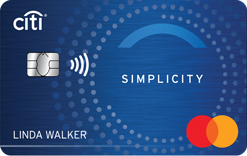
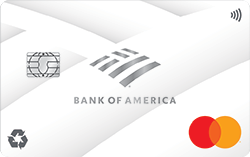
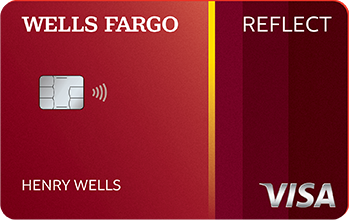
Length of the 0 % window is the first filter. The longest publicly available stretch today is 21 months on products such as the Citi Simplicity®, BankAmericard® and Wells Fargo Reflect®. A household that can budget $200 a month against a $2,000 slate therefore needs only ten months; paying a higher annual fee or sacrificing rewards to obtain 21 months gains nothing. Conversely, a $7,500 balance paired with $350 of free cash flow needs at least 22 months, so a shorter teaser would re-introduce interest before the finish line.
Balance-transfer fees form the second screen. Most issuers quote 3 %–5 % with a $5 minimum. On a $10,000 transfer the spread between the low and high end equals $200, so applicants with large balances should scan the Schumer box for language such as “introductory $0 fee on transfers requested within 60 days,” a promotion that occasionally appears on products like the Navy Federal Platinum or the Union Bank® Platinum™.
Credit limit and utilization make the third lever. A new card approved with a $5,000 line cannot absorb $5,001, and maxing it out on day one pushes personal-utilization ratios toward the 100 % mark, a factor that can depress FICO® scores 25–40 points until balances start to fall. Requesting a higher line during underwriting—or splitting debt across two transfer cards—spreads the metric and preserves scoring headroom.
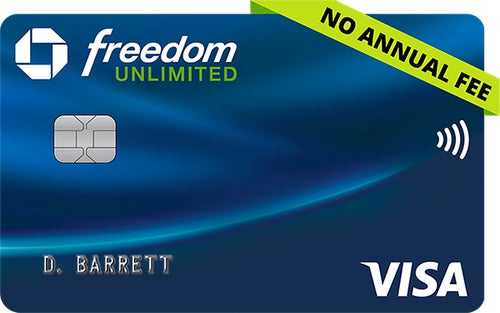
Finally, weigh ongoing utility. A plain-vanilla card may grant 21 months at 0 % and then settle into a no-frills life, while a cash-back product such as Chase Freedom Unlimited® dangles 1.5 %–5 % rewards and 15 months of 0 % interest. If you foresee paying off the transfer in 14 months, the latter delivers a permanent perk factory once the slate is clean.
Cards That Currently Dominate the Teaser-Rate Landscape
The longest 0 % terms—21 billing cycles—reside with three general-purpose cards marketed almost exclusively around the transfer feature: Citi Simplicity®, BankAmericard® and Wells Fargo Reflect®. None charges an annual fee, none pays ongoing rewards, and each levies a 5 % fee (minimum $5) on balances moved within the first four months. After month 21 the variable APR reverts to a range that currently centers on 18 %–24 %, depending on the applicant’s credit tier.
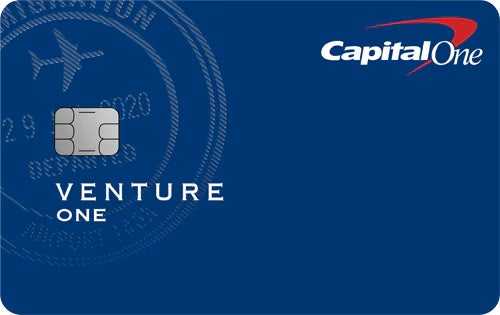
Consumers who can clear debt in 15 months or fewer often pivot to multitaskers. Chase Freedom Unlimited® grants 15 months of 0 % on transfers and purchases while paying 3 % on dining, 5 % on travel booked through Chase, and 1.5 % elsewhere. Capital One VentureOne® offers 15 months at 0 % plus 1.25 % miles on every purchase, and American Express Blue Cash Everyday® pairs 15 months of interest-free breathing room with 3 % cash back at U.S. supermarkets, U.S. gas stations and on online retail. All three waive the annual fee, so the risk is limited to the transfer fee and the discipline required not to stack fresh purchases atop old debt.
Meanwhile, regional credit unions quietly undercut the big banks on fee-free days. First Tech Federal’s Platinum Rewards card runs a 12-month 0 % window with no transfer fee at all, a move that raises questions about how smaller issuers fund the concession. The catch: you must join the credit union by opening a $5 savings account and agreeing to receive e-statements. For a $3,000 balance, skipping the 3 % fee saves $90—cash that can be redirected to principal.
Personal Loan Alternative: Installment Stability vs. Revolving Flexibility
Balance-transfer cards excel when the borrower can extinguish principal quickly; installment loans suit households that need a longer runway or that carry additional obligations such as medical or auto debt. Personal-loan APRs currently average 12 % for two-year terms and 15 % for five-year terms among borrowers with FICO® scores above 720, according to Fed data. That is far north of 0 %, yet it is fixed, predictable and often lower than the go-to rate on most credit cards.
Picture the same $5,000 obligation. A 60-month personal loan at 12 % requires $111 a month and accrues $1,670 in interest. A balance-transfer card paid off across five years would first need three consecutive 18-month teaser products—an impractical feat—otherwise the residual balance slams into a 20 %-plus variable rate. Therefore, anyone whose realistic budget lands near the $100 mark is typically better served by locking in a medium-rate installment note than by gambling on serial refinances.
Loans also skirt the utilization ratio trap entirely because installment balances are scored separately from revolving utilization. On the other hand, they lack the flexibility to re-borrow as you pay down principal, a feature that can tempt over-leveraged households back into the red.
Tactical Mistakes That Convert 0 % Into a Costly Reset
The biggest post-transfer pitfall is treating the new credit line as fresh purchasing power. Issuers are required by the CARD Act to apply any payment above the minimum first to the balance carrying the highest APR. In practice that means new purchases—which immediately begin accruing interest unless the card also offers a 0 % purchase promo—sit untouched until the entire transfer is retired. A $3,000 sofa bought at 19 % will simmer for 18 months while every extra dollar peels the zero-interest balance, and the deferred purchase interest can top $850.
Missing the due date even once can be catastrophic. Most 0 % agreements contain universal-default language: the teaser rate evaporates, and a penalty APR—often 29.99 %—kicks in retroactively on the remaining transfer. Auto-pay set for at least the minimum prevents the lapse; layering on an extra $25–$50 manually accelerates principal reduction.
Finally, closing the old account the same day the transfer clears shortens average account age and can shave points from a credit score just when you need clean borrowing credentials to qualify for the next round of credit. Leaving it open with a zero balance, or charging a small recurring subscription and paying it off monthly, keeps the history intact and the utilization denominator plump.
In related developments, some fintech apps now market “debt migration” services that promise to automate the entire sequence—apply, transfer, close old card, set autopay. Users in early beta tests saved an average of $604 in interest during the first year, but 14 % accidentally triggered late fees when the app mis-synced due-date changes. The lesson: automation helps, yet a monthly five-minute eyeball of the statement remains the cheapest insurance you can buy.
Credit-Score Anatomy Before, During and After the Transfer
The act of opening a new card generates a hard inquiry that typically docks five points from FICO® for 12 months. The new account also lowers average age of accounts, a factor worth 15 % of the score, but the sting is transient. Within three months the same tradeline begins to report on-time payments, and its unused portion adds to aggregate credit limits, pushing utilization downward. Consumers who started with 70 % aggregate utilization often see a net 25-point gain by the sixth month as the numerator shrinks and the denominator swells.
The curve flips if the transfer card reports at 90 % individual utilization; scores can sag 20–35 points until the balance falls below 50 % of the line. Spreading $9,000 across two $10,000-limit cards instead of cramming it onto one $10,000 line keeps both ratios under the psychological 50 % threshold and cushions the scoring impact.
Unexpectedly, some borrowers report a brief VantageScore dip even when FICO® rises. The competing model weighs newly opened accounts more heavily for the first 90 days, illustrating why mortgage shoppers should complete balance-transfer maneuvers at least four months before applying for a home loan.
Planning the Exit: How to Budget for the Teaser Expiration
The safest approach is to divide the transferred balance plus the fee by the number of months in the teaser window, then add 5 % as a cushion. A $4,000 balance on an 18-month 0 % card with a 3 % fee equals $4,120; dividing by 18 yields $229. Boosting the monthly draft to $240 finishes the job three weeks early and absorbs any surprise rate increase that might follow a billing-cycle misalignment. Automate the payment, calendar the payoff date, and set a phone reminder 45 days beforehand to confirm the statement reads zero.
If cash flow wobbles—overtime dries up, daycare costs spike—triage immediately. Trim discretionary categories first, then consider selling an underused asset (sporting equipment, vintage electronics) to bridge the gap. The cost of a single quarter’s soccer registration is minor compared with allowing $1,500 to roll into 24 % APR because the budget drifted.
Separately, tax-refund season presents a one-time accelerant. The average 2025 federal refund was $2,183. Applying even half of that windfall to a $3,600 balance on a 15-month 0 % card chops five months off the schedule and leaves a safety buffer if hours are cut later in the year.
Useful Resources
- Federal Reserve Consumer Credit Report – Monthly update on nationwide credit-card balances and average APRs; useful benchmark for comparing your own debt load.
- Citi Simplicity® Card Calculator – Interactive tool that graphs payoff timelines under different payment amounts and teaser lengths.
- AnnualCreditReport.com – Official gateway to pull all three credit bureaus for free before applying, letting you spot utilization or error issues that could lower your approval odds.
- Chase Freedom Unlimited® Rewards Simulator – Shows how much cash back you could earn post-transfer, helping quantify long-term card value.
Sources: Federal Reserve G.19 Consumer Credit release, Citi, Chase, Wells Fargo, Bank of America, Experian, TransUnion, FICO, Navy Federal Credit Union, First Tech Federal Credit Union, Synchrony, Capital One, American Express, Chase Freedom Unlimited, Citi Simplicity, BankAmericard, Wells Fargo Reflect, Capital One VentureOne, American Express Blue Cash Everyday, Chase, Navy Federal Platinum, Union Bank Platinum, Consumer Financial Protection Bureau, Board of Governors of the Federal Reserve System.




Comments