
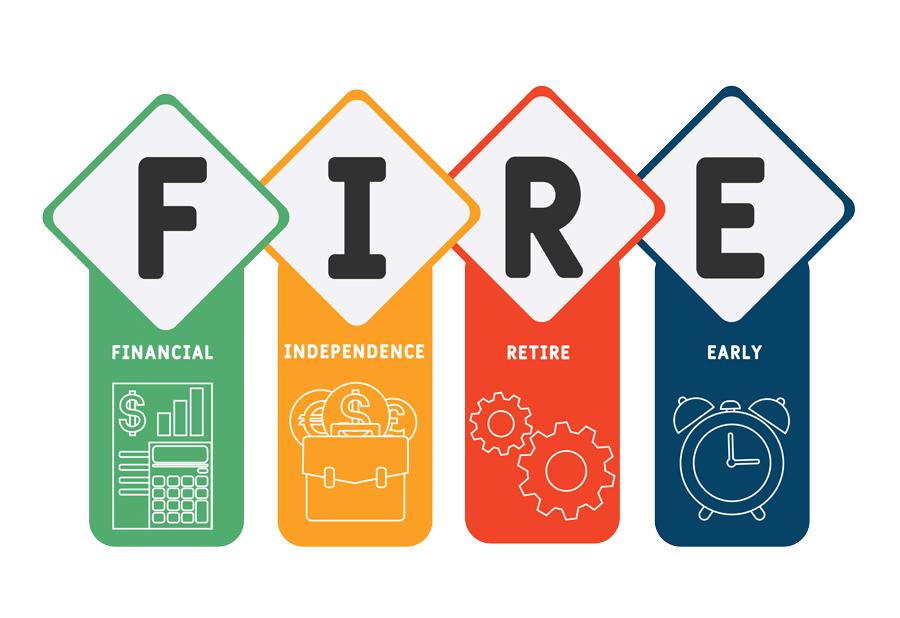
FIRE, short for Financial Independence, Retire Early, is no longer a fringe Reddit experiment. By March 2026, the hashtag has racked up 3.4 billion views on TikTok and has its own aisle of notebooks at Target, yet advisers say most newcomers still equate “early retirement” with one generic, community formula. In practice, the movement has stratified into four distinct wealth tiers, each with its own target portfolio, burn rate and lifestyle code.
Four FIRE Tiers Match Capital to Lifestyle
Meg K. Wheeler, CPA and founder of The Equitable Money Project, frames the math plainly: “The goal is to stockpile a balance that throws off 25 years of forward spending in passive income.” That translates to 25× annual expenses, a shorthand lifted from the so-called 4% withdrawal rule pioneered by Trinity University researchers in 1998. Whether you want to clock out at 35 or simply escape a soul-draining job at 55, the first decision is choosing which tier—Lean, Traditional, Fat or Barista—best mirrors the life you are willing to finance.
LeanFIRE: Living on Under $40,000 a Year
LeanFIRE disciples aim to replace only baseline survival costs: groceries, utilities, transport, rent and a catastrophic health plan, typically landing between $25,000 and $40,000 a year. A couple that spends $30,000 needs roughly $750,000 invested, a figure reachable in under a decade if they save 55% of two median tech salaries and ride a 9% average market return. Lawrence Klayman, founding partner at securities-law firm Klayman Toskes, says the lifestyle is “equal parts spreadsheet and camping ability.” DIY home repairs, library cards, geo-arbitrage—think St. Marys, Georgia instead of Naples, Florida—keep the annual withdrawal below 3.5%. The upside is maximum time freedom; the downside is little cushion for inflation shocks or a new roof.
In Morgantown, West Virginia, for instance, a pair of former Pittsburgh engineers live on $28,000 a year, grow peppers in recycled paint buckets and rely on a 2009 Honda Fit they bought for $4,200 cash. They document the routine on YouTube; ad revenue now covers half the grocery bill, an unexpected buffer they never modeled.
Traditional FIRE: Middle-Class Comfort Without the Paycheck
Traditional FIRE occupies the sensible middle, targeting $1 million to $2 million so a household can spend $40,000-$80,000 annually without guilt or side gigs. “You can say yes to a spur-of-the-moment long weekend or a new iPhone every third year,” notes Jason Breck, owner of 40 North Media, who is personally executing this plan. The portfolio size still leans on the 4% rule, yet many planners now model 3.6% to offset sequence-of-returns risk highlighted by the 2022 bear market. A two-income family banking $160,000 after tax can reach the $1.5 million mark in about 15 years by maxing two 401(k)s, a pair of back-door Roth IRAs and shoveling the surplus into a total-market index fund costing 0.03% a year. The tier appeals to parents who want margin for summer camp fees or a reliable used Subaru, but who will still brew coffee at home.
Critics argue the math is tight: childcare costs can erase a decade of gains if one parent steps away earlier than planned. Still, for households already living on 50% of take-home pay, the path feels less like sacrifice and more like bookkeeping.
FatFIRE and BaristaFIRE: Bigger Budgets, Softer Exits
FatFIRE starts at $100,000 of annual spending and scales well past $200,000, translating to portfolios north of $2.5 million. Tech executives, physicians and small-business sellers populate this bracket, often chasing geographic independence rather than coupon clipping. BaristaFIRE, by contrast, keeps the healthcare card: quit the 60-hour corporate grind, then pull 15–20 hours at Starbucks or a local nonprofit for medical benefits and latte money. The hybrid income trims the pure-investment target, sometimes dropping the FI number by 20%. Both camps share a common fear—health insurance unpredictability—yet solve it in opposite ways: FatFIRE over-saves; BaristaFIRE keeps one foot on the job ladder.
Psychological Trade-Offs and Withdrawal Reality Checks
Choosing a tier is less a math problem than a personality audit, advisers warn. Lean households must tolerate constant “no” statements; Traditional adherents still track Costco coupons; Fat FIRE, the $100,000-plus spend track, demands either a Big-Tech career or a liquidity event. Whichever route you pick, the first five years after resignation—often called the “fragile decade”—determine long-term success, because negative returns early on can permanently erode capital. Planners therefore recommend a two-bucket system: keep three years of cash plus short-term Treasuries, and leave the remainder in a 70/30 equity-bond mix to ride out volatility without selling at a loss.
Unexpectedly, the emotional pivot rivals the financial one. “I spent 18 months convincing myself that Monday mornings no longer required panic,” says Breck, who left his corporate post last July. The admission underscores a repeated planner warning: identity and net worth can get tangled, and untangling them takes longer than stacking the 25× portfolio.
Action Steps
- Calculate your household’s “FI number”: multiply current annual expenses by 25.
- Decide which tier (Lean, Traditional, Fat, Barista) matches desired future spending.
- Open a high-yield brokerage and automate deposits equal to 30-50% of net income.
- Build a cash bucket covering 36 months of withdrawals before giving notice.
- Test-drive the lifestyle for six months—rent in the cheaper city, cook every meal—to confirm the budget is livable.
Meanwhile, separately, brokerage data shows the average age of new FIRE-account openings has fallen to 27, down from 33 only three years ago, a reminder that the concept keeps sliding earlier into adult life. Whether that trend ends in mass early retirement or simply higher savings rates is still an open question, but for now the four-tier menu gives newcomers a ready-made blueprint instead of a one-size-fits-all mantra.
Sources: The Equitable Money Project, Klayman Toskes, 40 North Media, TikTok internal data, Fidelity Investments 2026 savings report.



Comments