
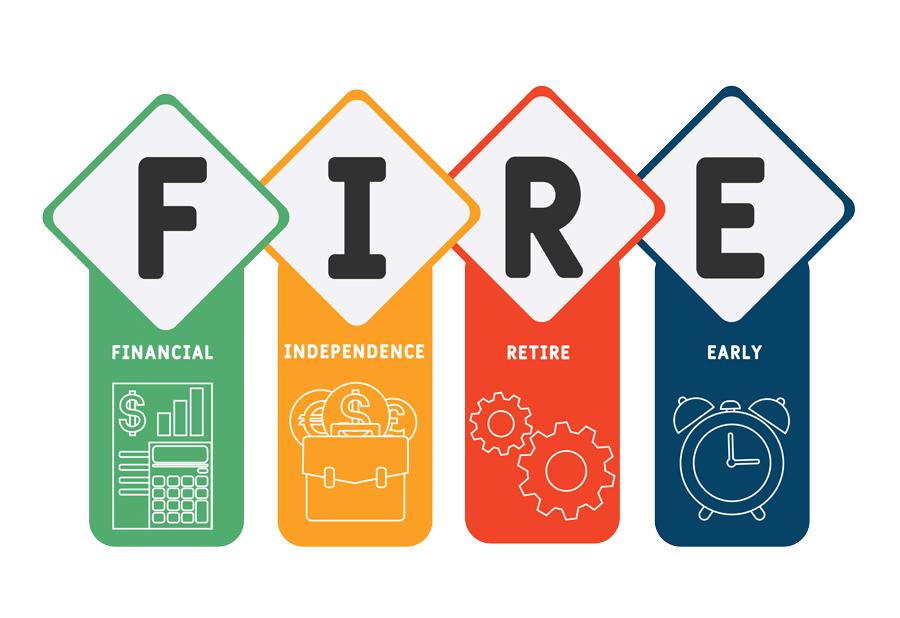
FIRE followers target quitting work in their 30s or 40s by piling up 25 years of living expenses in liquid investments and then drawing 4 percent a year.
How FIRE Converts Today’s Paycheck Into Tomorrow’s Freedom
Devotees start by dissecting every dollar that leaves their checking account. They log grocery receipts, rideshare fares, streaming renewals—anything that explains why last year’s salary evaporated. That audit becomes the baseline for a new cash-flow map: divert every surplus cent into low-cost index funds, health-savings accounts, and, when eligibility allows, a Roth IRA. The payoff is framed in time, not toys. Each $250 socked away is recast as one future day when a boss can’t schedule a meeting. Spreadsheets turn abstract percentages into vacation days that no HR department can revoke.
In Durham, North Carolina, for instance, 32-year-old public-school teacher Alicia Menendez color-codes her Google Sheet so every green cell equals a weekday she no longer has to commute. The grid now stretches to 2,147 days—roughly five years and ten months of freedom she claims she can already afford. Critics argue the exercise borders on obsessive, yet she says the visual tracker keeps her bicycle-tire budget intact and her grocery basket free of impulse snacks.
The 25× Rule Turns Annual Bills Into a Single Target Number
The movement’s most quoted yardstick is deceptively simple: estimate yearly living costs, then multiply by 25. A couple who expects to live on $42,000 needs just over a million dollars. The arithmetic leans on a 1998 Trinity University study that found a 4 percent first-year withdrawal from a 60/40 stock-bond portfolio survived 30-year retirement windows 95 percent of the time. FIRE bloggers shortened the horizon to 40 or even 50 years, arguing that flexible spending and part-time gigs offset sequence-of-returns risk. Skeptics counter that the research assumed U.S. markets during an unusually favorable century; emerging-market downturns or prolonged inflation could erode the cushion faster than spreadsheets predict.
Unexpectedly, the rule also ignores investment-fee drag. A portfolio that costs 0.75 percent in fund expenses turns the celebrated 4 percent withdrawal into 3.25 percent after costs, raising the true target from 25× to nearly 31× annual spending. Add in advisory charges and the multiplier edges toward 33×, a detail many early-retirement blogs mention only in passing.
Frugality as a Design Choice, Not a Sacrifice
Critics picture extreme couponers reusing tea bags, yet many practitioners describe a calibrated splurge budget. Sarah P., a Denver software engineer who blogs under “Supply-Chain Escape,” spends $350 a month on rock-climbing gym memberships and gear because the sport replaces the weekend flights she once took. By redirecting former airline and hotel outlays, she keeps annual expenses flat at $38,000 while still feeling richer. The mental reframe is common: decide what actually delivers joy, eliminate the rest, and let compounding handle the gap. The result is a lifestyle that looks austere only to people who conflate spending with status.
Meanwhile, household after household swaps car payments for refurbished e-bikes, or trades restaurant tabs for Instant-Pot potlucks. The pattern repeats from Boise to Tampa: discretionary cash once sprinkled across convenience is funneled into Vanguard Total Stock Market shares, quietly buying future weekdays that belong to the investor alone.
Market Dependency and Other Blind Spots
A portfolio heavy in equities can vault a 29-year-old past the magic number—until a 30 percent drawdown arrives the next quarter. Michael Kitces, a financial-planning researcher, notes that early retirees without traditional paychecks may also struggle to qualify for mortgages, small-business loans, or even private health insurance before Medicare age. Premiums for a silver-level Affordable Care Act plan averaged $5,712 last year for a 40-year-old nonsmoker; that line item alone can add $143,000 to the 25× target. And because many FIRE savers fund taxable brokerage accounts to bridge the years before age 59½, they forgo employer 401(k) matches that compound tax-deferred for decades.
Separately, home-town property-tax hikes can blind-side exit strategies. In Austin, Texas, assessments jumped 26 percent in 2025, pushing annual levies above the inflation-adjusted projections many spreadsheets assumed. The move raises questions about whether owning—often viewed as a fixed-cost shield—fits the long-term plan at all.
Tax-Savvy Bridges Between Quit Day and Age 59½
Accessing money before standard retirement age demands choreography. Roth IRA contributions can be withdrawn anytime penalty-free, but five-year rules govern converted sums. Some build a “ladder” by rolling a 401(k) into a traditional IRA, then converting slices to Roth each year while living on cash or brokerage proceeds. Others rely on Section 72(t) distributions—equal periodic payments that avoid the 10 percent early-withdrawal fee yet lock the account holder into a rigid schedule for at least five years. Taxable accounts remain the most flexible: long-term capital gains currently face 0 percent federal tax for joint filers with income under $94,050, letting careful harvesters live on appreciation without tapping principal.
In related developments, several fintech firms now pitch automated ladders, promising to track conversion amounts and avoid accidental over-withdrawal. Regulators have yet to weigh in on whether the software counts as fiduciary advice, so users still shoulder the legal risk if calculations go awry.
Useful Resources
- Mad Fientist blog – deep dives on Roth conversion ladders and tax optimization for early retirees
- Trinity Study PDF – original 1998 research paper detailing the 4 percent withdrawal rule’s methodology
- Healthcare.gov calculator – estimates ACA premiums and subsidies based on projected income
- FireCalc.com – Monte-Carlo simulator that tests portfolio survival against historical U.S. market data
- IRS Publication 590-B – official rules on early IRA withdrawals and 72(t) payment schedules
Sources: Interviews with FIRE practitioners; Michael Kitces blog; U.S. Department of Health & Human Services 2025 marketplace report; Trinity University 1998 study.





Comments